
Gardening in southern Spain
The satin flower
Sisyrinchium striatum, commonly known as blue-eyed grass or the satin flower, is a close relation to the iris
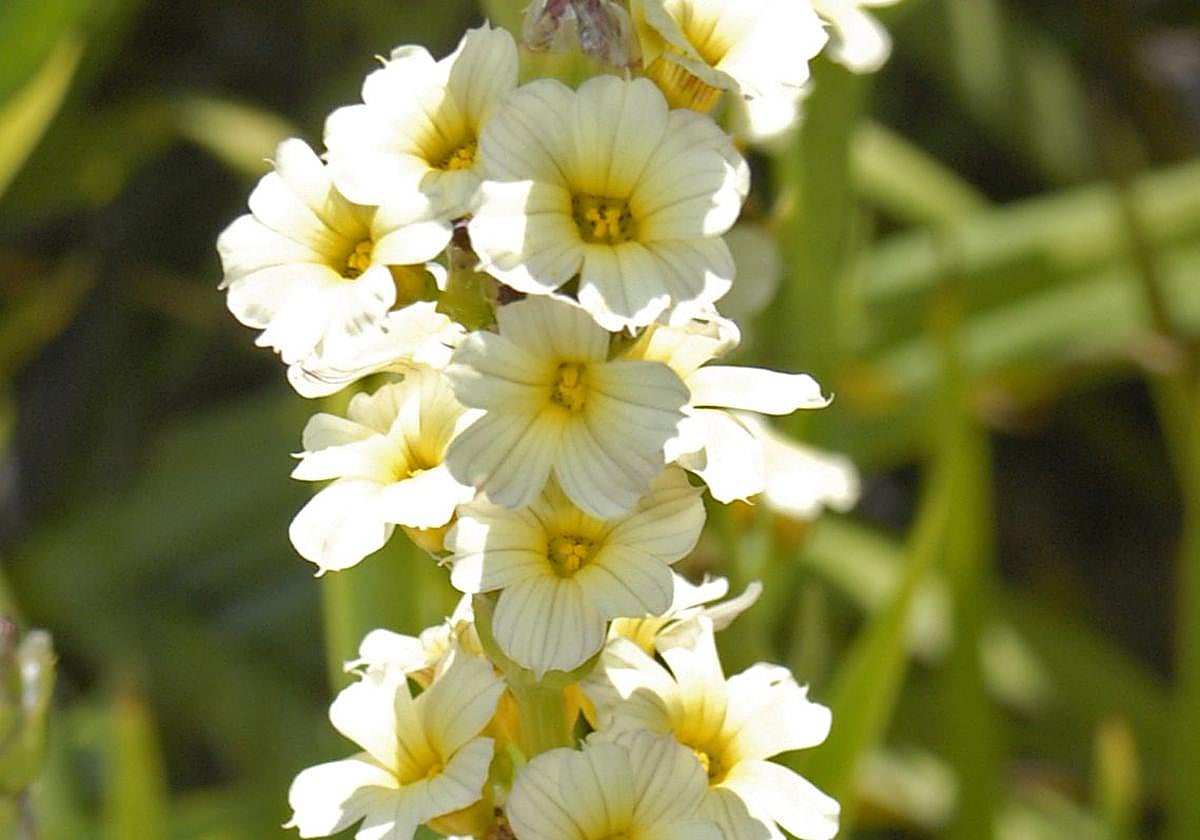
Denise Bush
Sisyrinchium striatum, commonly known as blue-eyed grass or the satin flower, is a rhizomatous herbaceous plant native to North and South America. A close relation of the Iris family, this clump-forming genus contains over 200 species and is valued by gardeners for its architectural foliage and attractive summer blooms.
The plant typically reaches a height of around 80cm, featuring narrow strap-like leaves and tall spikes of pale yellow cup-shaped flowers. These blooms, which can also be white or mauve, open progressively from the base of the spike upwards throughout the spring and summer. Each six-petalled flower features distinctive dark brown lines on the reverse and will attract lots of pollinating insects.
Hybrids
Several hybrids are available for different garden settings, including shorter varieties suitable for rockeries or the front of a border. The hybrid Sisyrinchium striatum ‘Aunt May’ is has attractive variegated foliage, with creamy yellow and green stripes, though it does not flower as prolifically as the standard forms.
Sisyrinchium striatum can be grown in borders or in containers. Once established, it can withstand short periods of drought, but it is important to prevent waterlogging as the roots rot easily; the plant must never be allowed to sit in water.
Although the satin flower will grow in most soils, it will benefit from a high potassium liquid feed, such as tomato fertiliser, every fortnight during the growing season.
Self-seeding
The species self-seeds itself very easily. To prevent it from spreading throughout the garden, spent flower spikes should be removed immediately after flowering before the seeds have a chance to ripen.
Any dead leaves should be left on the plant over winter to help protect the roots from cold and wet and can be removed once the weather warms up in the spring.
Propagation can be carried out by sowing fresh seeds or by lifting and dividing established clumps in early spring.
While the plant can withstand some frost, it will benefit from being given some protection in the winter. Ground-planted specimens should be covered with a thick layer of mulch, while container-grown plants should be moved to a sheltered position to avoid over wetting and cold temperatures.
![[]](http://static.vocstatic.com/voc26/latest/assets/images/favicon/surinenglish/apple-touch-icon-57x57.png)