
Gardening in southern Spain
The Osage orange
The Osage orange (Maclura pomifera) is not a citrus but is a deciduous tree belonging to the mulberry family
Denise Bush
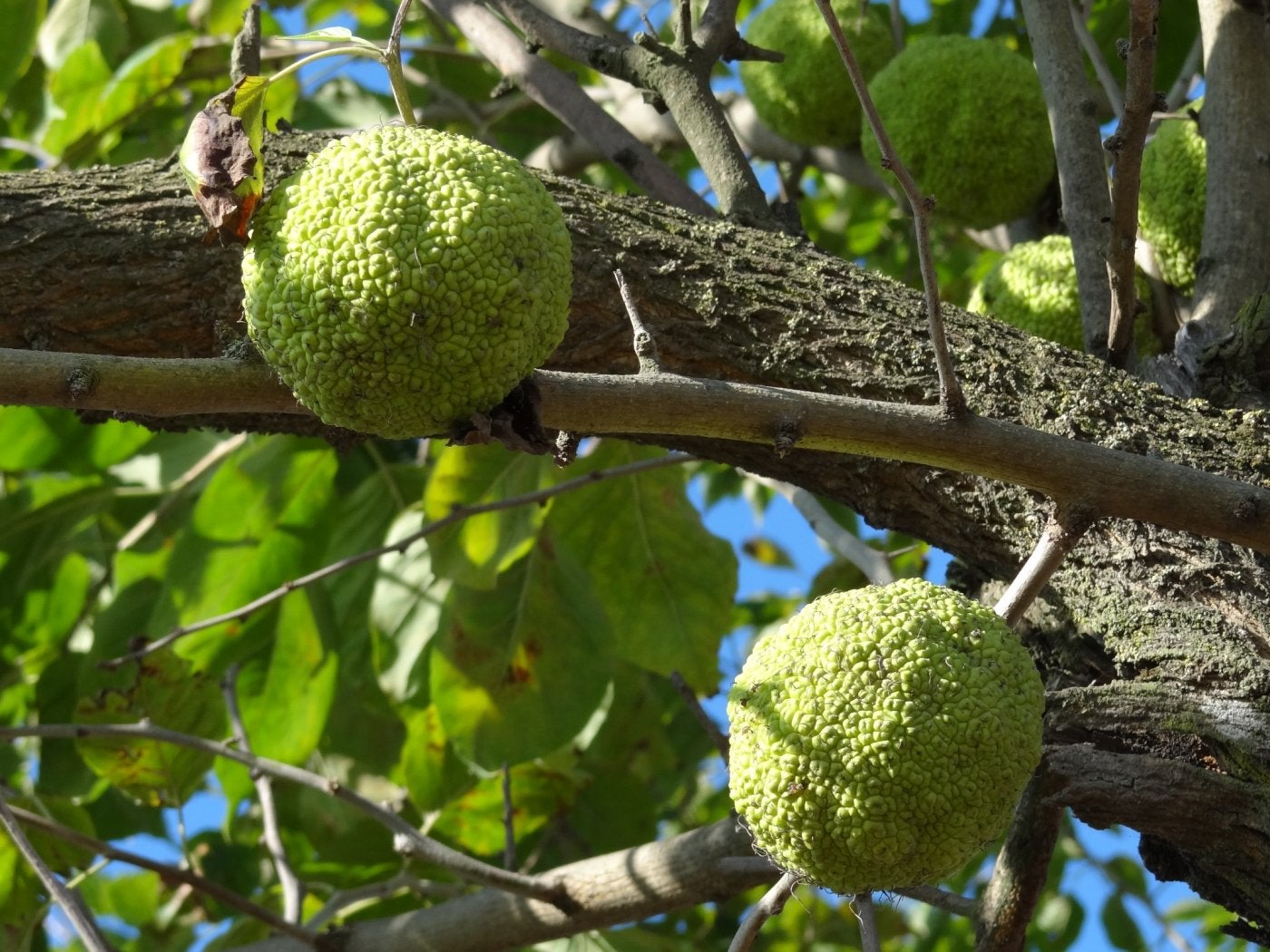
The Osage orange (Maclura pomifera) is 'plant of the month' at the Jardín Botánico La Concepción in Málaga, where they have a mature female specimen in the area of the Noria pond, near the conifer collection. It is a deciduous tree belonging to the mulberry family and native to the border region of Texas and Oklahoma and extending into Arkansas. Once mature, and in ideal conditions, it can reach up to 15 metres in height.
The tree gets its common name from the Osage tribe, who inhabited areas near its native range. Indigenous people historically valued the plant as the prime timber for constructing hunting bows, leading French settlers to call it 'bois d'arc' or bodark, which translates directly as “wood of the bow”.
As a dioecious species, individual trees are either male or female, meaning only female specimens produce the characteristic fruit. Measuring roughly ten to twelve centimetres across, these heavy globes have an uneven surface reminiscent of brain tissue and consist of hundreds of smaller fruits clustered together.
Although inedible for humans due to its bitter flavour, dense texture and sticky sap, the fruit is a striking feature alongside the tree's glossy, green summer foliage, which turns shades of yellow in autumn. It is not toxic for humans or animals
Once established in a position with full sun and well-drained soil, it can tolerate extreme heat, severe cold, strong winds, drought and poor soil.
Its branches have sharp, straight spines at the leaf axils, making it ideal for creating an impenetrable hedge. Regular hard pruning every few years keeps its vigorous growth bushy and dense.
For gardens where spines and fallen fruit are undesirable, male cultivars such as White Shield and Wichita have the same hardiness without the drawbacks.
The tree produces dense, heavy wood with a tight grain and an orange-yellow hue. As it matures, it develops an orange-brown bark. Impregnated with natural antifungal and insecticidal compounds, this timber resists rot and pest damage, making it prized for crafting tool handles and fences.
Left unpruned, older specimens grow into dramatic, twisted shapes and create a distinctive feature tree in larger gardens.
Propagation is easy to carry out from collected seed; keep in the fridge over winter and plant in spring in a pot filled with moist compost.
![[]](http://static.vocstatic.com/voc26/latest/assets/images/favicon/surinenglish/apple-touch-icon-57x57.png)