
Travel
The man from Malaga who turns deserted islands into tourist destinations
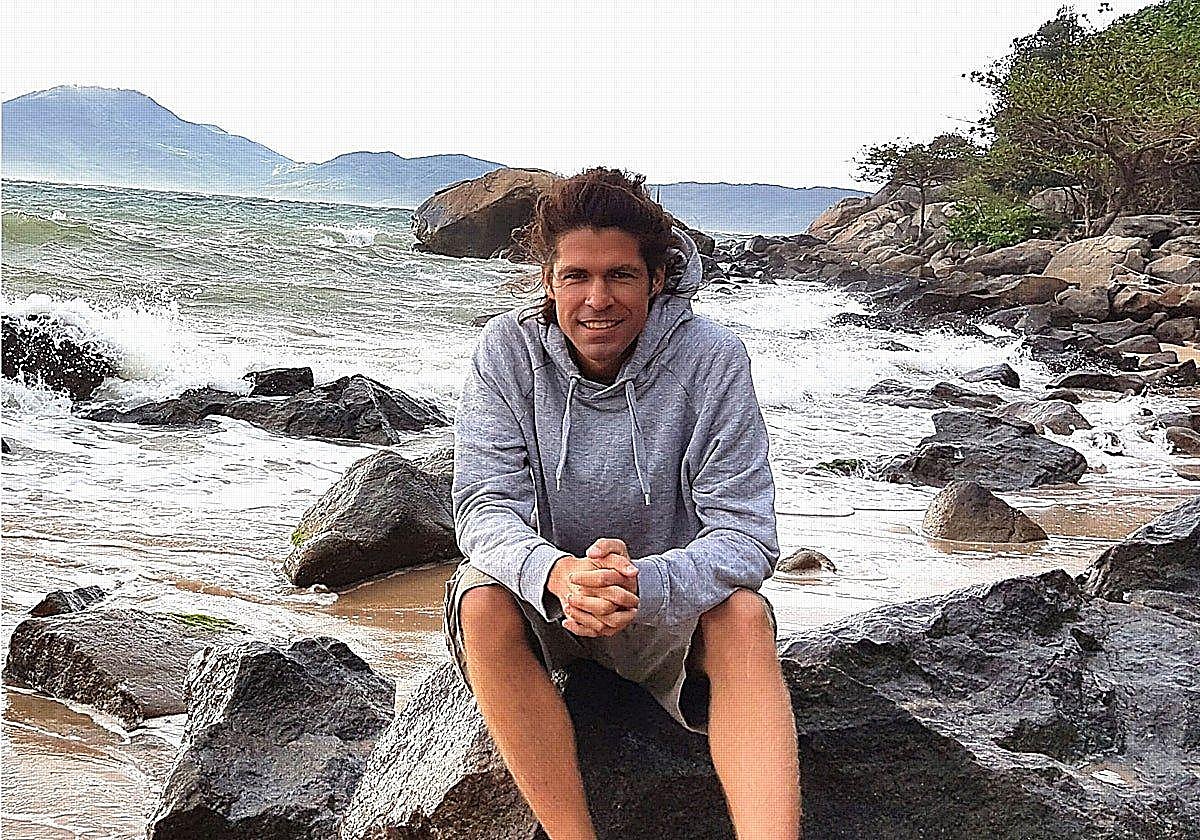
Álvaro Cerezo has spent the last 16 years running a company whose clients pay for extreme experiences in remote locations to test their mental and physical strength
Susana Zamora
A few metres from the shore, there are no hotels, no beach bars, nor the clamour of notifications that accompany everyday life. Just sand, an endless horizon and a person who has just found themselves alone on an island.
That scene, which has been repeated in various parts of the world over the last 16 years, is the driving force behind Docastaway, the company founded by Álvaro Cerezo from Malaga.
What began in 2010 as an idea that was hard to explain has become a unique business: organising isolation experiences on remote islands for people seeking to be completely cut off from the outside world for days or even weeks at a time.
Related story
-
 Susana Zamora
The concept emerged well before content creators filled the internet with extreme challenges and survival videos. Back then, those who found their way to Docastaway were looking for something different. They wanted to test themselves, escape the hustle and bustle of everyday life, feel completely free, or fulfil a dream fed over the years by adventure books and castaway tales.
The story of the project, however, goes back even further than the company itself. Cerezo, who holds a degree in Economics from the University of Granada, grew up with a fascination for islands. As a child in La Herradura, on the coast of Granada, he would take advantage of any moment his parents weren't looking to slip away from the beach and paddle out on a lilo to a secluded cove where he imagined that everything belonged to him.
Years later, at 19, he began travelling thanks to his brother, a flight attendant, and in the Andaman Islands, in India, he had his first taste of real isolation. There, he sensed that what was, for him, a personal quest could also become an experience sought out by others. He was not mistaken.
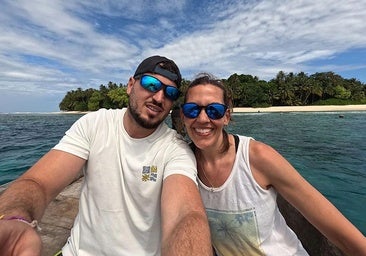
Since then, Docastaway has organised more than a thousand experiences. Most participants travel solo, although there are also some couples and small groups. Some are looking to switch off. Others are seeking a challenge. There are also those with more specific motivations: from clients who want to disappear from the world for a few days, to experiences designed on specific islands in Southeast Asia or the Caribbean where isolation is extreme but carefully controlled.
The company works with a set of islands located mainly in Indonesia, the Philippines, Thailand and the Pacific, including destinations such as Juanito Island (Indonesia) - one of the best known for its accessibility and its balance between seclusion and logistics - and the remote Siroktabe Island (Indonesia), where the sense of solitude is far more intense and human presence is virtually nonexistent.
The company also uses locations in lesser-known archipelagos in the Philippines or on small private islands in Southeast Asia where access is strictly limited to clients. These are places where travellers can feel as though the world is reduced to a single coastline.
Adventure or Comfort Mode
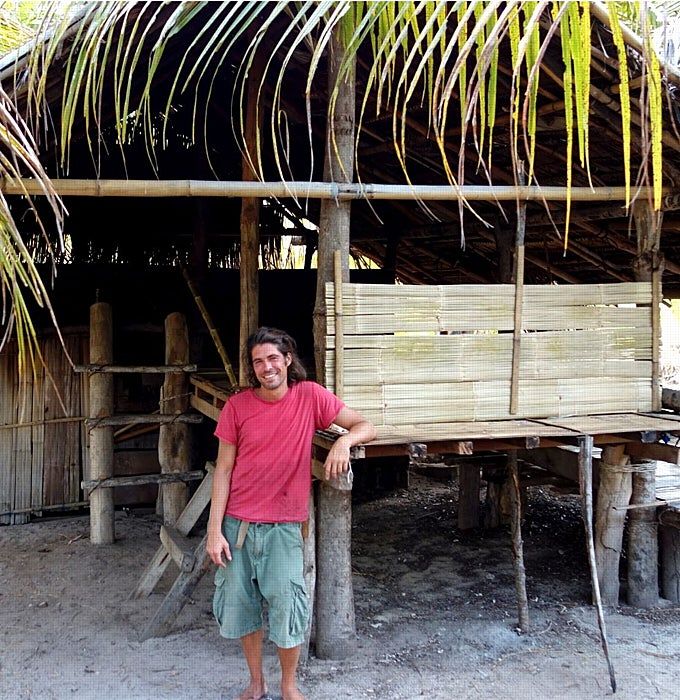
The company offers two options via its website. Adventure Mode gives an extreme experience: catching your own food, sleeping on the sand among palm trees and building a fire using basic techniques. Comfort Mode, on the other hand, offers eco-friendly accommodation without electricity, with meals and logistics taken care of, designed for those who want isolation without giving up a few basic comforts and without having to worry about water or food.
Some guests are looking to live out their own version of Tom Hanks' 'Cast Away', although the company always maintains communication via walkie-talkie or satellite phone. Safety is a constant priority, and any emergency triggers an immediate rescue. In practice, the isolation is real, but never absolute in operational terms: there is always a team standing by on land or on a nearby boat.
Prices start at around 1,500 or 2,000 euros for a solo experience, varying by destination, duration and level of service. The price includes all logistics: boat transfers, preparation of the island, provisions where applicable, and coordinating a team that monitors each stay from land or a nearby vessel. For longer stays or especially remote islands, the cost may increase due to the complexity of travel arrangements or the need for additional local support.
"If an island stops being peaceful, we have to find another one; this business relies on isolation"
Behind the apparent simplicity of the concept lies a complex structure. Chartered boats, local teams, administrative permits, agreements with communities and fishermen, and between five and six people involved in each operation.
Nothing is left to chance in an experience whose value depends precisely on nobody disrupting the seclusion. In some destinations, schedules are even coordinated with local communities to avoid any accidental human presence in the area during a client's stay. "This business relies on isolation," said Cerezo. "If an island stops being peaceful, we have to find another one."
The pandemic marked a turning point. For three years, the activity came to a virtual standstill. Many islands stopped being viable, others saw their circumstances change, and flight routes to remote destinations disappeared. When the project got back on track, the landscape was no longer the same. "I didn't have the same energy as when I started, but I did have the experience," said Cerezo.
Today, they work with a handful of main islands, while keeping a wider network in reserve, adapting to a much more volatile tourism environment. Some locations that were once common have been dropped due to changes in permits or increased fishing activity in areas that used to be completely untouched.
In Adventure Mode, travellers face nature with limited resources. In Comfort Mode, everything is taken care of. But in both cases, what matters most is being alone. "Survival is secondary", he explained.
Reactions vary widely. Roughly three out of every ten participants cut their stay short, and some call the very next day after arriving. Others discover an unexpected sense of calm that they had never experienced before, even after years of living in crowded urban environments.
Among the most striking stories, Cerezo recalls an Italian couple who wanted to rent an island with the aim of trying for a baby in complete isolation. The planning required coordinating timings, privacy and very specific conditions, including tracking the menstrual cycle and preparing the surroundings in advance. Despite all these arrangements, the trip ended without a pregnancy.
Impossible proposals
Another proposal that proved impossible was that of an American content creator who wanted to bring a disassembled plane in crates, put it together piece by piece on the island, and take off from the beach as part of his video project.
"The proposal was completely ruled out due to its technical, legal and safety impracticability, as it would have required international aviation permits that were impossible to obtain in that context," said Cerezo.
Beyond these anecdotes, every client has their own motivation. Cerezo recalls a young Japanese woman who spent 20 days alone on an island. She came from an extremely isolated life and returned with a different relationship with herself and her surroundings. Not all cases are transformative, but they do reveal a paradoxical phenomenon: in the age of hyper-connectivity, there are people who pay to disappear.
Many younger clients also want to document the experience. Older ones, however, are seeking to fulfill 'the dream of a lifetime', as Cerezo puts it.
16 years ago, his project seemed like something of a curiosity. It still is today, because there are still those who travel halfway around the world to listen to the one sound that cannot be silenced: the sound of one's own self.
![[]](http://static.vocstatic.com/voc26/latest/assets/images/favicon/surinenglish/apple-touch-icon-57x57.png)