
Lifestyle
Malaga's working university students race against the clock to say 'yes' to lectures and shifts
One in four young people juggle their university studies with a job, paying the price by sacrificing sleep, social life or academic performance
Rubén Martín
Málaga
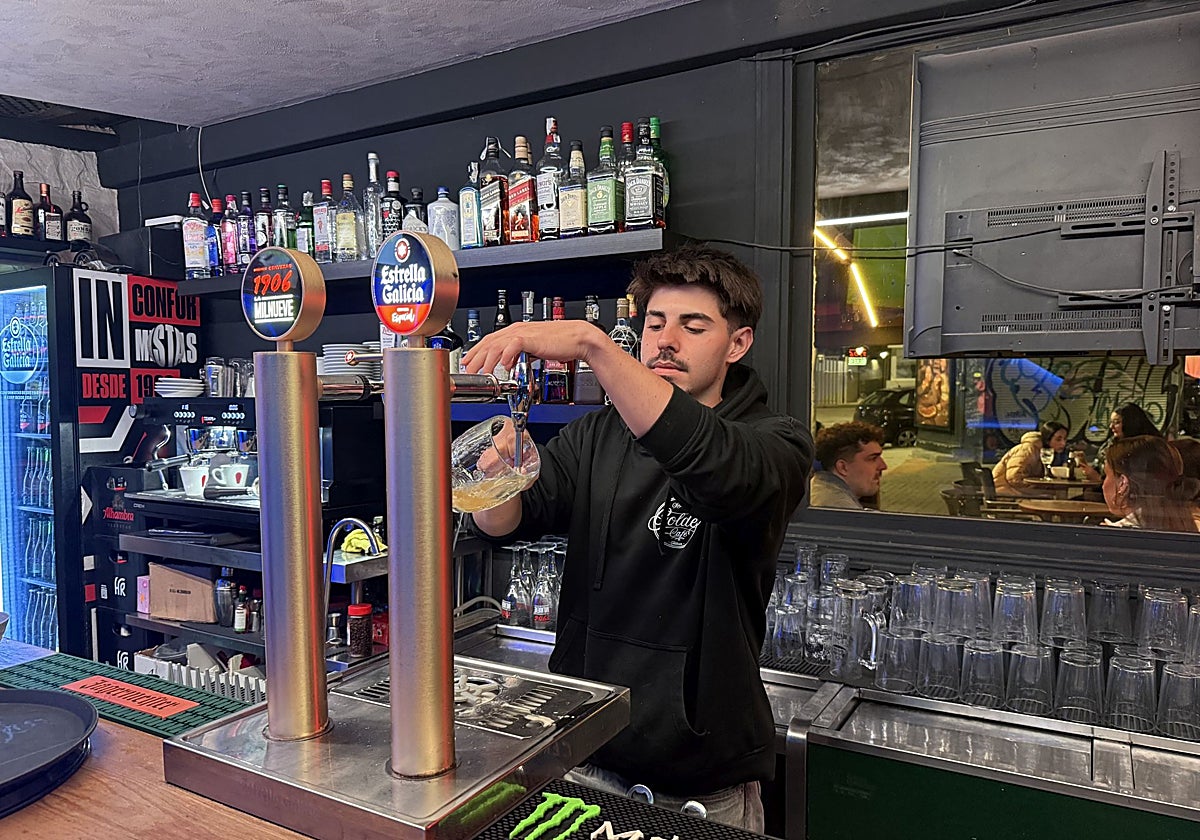
At 7.45am, Juan Pedrosa walks out the door of his student flat, leaving behind a mug of coffee that is still half full. He ... has a concrete structures lecture at 8.30am and a shift as a waiter at 6pm. In between, he has three hours, though he already knows they won't be free: lecture notes, a group assignment, an unanswered email. He tells SUR about this as a matter of fact, while adjusting his black uniform T-shirt with the white logo on the back. A classmate calls him over about an assignment.
Like Juan, one in four young people juggle their studies with a job, according to the latest Eurostat figures. It's not a new phenomenon, but it's something that almost never features in the typical picture of university life: the one involving beer, travel and parties. Here, the schedule calls the shots and the clock even more so.
At the café where he works, Golden Café Teatinos, the atmosphere has a distinctly university feel to it, from afternoon coffees to after-class beers. Juan is 20 years old, a mechanical engineering student and a debater with 'Tum Asociación Juvenil Séneca XIII de Córdoba'.
Right now he's serving one table after another, with a smile on his face. "My friends come to see me at the bar while I'm working. They help make it more enjoyable," he says as he clears a couple of tables. When things are quieter, he takes the opportunity to check his study group's schedule and see what he'll have to do in the early hours to prepare for the next day.
Part-time students
Although Malaga University offers support to part-time students, such as flexible timetables, the option to choose a study group or extended deadlines, this is often not enough: they have to sacrifice their social life and sleep and some cannot even go home, as most contracts require them to work at weekends. Support that may not be of much help in some cases.
This is the case for Sergio Ogallar, an electrical engineering student who works doing electrical repairs. He won't be able to go home to see his family in Baeza until the Christmas holidays, when the four-month term ends. "It's a bit tough and an uphill struggle on many days, but well, I'll just have to carry on," he says.
There is one thing that matters a great deal to these students: financial independence, as they say that this enables them to pay for their own studies and help out at home so that their other siblings can study too. Every now and then, they can treat themselves to something, but it's almost always something they need. "I've bought myself an iPad so I can study anywhere and it's more convenient," Juan says.
Related story
Balancing study and work presents a number of risks, such as increased absenteeism from classes, a decline in students' academic performance or even dropping out. By taking on precarious jobs, they are actually drifting away from the profession for which they are training, however much they may learn other skills.
Work placement contracts
Internship contracts are another matter altogether. Miguel Labella, a software engineering student, says: "Last term, I did an extracurricular internship at ViewNext, a subsidiary of the IBM Group, where they gave me the option to stay on and work over the summer, which I was very grateful for."
These work placements help them get to know the profession and make better decisions in the future. "It's true that you're paid less than you would be in a normal job, but you make up for it with the opportunities it offers for the future," Miguel says.
At 1am, Juan starts clearing the bar's terrace, trying to make as little noise as possible so as not to disturb the neighbours. He's been on his feet for over 14 hours: three hours of lectures at university, two hours of haphazard note-taking in the library and eight hours behind the bar.
He steps out onto the street, where there isn't a single group of university students left with a beer in hand and pulls his hood up for the walk home. On his mobile, he finds 23 messages from his class group chat, the unanswered email from this morning and an alarm set for 7am.
When he gets home, the cup of coffee is still in the same spot, cold and still half-full, just as he left it 17 hours earlier. Without a second thought, he wipes it down, opens his laptop on the bed and starts writing the part of the assignment that's his responsibility.
Meanwhile, Sergio is going over the wiring diagrams for the electrical installation he has to fix first thing tomorrow and Miguel is getting ready for another day of work experience which, at least, brings him closer to what he wants to be. Each of them has found their own way of getting through a day that feels longer than 24 hours and neither of them thinks it's fair, but they don't see any other option either.
Every euro earned means one less school fee to worry about at home, an iPad to study on wherever they are and a sibling who might be able to study too. Every hour of lost sleep is the price they pay for it and for now they're willing to keep paying it.
At 7.45am tomorrow, Juan will head out the door again, on his way to class, with no time for that coffee. Such is the era of the 'sisis' ('yes-ers'): yes to lectures, yes to the timetable, yes to group work, yes to everything, even if there aren't enough hours in the day.
