
Art
The secrets behind a gigapixel artwork
At a billion pixels, details that go unnoticed to the naked eye can be revealed. Around thirty paintings from the Carmen Thyssen museum can now be explored in ultra-high resolution on Google Arts & Culture

Malaga
No image will ever match the experience of viewing a work of art in person, but it can make us see it in a different ... light. Around thirty paintings from the Carmen Thyssen Museum can now be explored in gigapixel format on Google Arts & Culture, a free digital platform and mobile app that allows users to view artworks, historic sites and museum collections from around the world in extremely high resolution. Zooming in on these billion-pixel photographs reveals details that go unnoticed to the naked eye, and the artist’s technique is revealed with astonishing clarity. This is an interesting technology for the general public who wish to delve into works that, in the gallery, must be viewed from a safe distance, but it is particularly useful for art professionals who learn about, study and care for the works of the great masters.
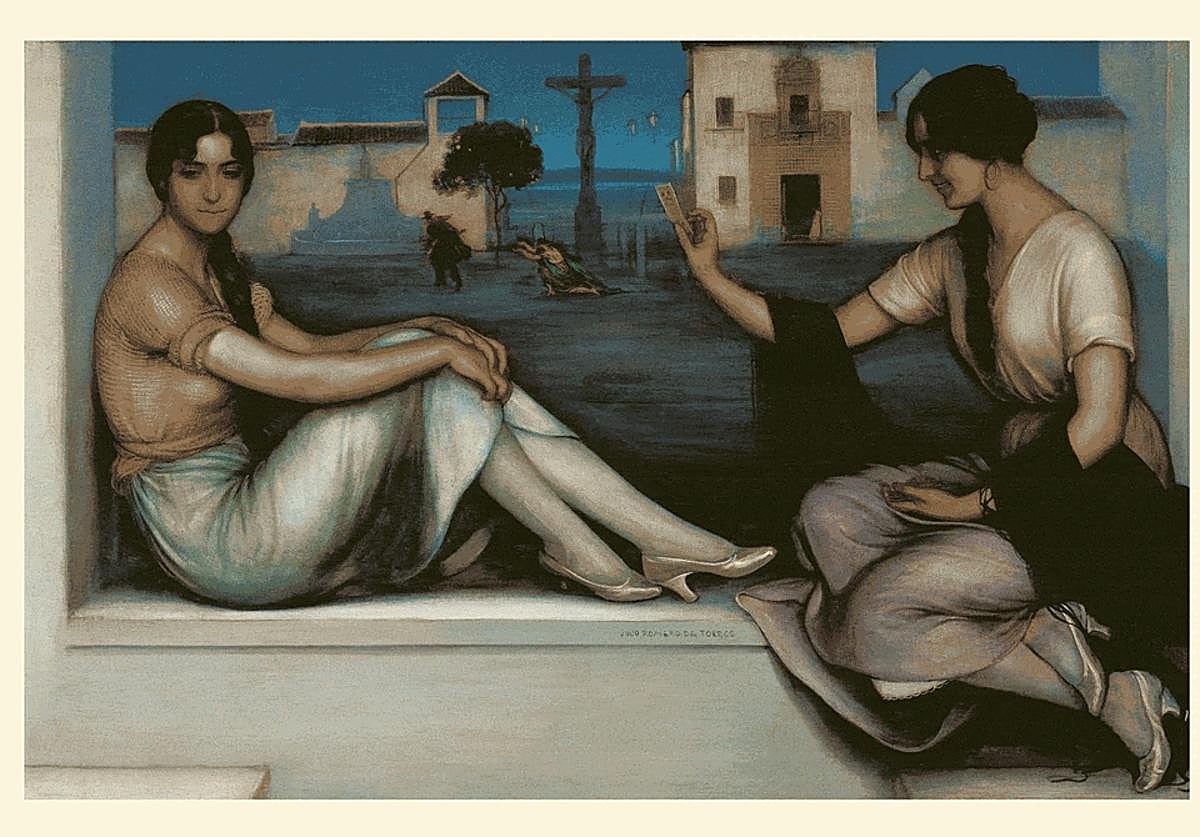
Google’s Art Camera has digitised 33 paintings from the permanent collection. It is an ultra-high-resolution robotic camera that captures hundreds of microphotographs, which are then algorithmically assembled to reveal details invisible to the human eye. Works that have been scanned include such well-known pieces as La Buenaventura by Julio Romero de Torres – the painting that first showcased this technology in its early stages – and Corrida de Toros en Eibar by Zuloaga; popular works such as Fuente de Reding by Guillermo Gómez Gil and Ambush on a Band of Bandits in the Cueva del Gato by Manuel Barrón y Carrillo; and others such as Marina (View of the Bay of Palma de Mallorca) by Muñoz Degrain and Ca d’Oro by Moreno Carbonero.
When viewed under a magnifying glass at 100 per cent, the weave of the canvas beneath the oil paint becomes visible, brush hairs trapped in the paint come into view, and secondary scenes take centre stage. Moving from one work to another, one can appreciate the artists’ different techniques; the direction of the brushstrokes can be seen with precision and their imperfections are laid bare. And what from a distance are perfectly recognisable figures are transformed into blurs when viewed at close quarters. "There are countless details that aren’t easily visible – details relating to the artist’s signature, their technique, the type of canvas and each painter’s individual style," explains Lourdes Moreno, artistic director of the Carmen Thyssen Museum in Malaga.
As Moreno maintains, it serves an educational purpose by offering students the opportunity to explore masterpieces of painting in greater depth than ever before. It is a tool for research by art historians, as well as for curators, who can identify, at the click of a mouse, the most pronounced craquelure (cracks in the paint) and areas of risk on a canvas. These thirty or so works are in addition to another 62 from the Malaga museum that were already made available on this platform a decade ago. The quality of some of them has now been improved, thereby also expanding their potential.
A love triangle in the background
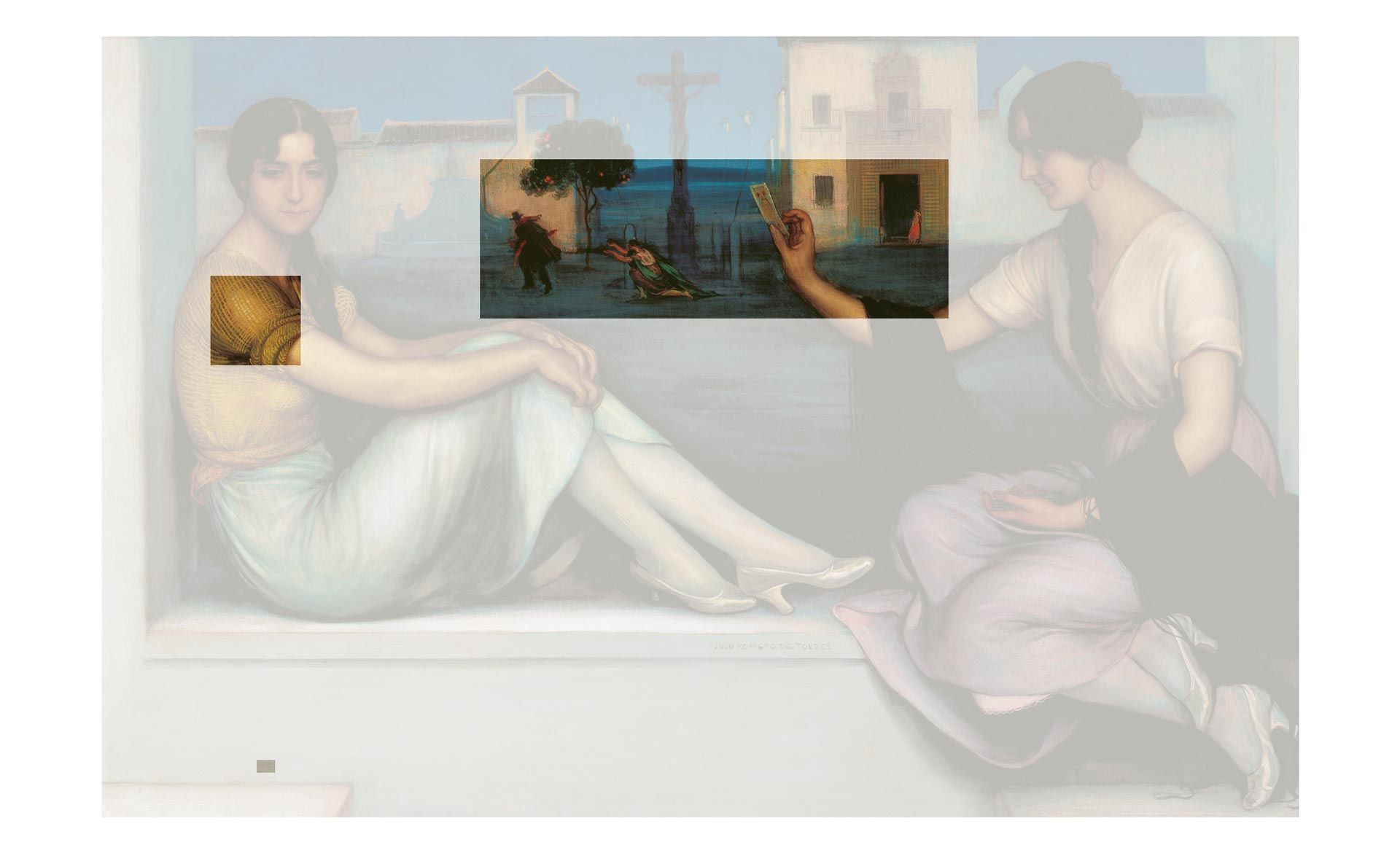
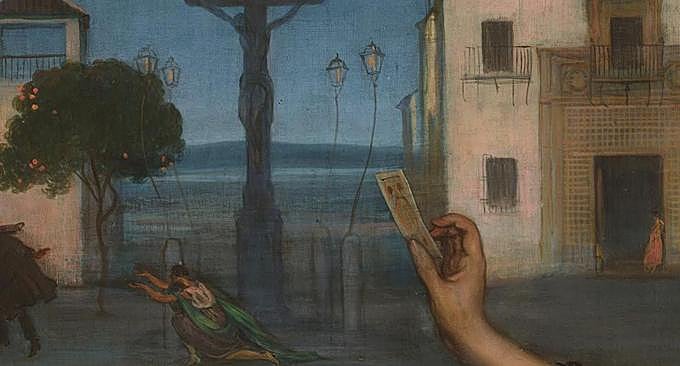
In the background of the painting, the story unfolds that gives meaning to the main scene, in which a woman is reading a fortune for another. She looks sad and seems oblivious to what the fortune-teller is saying to her, who is warning her of something whilst holding a card in her hand. The explanation becomes clear when the image is enlarged: one can then see more clearly a woman in a pleading posture towards a man wrapped in a cloak, whilst another woman in a red cloak is seen leaning against the doorframe of the palace on the right. This is a love triangle: the wife is trying to hold on to her husband, whilst the mistress (the very one having her fortune told) looks on.
Bristles and crackedpaint
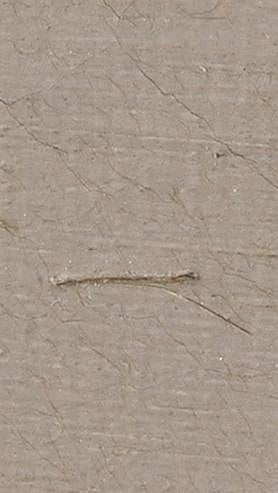
In the lower left-hand corner, above the bench that Romero de Torres has painted beneath the main scene, there is what appears to be a bristle from the artist’s brush, probably from the layer of varnish he applied to the painting. Various cracks are visible in the surrounding areas of the work; these are fissures that appear in the surface layer of the oil paint due to the natural ageing of the material. The paint is applied lightly, allowing the weave of the canvas to be seen in various places, for example, around the nose of the young woman leaning on the windowsill.
Subtle details of a genius
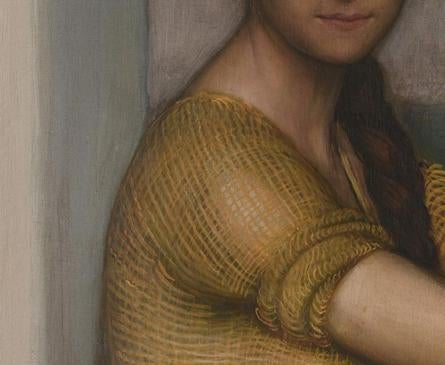
As the image is zoomed in on, the hand of a master painter becomes apparent. If you zoom in on the shoulder area of the young woman on the left, you can see the texture that Romero de Torres has imbued into the fabric of her shirt, with an irregular grid pattern deliberately created to lend it realism, and with that touch of light that adds volume to the figure. And if you bring the magnifying glass closer to her face, you can see the young woman’s faint and subtle blush.
The artist’s technique
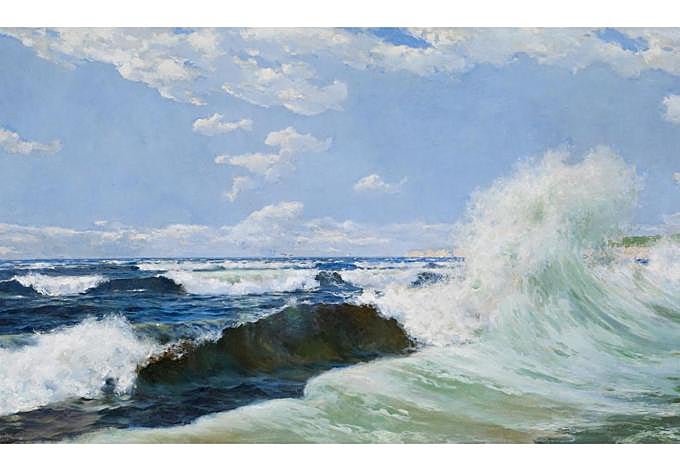
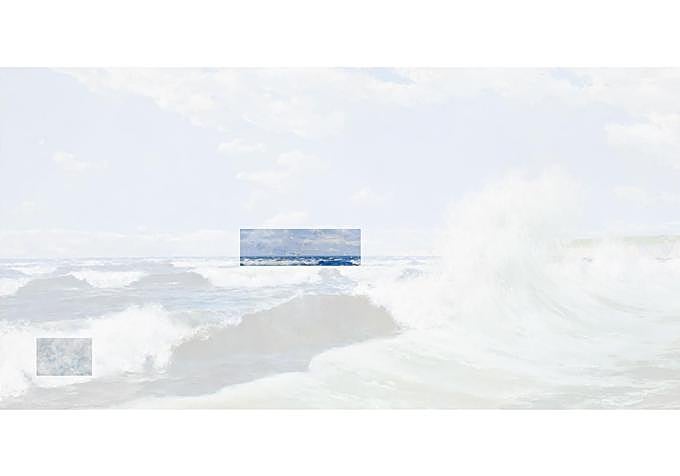
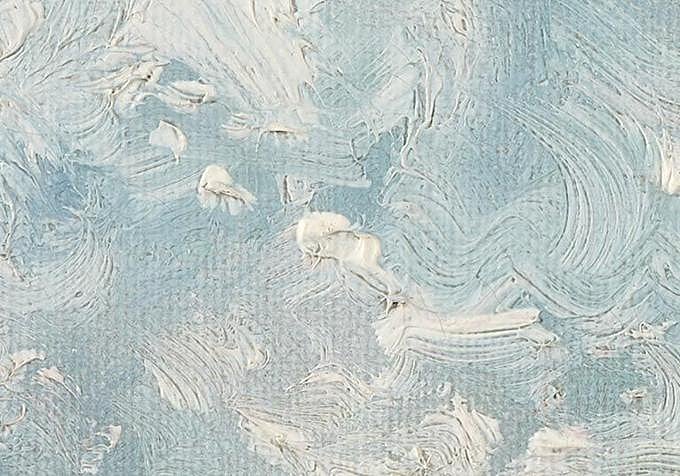
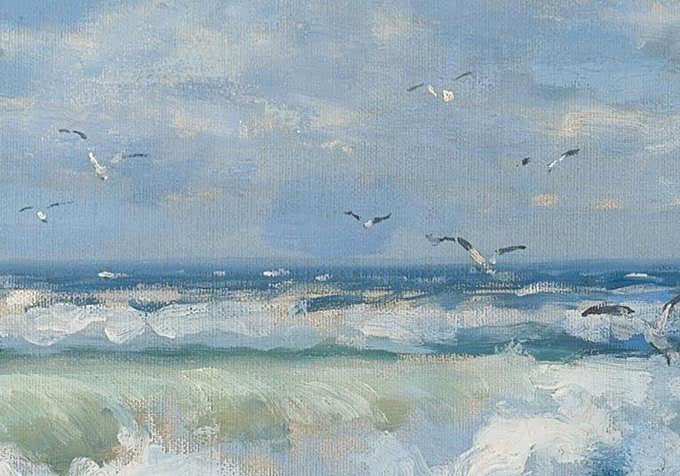
At a billion pixels, the technique of the Asturian painter Juan Martínez Abades is revealed. In the waves breaking in Puerto exterior y Abra de Bilbao con Punta Galea, one can see the different brushstrokes, some with more paint and very distinct impasto. They are not abrupt; this is not an Impressionist painting, but one can distinguish the vertical brushstrokes as the wave rises and the circular movement of the brush as it breaks. Although the foam appears white, when viewed through a magnifying glass one can also detect the use of blues and greens to give it that appearance of a rough sea from a distance.
Seagulls in the distance, the brushstrokes up close
In the centre-left of the picture, in the distance, one can make out a dozen or so seagulls flying over the sea. As the camera zooms in, what appear to be birds from afar become white dots with two horizontal black brushstrokes for their wings. Some are more clearly defined, whilst others are simplified to the utmost, demonstrating the artist’s keen powers of observation.
From crackled clouds to blue mountains
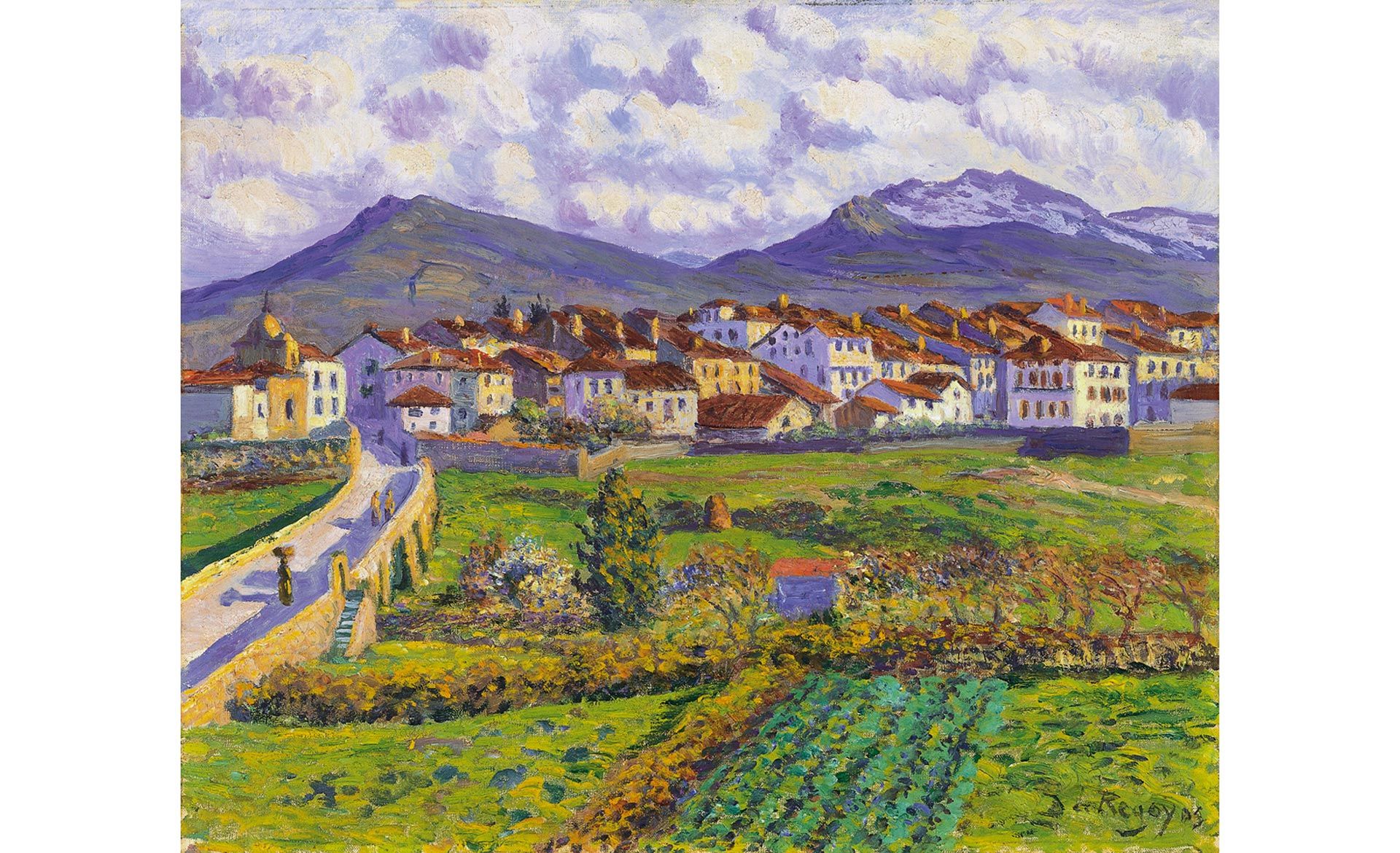
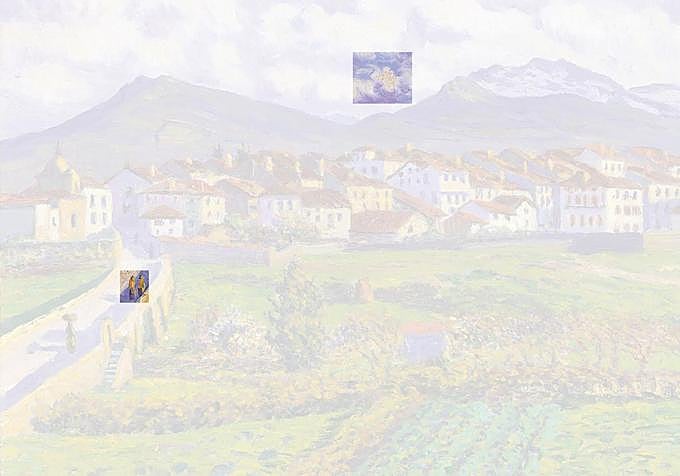
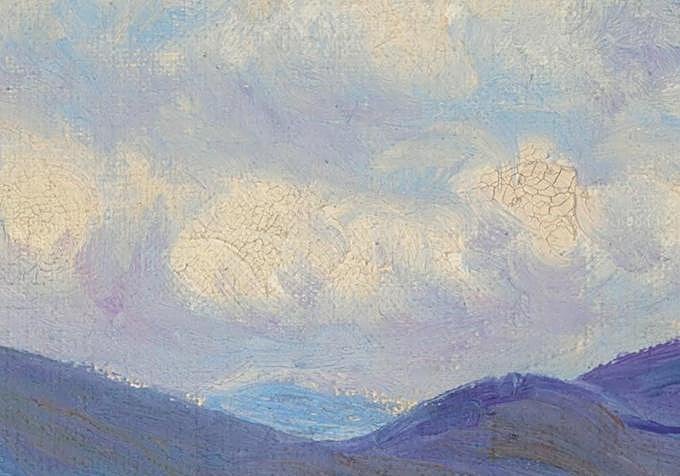
This landscape by Regoyos is perfectly preserved, but it has not escaped the craquelure caused by the white pigment used by the artist. A close-up view of the clouds reveals numerous cracks in those areas where he used large quantities of that colour to give a fluffy quality to the cloudy sky. And there is another interesting detail in his work which Regoyos – like so many others – borrowed from Velázquez: he painted the mountains in the background in shades of blue and violet, because that is how they appear in the distance, and not in brown as one might expect.
Women walking
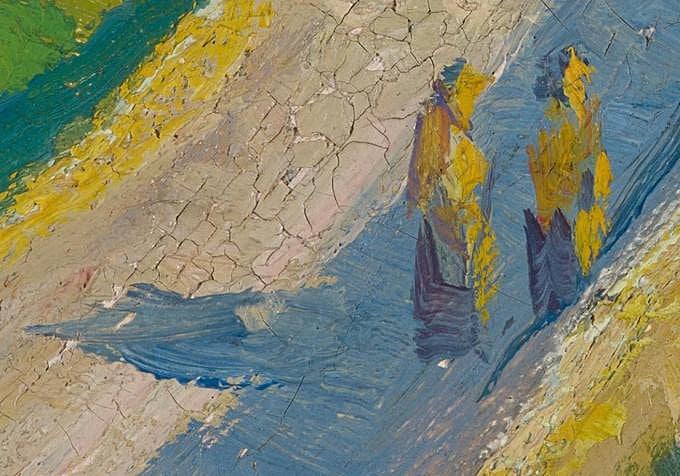
The artist has composed a scene that brings the painting’s story to life: there is a woman carrying a basket on her head, two others are chatting as they walk, and in the distance, off the path, two shadows can be glimpsed making their way through the village. Up close, however, they are mere strokes, often imperfect, with imprecise shading. But from a distance it works: as your gaze moves away, everything falls into place. ‘It’s fascinating to see how simple stick figures become characters full of life,’ explains director Lourdes Moreno.
The Hidden Shepherd
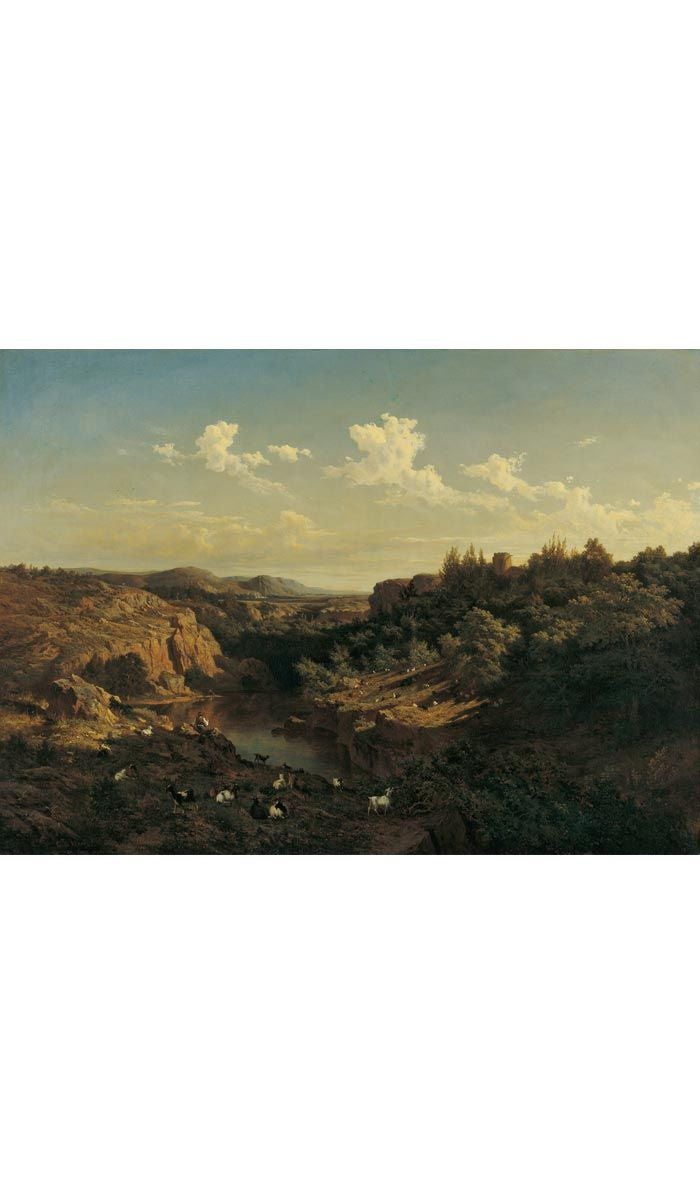
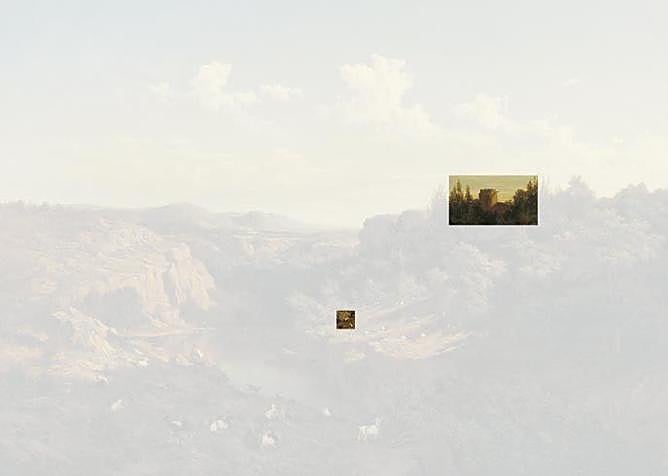
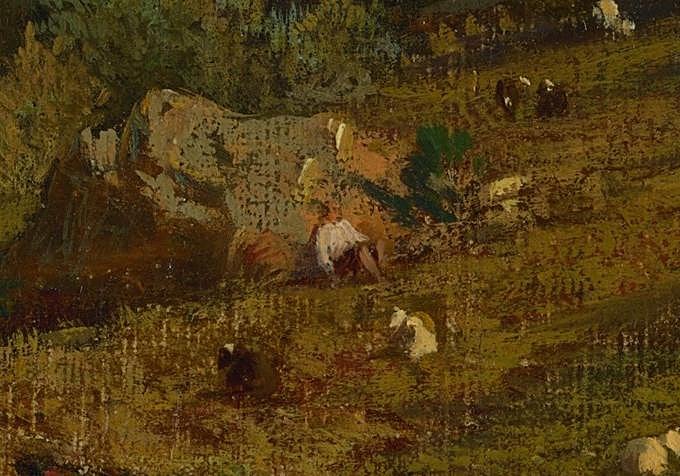
It is a bucolic scene: a beautiful Aragonese landscape with a herd of goats in the foreground. Carlos de Haes, meticulous and attentive to detail, paints the shepherd sitting on a rock on the banks of the River Piedra at dusk. But he is not the only person in the picture. His companion can only be seen by zooming in on the picture, on the other side of the river, on the right-hand side of the painting. There, leaning against a rock, another shepherd rests, surrounded by his sheep. A scene that goes unnoticed at first glance but which completes the story of that summer’s evening near the Monastery of Piedra.
Even brushstrokes
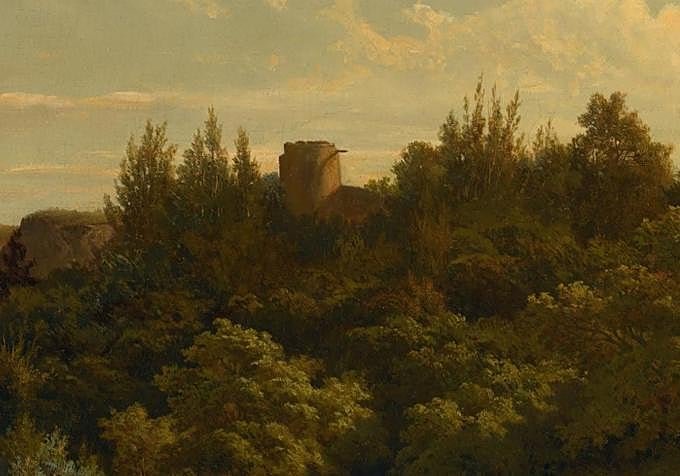
Carlos de Haes’s painting style is far more uniform than that of Diego de Regoyos. Even when viewed at close quarters, the gestural quality of his brushstrokes remains concealed, with delicate impasto used to create textures and a meticulous line, all within a restrained palette of earth tones and ochres.
Precise painting
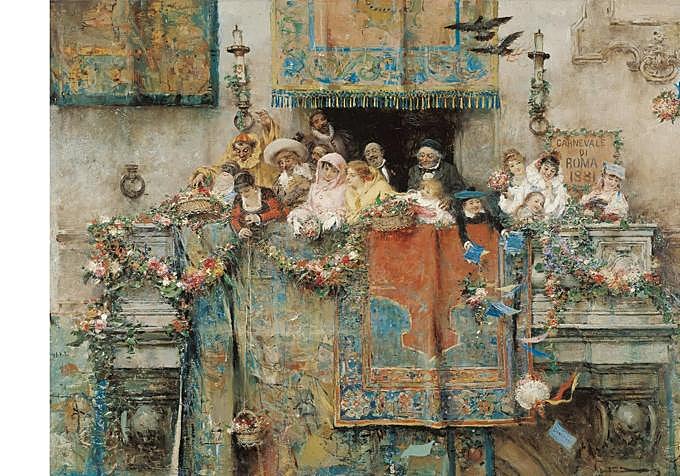
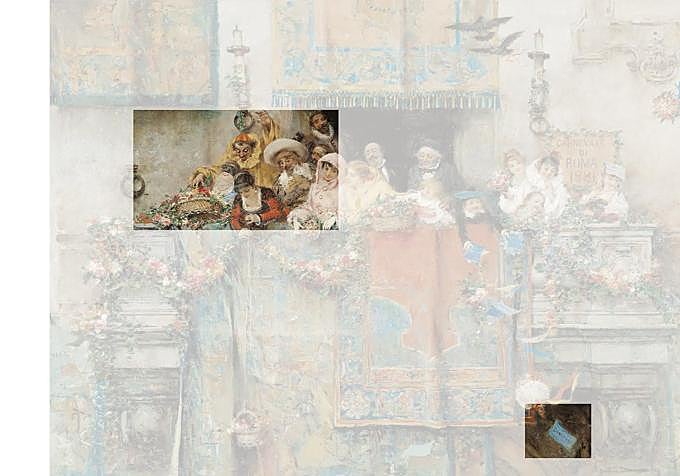
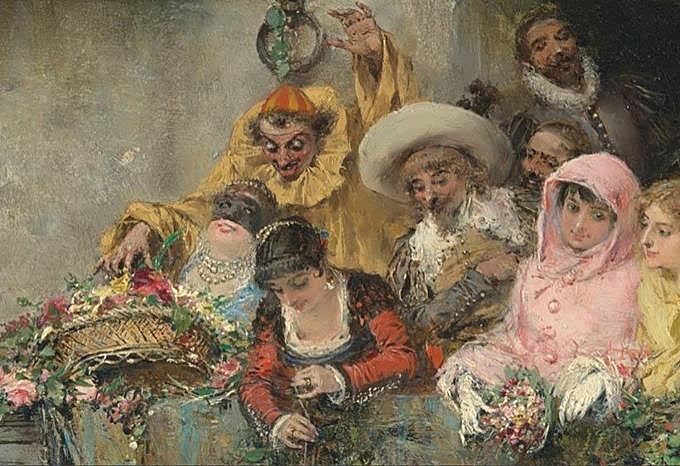
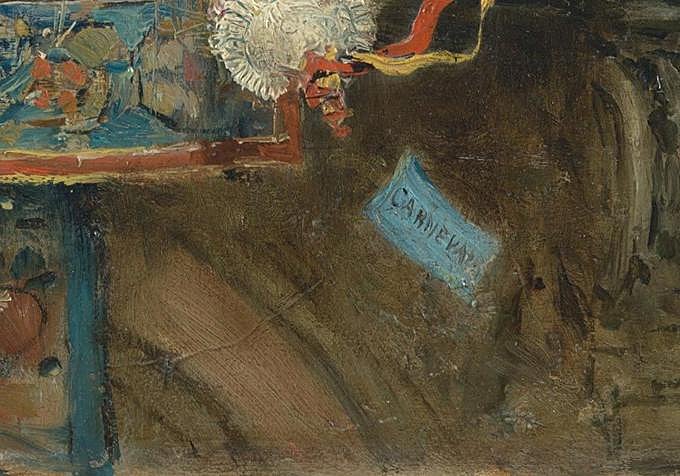
In a small painting (38.8 x 54.4 cm), Benlliure Gil depicts 16 figures on the balcony of an Italian-style mansion during the carnival celebrations. Each figure has a different expression and outfit, which the enlarged view allows us to analyse in depth. His is a meticulous, detail-oriented style that captures every nuance of a scene from everyday life.
An abundance of elements
The artist also takes care to draw the tapestries, garlands, candles and wall rings with precision, leaving no gaps. He even sketches a scene (of a king with a woman wearing an antique headdress) on the tapestry beneath the main one. These details go completely unnoticed at first glance: he could have left that section of the tapestry blank without affecting the overall composition. When viewed at 100 per cent magnification, the word ‘carnevale’ can be made out on the ‘aleluyas’ (sheets of paper with verses that used to be thrown from balconies during celebrations) being thrown by a child.
![[]](http://static.vocstatic.com/voc26/latest/assets/images/favicon/surinenglish/apple-touch-icon-57x57.png)