
In The Frame
Sharing a lifelong passion for music
Paul Mroček Declós regularly gives talks in English and Spanish about genres of music and is speaking to the Nerja Arts Society on 24 November about modern Spanish artists and bands
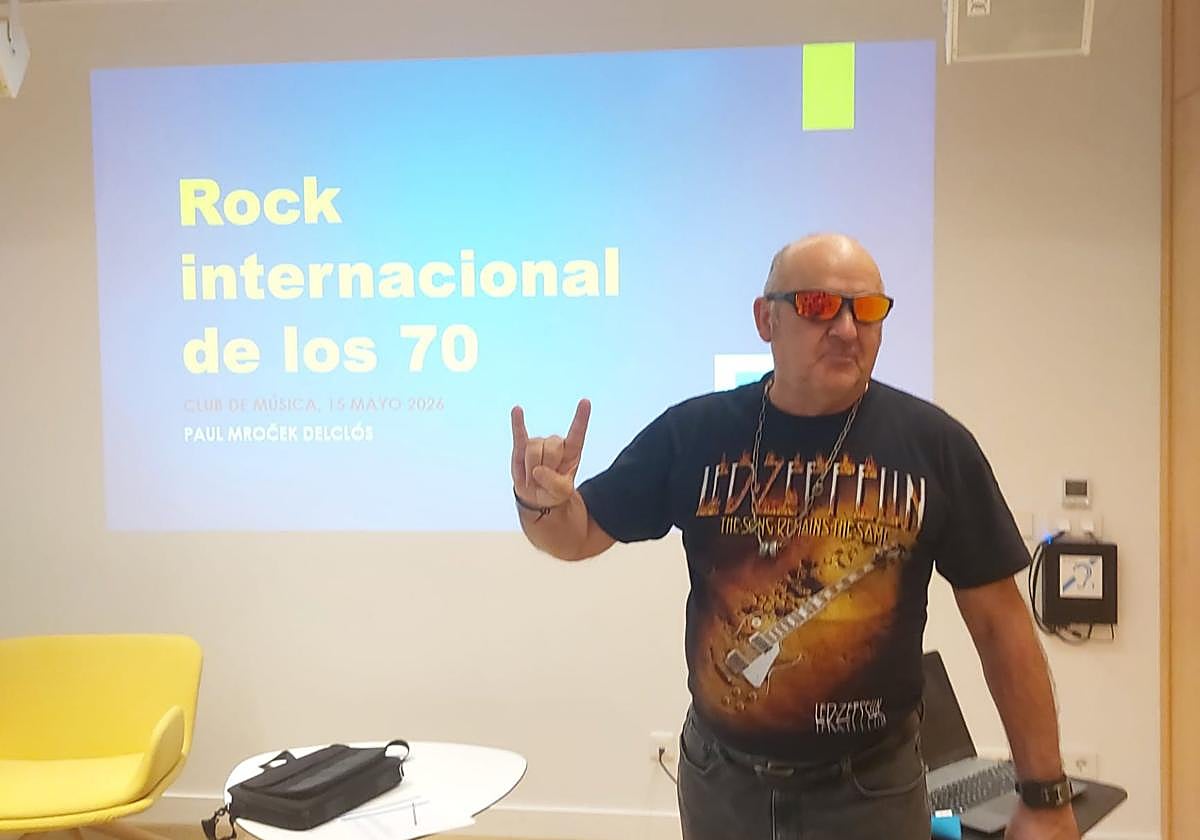
Jennie Rhodes
Paul Mroček Delclós has been collecting music albums since he was about 11 years old. The self-confessed “melomaniac”, who lives in Fuengirola, even makes lists of artists and groups from the countries he's going to visit on holiday and makes sure he finds record stores and people he can ask about the country's music scene.
He goes to concerts and festivals while he's abroad: “Even if I don't understand the lyrics, I just get into the flow of the music,” he says. And it's this passion that has driven him to start giving talks on a whole range of related subjects.
Paul will be speaking on modern Spanish music to the Nerja Arts Society on Tuesday 24 November when he aims to convey his passion for modern Spanish music to his audience.
He has offered to give a talk in English to Lux Mundi in Fuengirola about Spanish music as he is keen to help the foreign community and visitors to the Costa del Sol discover the huge variety available: “A lot of people think Spanish music is flamenco,” he says.
We agree that a big difference between native Spanish speakers and native English speakers is that there is a lot more exposure to songs sung in other languages on the airwaves, so Spanish people are much more familiar with English-language music than English-speakers with Spanish.
English classes in Worthing
Paul is bilingual as he was born in Coventry in England and spent the first four years of his life there before the family moved to Fuengirola in 1967.
He explains that with a Spanish mother and a Czech father - the couple met while living in England - the language used at home was English. His father, Paul explains, moved to England in “1948 or 1949” and his mother moved from Tarragona to the UK in the 1950s.
The couple met in the southern seaside town of Worthing while they were both attending evening classes to learn English and eventually moved to Coventry when his father found a job as a sales rep. However, in 1967, his father lost his job and that, coupled with the doctor's advice to move to Spain after Paul's older brother was diagnosed with asthma, led them to Fuengirola.
“My parents saw an advertisement in an English newspaper for a supermarket that was for sale in Los Boliches. An English couple were selling it and that's why the advert was in the newspaper,” Paul explains, adding that they decided to buy the supermarket and begin a new life in Spain.
Although Paul went through the school and university system in Malaga, he then decided to go to England to do a PhD. Paul studied Biology at the University of Malaga and did his PhD in food microbiology in Surrey.
But, following in the family footsteps - his mother taught Spanish in England and then English in Spain and his sister is also a teacher - Paul decided to follow the profession: “I love teaching. It's more interesting than working in a lab and looking down a microscope at how bacteria grow, or don't grow,” he laughs.
Paul was an English teacher at Spain's Escuela Oficial de Idiomas (official language school, or EOI) from 1994 until October this year, when he retired from the job which took him all around Andalucía and Spain including six years in Tenerife.
Paul still goes back to the UK regularly and says he still goes to visit an 'aunt', Eileen, who he explains was really his parents' best friend. He considers Eileen's children his “cousins” and Eileen “is now 92,” Paul says.
Early musical memories
He has never really had a connection with Czechia, however, despite being half Czech: “I have visited twice and have a cousin there but we're not really in touch. I don't speak Czech. I feel mainly Andalusian with a touch of English.”
As far as his passion for music goes, Paul says he grew up listening to Spanish and English-language songs on the radio, although the first music he really remembers hearing was Spanish.
“In Spain in the early 1970s on Spanish TV all you had really were Spanish bands like Formula Quinta, El Diablo and Triana, who have always been my favourite Spanish band.
Then he says that the first cassette he remembers being given was The Beatles' A Hard Day's Night. “I still have that cassette,” Paul reveals.
As for his favourite genre, Paul is clear: “rock in all its forms”. He says that while he listens to music in many different languages, Pink Floyd, King Crimson, Fleetwood Mac, Bruce Springsteen, The Beatles and Genesis are definitely his favourites and that he prefers to listen to English-language music.
Music was always present in the house when he grew up, “My parents loved music and listened to a lot: Elvis, Bing Crosby, Frank Sinatra, Tony Bennett, Perry Como and so on.”
This passion extended into his lessons at the EOI and Paul even has a radio programme which he started nine years ago while he was living in Tenerife. 'En la Corte del Rey Carmesí' (in the court of the crimson king), after the title of an album by King Crimson, which Paul says “completely blew my mind” as a 15-year-old just discovering music. The programme has also been broadcast on Radio Mijas for around five years and Paul focuses on a particular band or artist in each episode.
Festivals and ferias
He also teaches an online university course to people over the age of 55, which looks at the history of modern music from jazz to country, and brings it up to the present day.
Without giving too much away about the talk in Nerja, Paul says he hopes to give an insight into who the main Spanish artists are and encourage people to go to festivals and concerts to discover Spanish bands and singers.
“Lots of Spanish groups perform down here, we have the Marenostrum venue in Fuengirola and others and loads of Spanish people go to see concerts there.”
Paul goes on to say, “You don't always have to understand the lyrics. Seventy per cent of Spanish people who go to see Sting or whoever perform here don't understand the lyrics to British or American songs.”
Paul adds, “My interest is in letting people know more about Spanish artists. Nowadays it's so easy to look up on the internet with subtitles, the meaning of lyrics. It's a question of venturing into Spanish music. Go to the festivals, go to the ferias, even if you don't understand the lyrics and the feria concerts are normally free.”
The talk on Spanish modern music is on Tuesday 24 November, which Paul points out is very close to Santa Cecilia on 22 November who is the patron saint of music.
The talk is part of the 2026-27 Arts Society programme of lectures and will be taking place at the Centro Cultural in Nerja at 6pm.
