
In the frame
From the Ritz in Paris to rural Andalucía
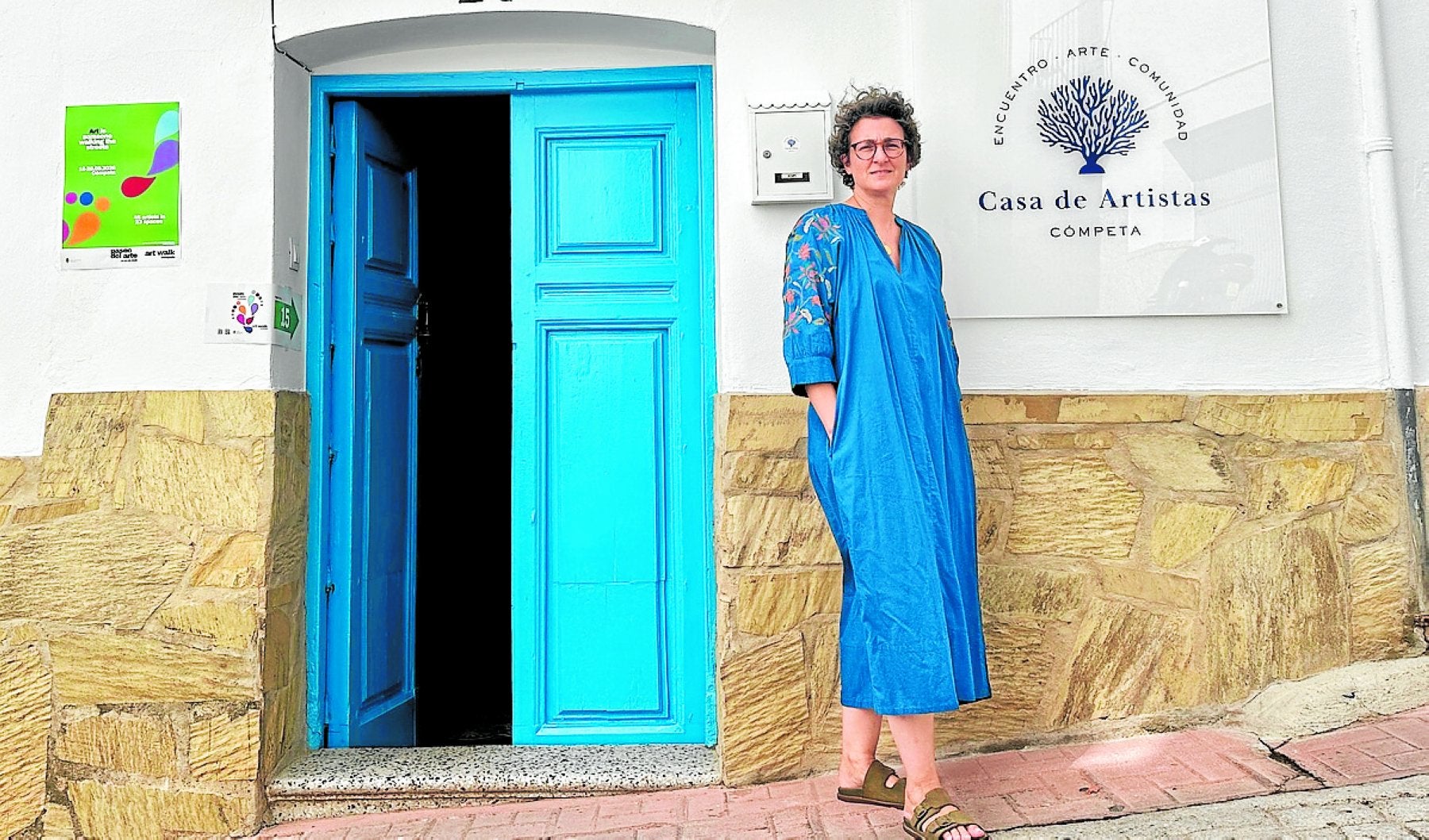
Caroline Theodor has recently opened Casa de Artistas in Cómpeta, where she and her partner bought a house after falling in love with the Axarquía when they came for a wedding in 2015
Jennie Rhodes
Belgian-French visual artist Caroline Theodor is the brains behind Casa de Artistas, a new, not-for-profit space for arts and community centre in Cómpeta, which officially opened as part of the Axarquía town's Art Walk in September.
Caroline explains that through the new venue she aims “to build a creative bridge between international contemporary artists and the local Andalusian community”.
Although Caroline, 52, has settled in Cómpeta, she has travelled extensively, both through her own work and the work of her father. Born in Montpellier, France, Caroline later moved to Belgium when her children were born and reveals that she considers herself “Belgian at heart”.
A father's influence
She also spent six years living in the USA as a child and teenager thanks to her father's work and says that it had an enormous influence on her own artistic path.
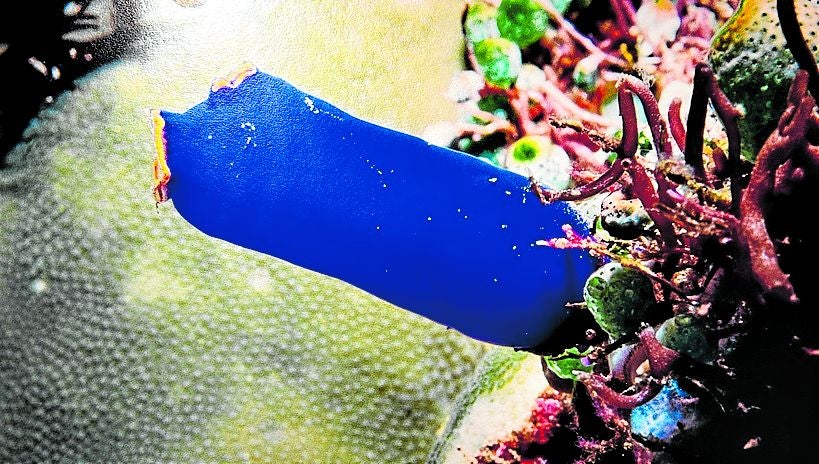
“He was a marine biologist and one of the very first Belgian divers and underwater photographers,” Caroline explains.
She adds, “At 92 he published a book of his underwater photographs taken between the 1960s and 1980s. He's the one who gave me my love of photography.”
Her father's work also took the family to some extraordinarily beautiful parts of the world: Svalbard, the Philippines, India, Bangladesh, Iceland, Sri Lanka, and more.
“Those journeys shaped me as much as any art class could have, they opened my eyes to how differently people around the world see beauty, tell stories and express themselves and they gave me a real hunger for other cultures,” Caroline explains.
During the Art Walk, along with her own work, Caroline showed her father's underwater photography. Her own work, she says, is also “a homage to my father's final years with dementia” which “struck a chord with visitors and allowed sincere exchanges”.
Before turning her hand to art, Caroline studied hotel management and worked at the Ritz hotel in Paris, then a few years later she studied criminology.
At the Ritz, Caroline worked for the head of sales and marketing and says of that time, “It was really amazing being able to call this palace my workplace. As all details in the hotel itself, everything needed to be impeccable. I used to love walking down those corridors as if in a life-size maze.”
However, when Caroline's daughter Emma was born, the family decided it was time to move back to Belgium. She also decided to take a career break and went “back to school” to study a Masters in Criminology.
After her son Douglas was born, Caroline did an internship in the police and did all of the tests required to get into the sector, but says she “ended up pursuing a more creative career”.
It was a trip to Frigiliana in 2015 for a friend's wedding when Caroline first fell in love with the Axarquía. She explains, “Everything about it moved me; the beauty of the white villages against the mountains, the wild, dramatic landscapes between the sea and the sierra, the particular quality of the light, the smell of the countryside.”
Village life
It wasn't just the nature and scenery; Caroline was also drawn to the “warmth and openness” of the people and “the way village life is still built around genuine human connection”.
It was then that she decided that she could live here; three years later she and her partner, Phillipe, known as Felipe locally, bought a house in the 'campo' near Cómpeta. In 2022 the couple decided to move into the town itself.
Caroline says she only really started to take photography more seriously when she and Phillipe bought the first house in Cómpeta, but it wasn't until the Covid pandemic in 2020 that she really had time to explore the artist inside her and that is when she discovered collage and “fell completely in love with the technique”.
Since then she has dedicated her time to her art and this led to opening Casa de Artistas. Caroline admits that she had “dreamed” of having her own studio, workshop and art gallery, but above all she wanted to create a project “that could be a way of giving back, a kind of return for everything Cómpeta has given me”.
“Everything moved incredibly fast. At the end of May this year, I visited a townhouse on a whim, on my own. I told myself, if it's still for sale when I come back with my partner in early July, we'll go see it together. He fell in love with it too. The very next day I made an offer and by the end of the month I was the happy owner of what would become Casa de Artistas.”
A different approach
Cómpeta has a long history of international artists and galleries; workshops and residencies have come and gone over the years, but Caroline explains that what makes Casa de Artistas different is that it wasn't created to be a commercial gallery or just another shop window. It's built as a nonprofit cultural engine.
“We want to be a bridge between local and international artists, rather than operating as an isolated bubble”, she says, adding that they collaborate with the town hall and the local school as well as local residents and international artists.
As well as French and English, Caroline also already spoke Spanish before she came here, but says she started classes again to brush it up and therefore be able to “talk properly” with her neighbours and “truly belong here”. Although up until now the house was used for holidays, Caroline points out that now she has Casa de Artistas she is spending much more time here.
When she's not making her own art, Caroline says that she can be found “visiting exhibitions, travelling, spending time with artist friends and practicing yoga”. Caroline also sees a long-term future in Cómpeta “as long as I'm still fit enough to walk up and down the steep streets it's good for me,” she concludes.
There is a call for artists currently open for the forthcoming exhibition, Encuentros, which will take place in December.
![[]](http://static.vocstatic.com/voc26/latest/assets/images/favicon/surinenglish/apple-touch-icon-57x57.png)