
Adventure
Couple set for fossil-free world voyage, starting from Gibraltar
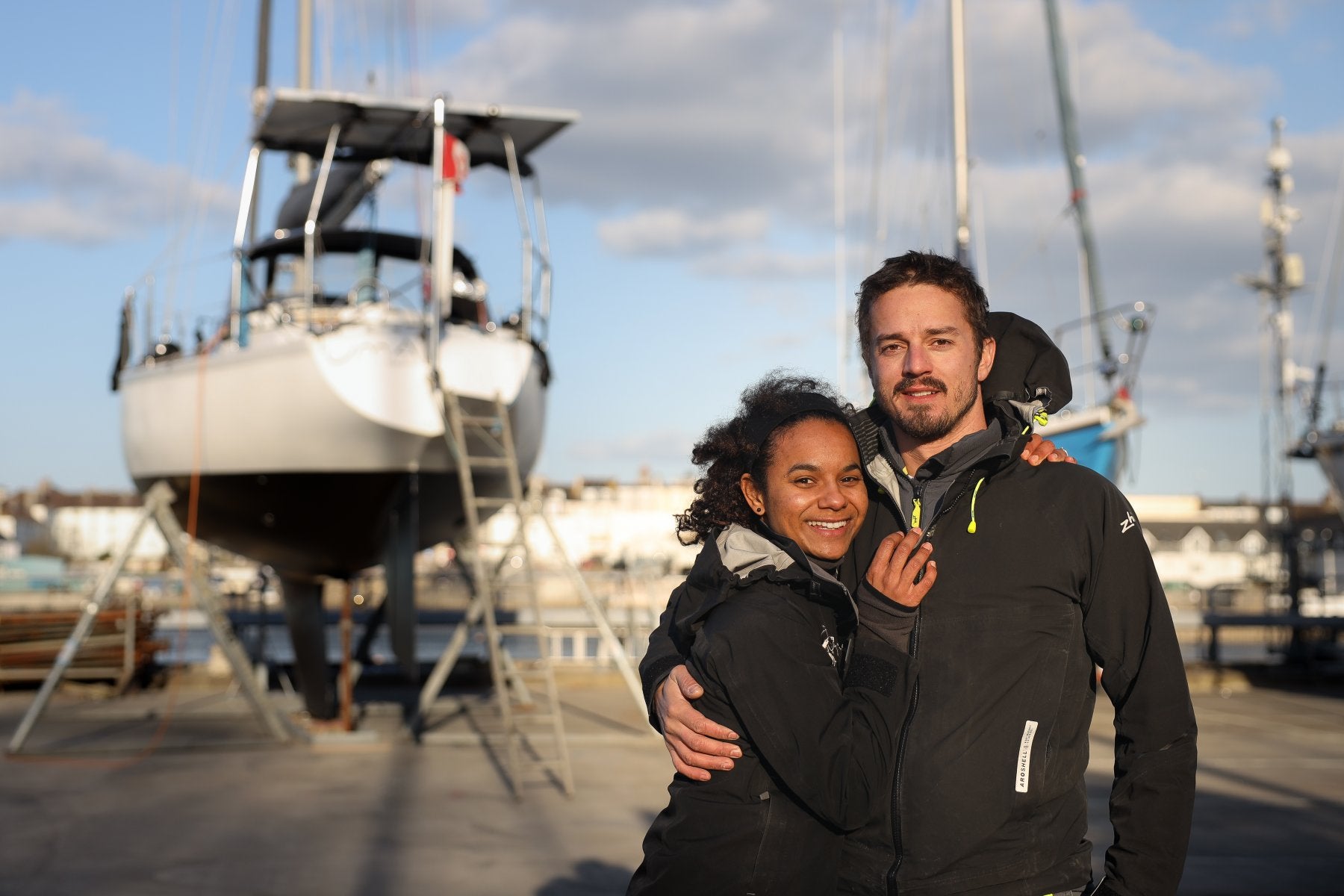
Solar power Dan and Kika Deckert set sail next month in a bid to become the first to circumnavigate the globe in an all-electric boat
Tony Bryant
An adventurous duo are preparing to embark on an all-electric circumnavigation of the world without using fossil fuels for propulsion or onboard power generation. If successful, the couple believe this would position them as the first all-electric cruising sailboat to complete a circumnavigation.
Canadian architect and filmmaker Dan Deckert, 38, and his wife, Kika, 36, hope to complete the voyage within 12 months. Sailing will remain their primary means of movement, while solar power, battery storage and regeneration under sail will support their propulsion, navigation, communications, cooking and daily life aboard.
The couple are planning to set sail from Gibraltar, weather permitting, during the first week of November, following a route south-west across the Atlantic Ocean, around Cape Horn, through the South Pacific, Australia and the Indian Ocean, around the Cape of Good Hope and back across the Atlantic.
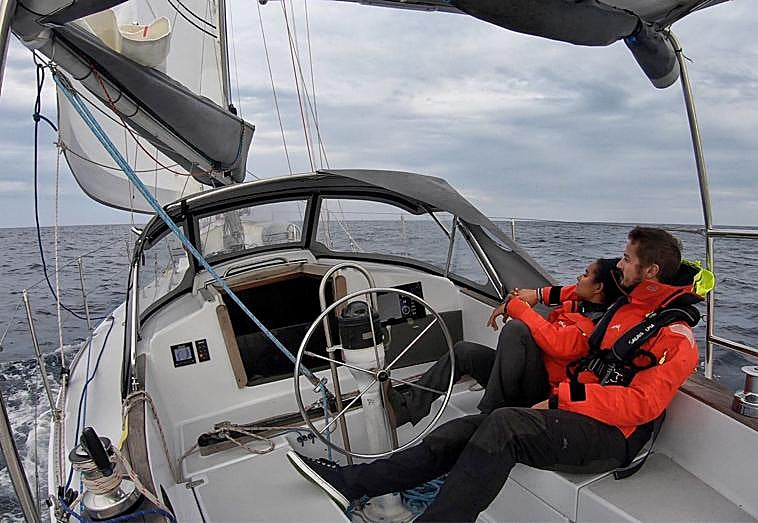
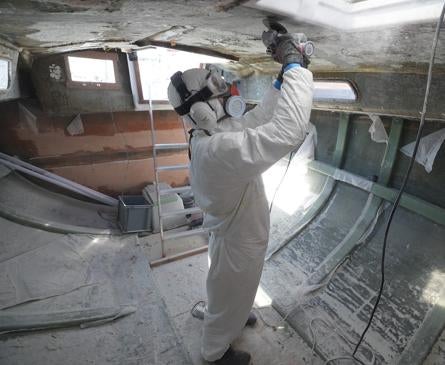
Dan and Kika met while they were both studying architecture in Atlanta, Georgia, and they soon discovered a shared fascination with travel and design. A few months after graduation, with no sailing experience, the couple bought Uma, a 1972 Pearson 36 sailboat for 3,000 dollars, and spent the next decade rebuilding her into a self-sufficient home.
“When we first started looking at sailboats back in 2014, we had one rule: we weren't going to go into debt to pursue our dream. The problem was that we were fresh out of college, had very little money and knew absolutely nothing about sailing. So, our options were pretty limited. Through our research, we figured that a boat between 36 and 40 feet would be the ideal size for the two of us to live aboard and sail around the world,” Dan tells SUR in English.
3,000
dollars
was the initial cost of the boat that was converted into an all-electric cruising sailboat
The couple say they intend to challenge technology, but perhaps even more importantly, challenge themselves and some of the assumptions people have about what is possible.
“Our goal is to complete a circumnavigation relying entirely on renewable energy. We believe that with proper planning, efficient systems, and the right mindset, long-distance electric cruising doesn't have to require a multimillion-dollar racing yacht or mean sacrificing everyday comforts. We have a water maker, an electric oven, air conditioning, a washing machine and plenty of other modern conveniences. The challenge is learning to manage the energy available to us,” he says.
Dan is responsible for much of Uma's technical design, engineering, fabrication and onboard systems development, while Kika, who left her home in Haiti at the age of 18 to study architecture in the USA, shapes the visual storytelling, design and communication: however, they say that they “never set out to become experts”.
“In 2016, we set sail for the Caribbean with almost no sailing experience and only the bare essentials: sails, an anchor, solar panels, a bucket for a toilet and a garden sprayer for a shower. Our philosophy was simple: start sailing, learn along the way and improve the boat as we go,” Dan says.
Today, Uma has become one of the world's most recognised electric-sailing projects. The latest rebuild, which they call Uma 3.0, is the most complete transformation yet. It combines upgraded electric propulsion, expanded solar capacity, battery storage, a redesigned interior and systems built for long-distance offshore sailing.
30,000
nautical miles
is the distance travelled after nearly a decade of adventures
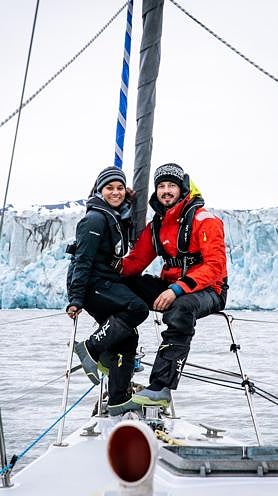
“After several years exploring the Caribbean, we returned to North America in 2019 for another refit before crossing the North Atlantic to Europe. We then sailed north along the Norwegian coast, crossed the Arctic Circle, reached Svalbard, and eventually made our way south into the Mediterranean in 2021.
“By 2023, after nearly a decade of adventures and more than 30,000 nautical miles, Uma was showing signs of structural weakness that we could no longer ignore. Rather than simply repairing what was broken, we saw an opportunity to apply everything we'd learned over the previous decade and completely reimagine what this 1972 sailboat could become,” he explains.
With their backgrounds in architecture and design, they approached the rebuild almost as if they were designing an entirely new vessel, using Uma's original hull as the foundation. Every decision was guided by their vision of what a modern, self-sufficient cruising sailboat should be.
Challenges and uncertainty
Dan and Kika face several challenges relying entirely on renewable energy for propulsion, especially the prospect of prolonged bad weather and rough seas.
“Our sails are our primary means of propulsion. We know how to balance and trim the boat in different conditions, and we use weather information to avoid dangerous situations whenever possible. In periods of limited renewable energy, we simply reduce consumption and prioritise the systems that matter most. And if modern navigation technology were to fail completely, we still have traditional tools, including paper charts and celestial navigation. Technology makes our lives easier and quieter, but good seamanship is what allows us to keep sailing,” Dan says.
36
feet
is the length of the 1972 Pearson 36 sailing boat
Dan explains that making it safely around the world and “closing our loop would be an incredible achievement”. He says that part of what makes this journey exciting is the “uncertainty”.
“If we knew for certain that we'd succeed, it wouldn't really be much of a challenge. Success is about more than completing a route on a map. We want to document the journey authentically, including the challenges, mistakes, limitations and unexpected discoveries along the way. If our experience helps others rethink what's possible, question conventional solutions, or feel inspired to pursue something they previously thought was out of reach, that would make the journey meaningful regardless of the final outcome.
“And if we make it back safely with our boat, our relationship and our sense of adventure intact, we'd consider that a pretty big success,” he concludes.
Read more features from the SUR in English Lifestyle section
