
1 May - International Workers' Day
1 May in Spain: A holiday to mark the struggle for workers' rights
International Workers’ Day is observed in Spain and around the world to honour the achievements of the late 19th-century labour movement
Tony Bryant
A national holiday in Spain, as it is in many other countries, 1 May has become one of the most significant dates on the labour calendar, a day which coincides with the European spring festival of May Day.
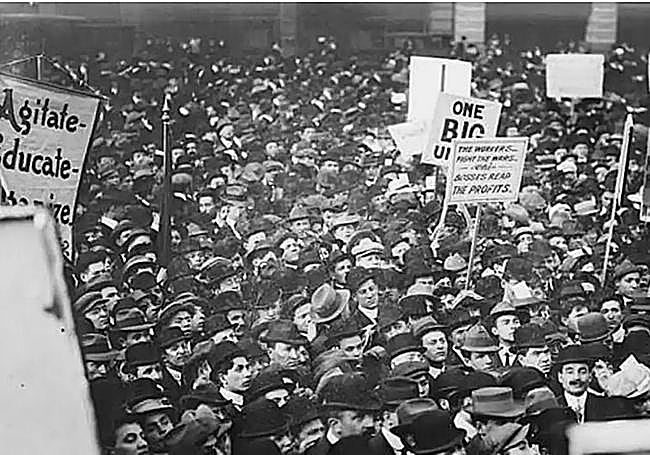
Each year, International Workers' Day is observed to honour the historic struggle for workers' rights and to recognise the achievements of the labour movement. This holiday has its roots in the labour movement of the late 19th century, which fought for and eventually secured the eight-hour working day. Its origins are closely linked to the Haymarket riot (sometimes referred to as the Haymarket massacre) in Chicago, whose 140th anniversary is marked this year. The demonstration, which took place on 1 May 1886, ended in violence and led to five union leaders receiving the death sentence for offences committed during the rioting.
However, this holiday existed in some European countries since the end of 18th century, although it was not held on 1 May.
In 1889, the Second International established 1 May as International Workers' Day to honour the so-called Chicago Martyrs and recognise the broader struggle for workers' rights.
The Second Socialist International, commonly known as the Second International, was a political alliance of socialist and labour parties founded in Paris in 1889. Emerging at a time of expanding industrial working-class unrest, it united autonomous national parties in an international federation. The organisation carried forward the work of the International Workingmen's Association (the First International, 1864–1876), inheriting both the intellectual legacy of the German-born socialist thinker and revolutionary activist Karl Marx and its long-standing conflicts with anarchist movements.
Unfounded concerns
Ahead of the first Labour Day in Spain in 1889, socialist groups feared that turnout on the designated date would be too low and initially considered postponing the celebration until Sunday 4 May. However, those concerns proved unfounded, as workers had already begun organising demonstrations for 1 May after news spread of the decision taken in Paris earlier that year.
Two separate demonstrations were held in Madrid - one socialist and the other anarchist - and both took place peacefully without any incidents. In contrast, violence broke out in other regions of Spain, including the Basque Country, Valencia and Barcelona, which ultimately led to the banning of the 1890 demonstration.
Spain's first Labor Day was considered a clear success because, even though it did not bring immediate nationwide improvements, it made both the government and employers recognise the importance of addressing workers' concerns.
In response to the Spanish authority's decision to ban May Day the following year, socialists limited their observance to a work break and private activities, while anarchists continued with a one-day strike.
The following year, May Day became an International Day of Protest, forcing both groups to reconsider their approach. Seeking to comply with the law, the socialists shifted toward peaceful celebrations focused on labour rights rather than social revolution. However, the anarchists, frustrated by their inability to stage protests or pursue revolutionary aims, gradually lost interest in participating in May Day events.
But when did the date officially become a national holiday in Spain?
Although the first Día del Trabajador in Spain took place in 1889, it was not until 1931, during the Second Spanish Republic, that 1 May was formally recognised as an official public holiday. The way Spaniards celebrate May Day has varied greatly since then, mainly due to the dictatorship of Francisco Franco (1939-1975). After being banned during Franco's reign and replaced with La Fiesta de la Exaltación del Trabajo on 18 July (the same date as the anniversary of the National uprising), it was restored as a national holiday in 1978 with Spain's return to democracy.
Franco considered that May Day had been established by his enemies - the socialists and communists. During his rule, the event stopped being a day focused on workers' rights and instead became a day expressing solidarity with employers.
Since 1978, it has been the perfect instrument for unions to emphasise the needs of Spanish employees.
The 'puente'
Since this year's holiday falls on a Friday, it automatically creates a three-day weekend ('puente') nationwide. Furthermore, in some parts of Spain, this long weekend can be even longer. Madrid, for example, celebrates its Fiestas de 2 May, which marks the 1808 uprising against the French that triggered the War of Independence. As this falls on a Saturday this year, the holiday is moved to Monday, creating a four-day weekend for Madrid residents.
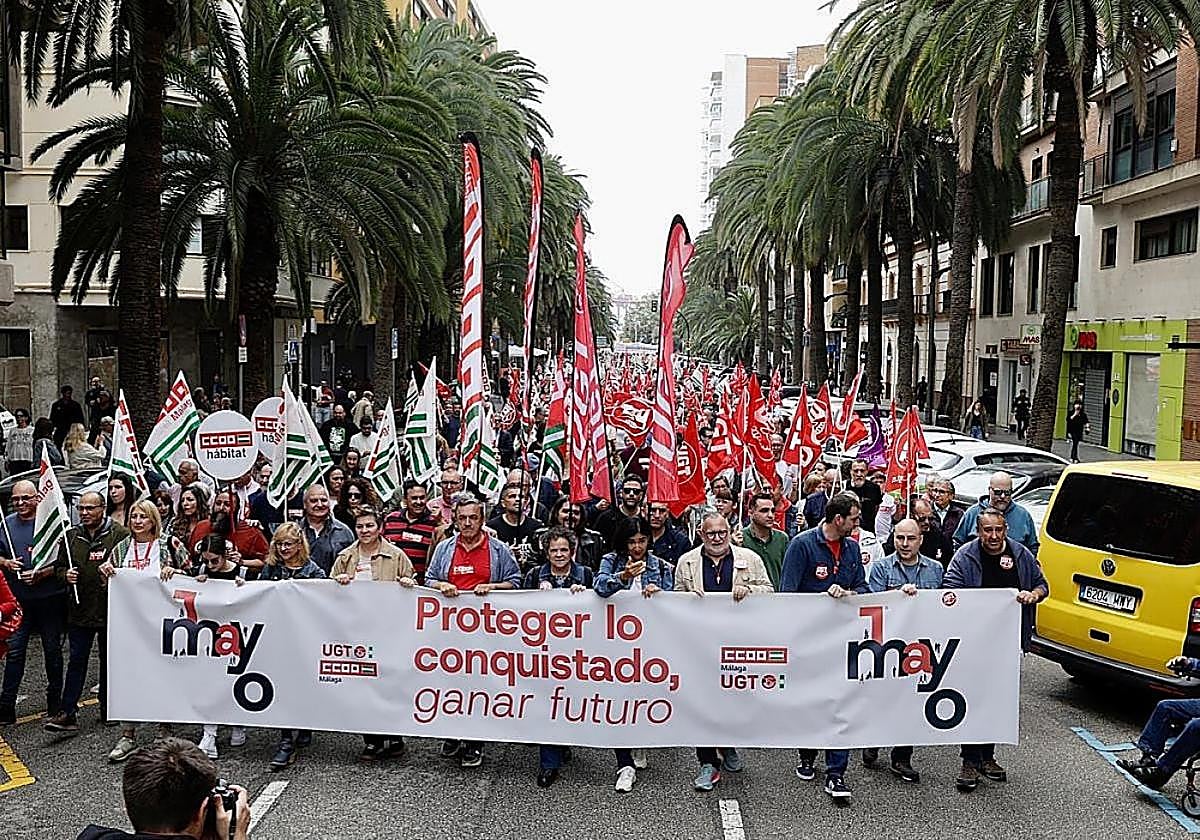
The traditional May Day demonstration in Malaga last year focused on "protecting what has been won" in the face of the rise of extreme right-wing political parties and governments all over the world. Thousands of people took to the streets of Malaga city to defend their rights in the face of the ultra-right wave.
In the province, as in the rest of Spain, the UGT and CC OO unions jointly organise the planned demonstrations, taking turns each year to host the press conference presenting their demands. This year, Malaga has the responsibility.
As every year, the trade unions in Malaga are calling for a mass mobilisation again this year, with a demonstration set to depart at 11.30am from Muelle Heredia.
This year, the unions and workers are demanding wage improvements, better working conditions, a subjective right to housing and more democracy in order to prevent the deregulation of labour rights.
![[]](http://static.vocstatic.com/voc26/latest/assets/images/favicon/surinenglish/apple-touch-icon-57x57.png)