
Gardening in southern Spain
Madagascan palm
This semi-succulent species features a grey, spiny trunk topped with a crown of long, thin, dark green leaves. Mature specimens may produce fragrant white flowers resembling jasmine
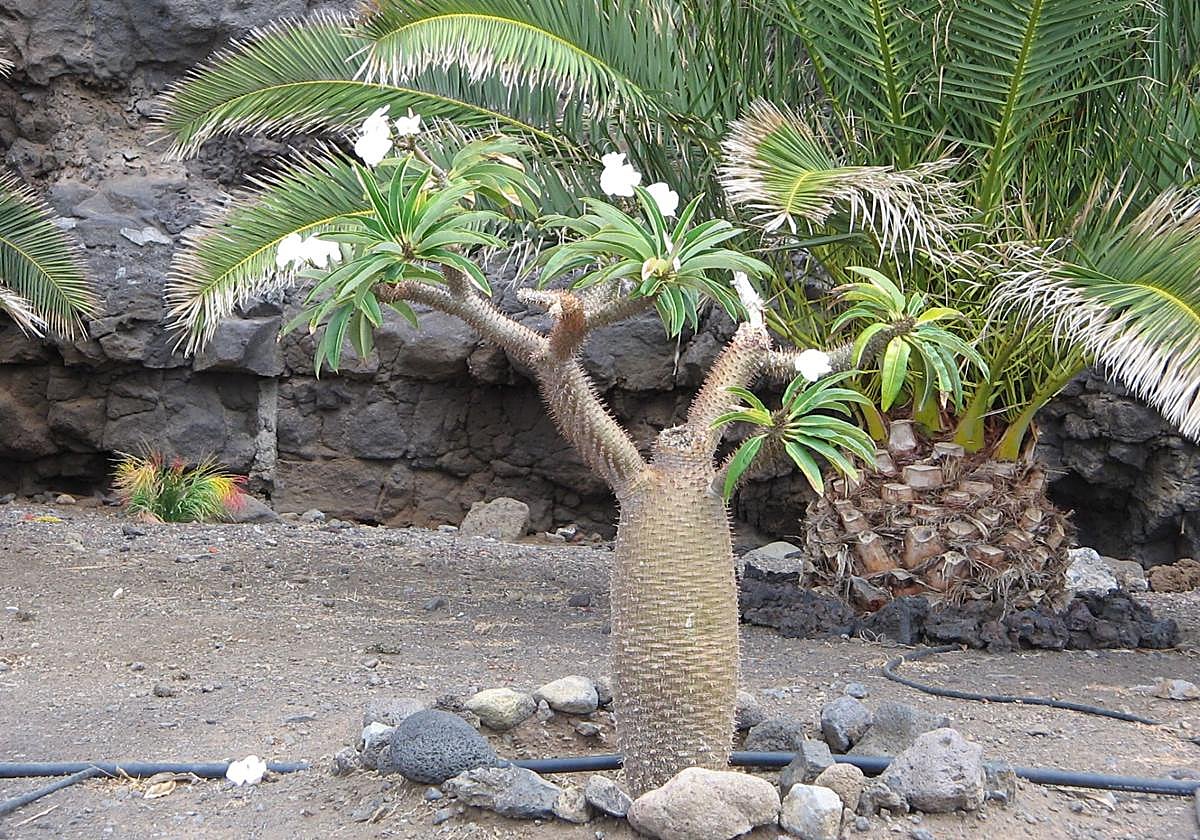
Denise Bush
Despite its common name, Pachypodium lamerei, or the Madagascar palm, is not a true palm. It is a succulent shrub or tree native to Madagascar and belongs to the dogbane family, Apocynaceae.
First described by Emmanuel Drake del Castillo in 1899, the genus name derives from the Ancient Greek pachus and podion, meaning “thick foot”, which refers to its characteristic swollen base. The species name lamerei may honour a nineteenth-century botanist of that surname.
This semi-succulent species features a grey, spiny trunk topped with a crown of long, thin, dark green leaves. Mature specimens may produce fragrant white flowers resembling jasmine during spring or summer. Grown in ideal conditions, it may achieve full height in around fifteen years. Pot- grown specimens need repotting every two to three years.
Pachypodium lamerei thrives in bright conditions with direct sunlight and prefers moderate temperatures and low humidity. To acclimatise the plant to brighter locations without risking leaf scorch or bleaching, gradually increase its direct sunlight exposure by an hour each week from autumn to late winter, up to a maximum of four hours daily.
In cooler climates, the plant must be brought indoors when temperatures drop below 4C. During its dormancy period, it may lose its leaves entirely. Water sparingly, allowing the soil to dry out almost completely between waterings, particularly during winter. Overwatering can cause leaf yellowing, browning, soil mould and root rot.
A well-draining cactus or succulent soil mix is an ideal potting medium. Apply a balanced fertiliser every four to six weeks during the active growing season. Repotting, pruning and propagation are best undertaken in the growing season. When pruning, remove dead, yellowing or damaged foliage to maintain shape and promote new growth.
Propagation can be achieved via stem cuttings that have been allowed to callous before planting in sandy soil, or through seed. To propagate by seed, collect dried pods from mature plants in late summer or autumn, take out the seeds, soak them for 24 hours and sow in a warm, moist, well-drained soil.
All parts of Pachypodium lamerei are toxic to humans and pets if ingested and the sap can cause skin irritation. Wear protective gloves when handling the plant and position it out of reach of children and animals.
![[]](http://static.vocstatic.com/voc26/latest/assets/images/favicon/surinenglish/apple-touch-icon-57x57.png)