
History: Spanish Civil War
Looking back at the 1936 uprising
During the brutal three-year conflict, violence and destruction was committed by both the Republican and Nationalist sides, but the nature, timing and scale of the atrocities varied across regions
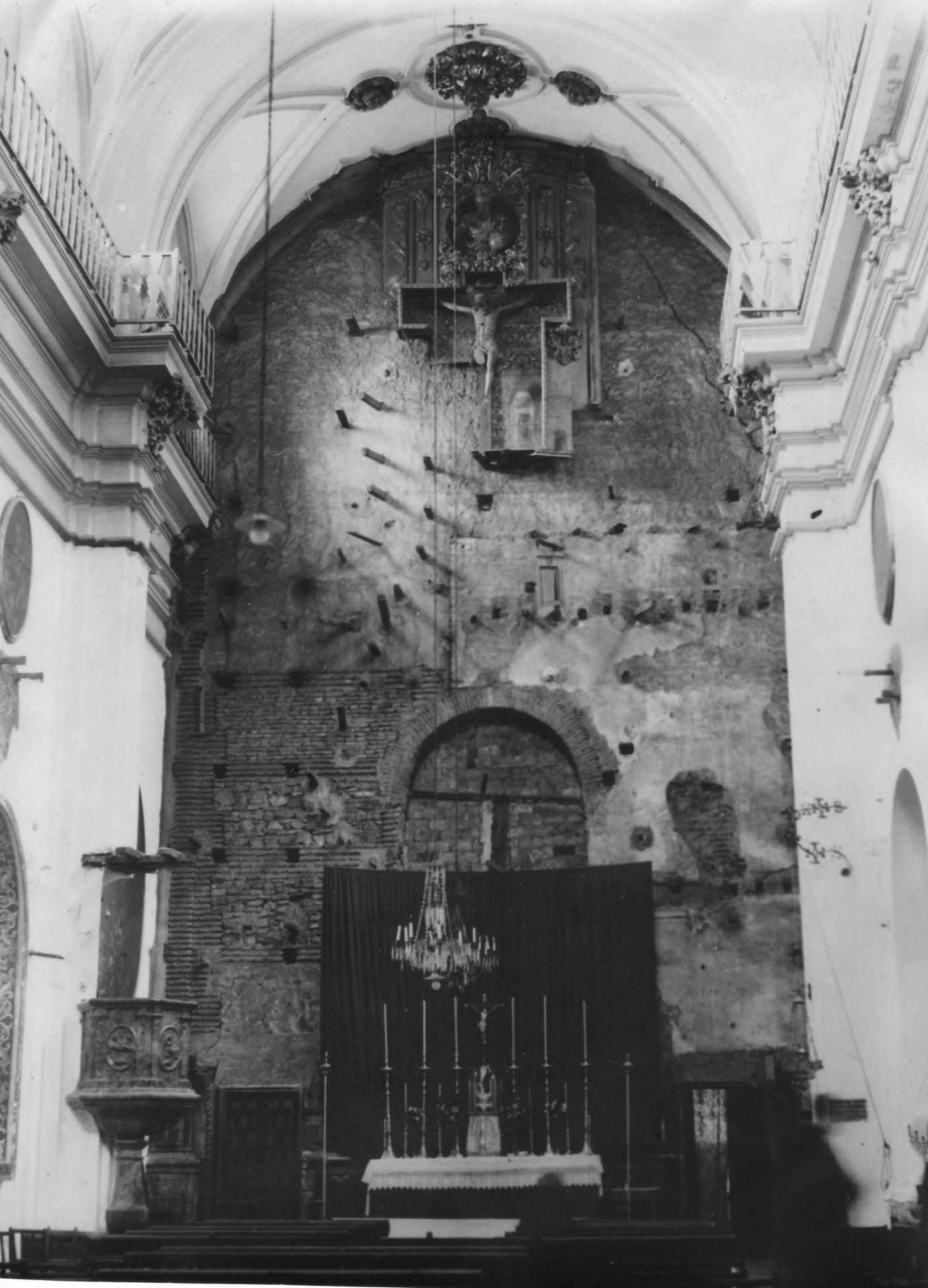
TONY BRYANT
This weekend marks the 90th anniversary of the beginning of one of the most horrifying chapters in modern Spanish history, the Spanish Civil War (1936-39). The conflict had been simmering for many years and was triggered by a series of events, starting in April 1931, when the Second Spanish Republic was proclaimed and King Alfonso XIII left Spain for exile.
This was followed by an unsuccessful military uprising against the Republic in August 1932; an abortive miner's revolt in Asturias in October 1934; and the Popular Front coalition winning the general election in February 1936, when a new republican government was formed.
The assassination of the Monarchist leader Calvo Sotelo, a leading figure during the Second Republic, was a prelude to the triggering of the right-wing military coup against the Republican government proclaimed in Spanish Morocco on 17 July 1936.
During the conflict, violence was committed by both the Republican and Nationalist sides, but the nature, timing and scale varied across regions. In Malaga, for example, atrocities by Republican forces occurred during the first months of the war. After the military uprising in July 1936, revolutionary militias - not always under effective Republican government control - arrested and killed people suspected of supporting the Nationalist rebellion. Victims included conservative politicians, monarchists, members of right-wing parties and landowners, many of whom were executed without formal trials.
Religious persecution
One of the most severe aspects of Republican violence in Malaga was anti-clerical persecution, which targeted symbols associated with the Church and conservative elites. Those opposing the uprising singled out Catholic priests, monks and nuns. The Diocese of Malaga estimates that more than 100 members of the clergy from the province lost their lives during the period of Republican control of the city, though several historians contend that the true number was even greater.
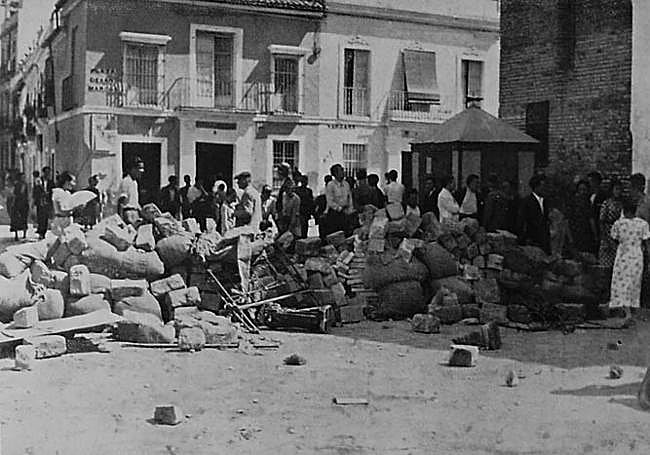
Several churches in Malaga were burned, looted and desecrated, while priceless religious artwork, images of the Virgin and Christ, and the buildings where they were located, were destroyed. Among them were the churches of Santiago Apóstol, Santo Domingo, San Felipe Neri, San Pablo and El Sagrario, which were burned and badly damaged, resulting in the destruction of many priceless altarpieces.
Seville taken early
However, in Seville, much of the city's historic architecture, as well as its religious art and iconic images were saved. The fact that the Nationalists took Seville with relative ease on 18 July 1936 stopped the republican supporters looting and sacking churches and religious institutions, as they had done in provinces such as Malaga.
One of the most severe aspects of Republican violence in Malaga was anti-clerical persecution, which targeted symbols associated with the Church
General Franco had the support of the Church during the war because he granted it significant privileges and control over various aspects of Spanish society. The regime and the Church worked together in various ways, and the war was often portrayed as a crusade to protect Spain's Catholic identity from the secular and anti-clerical forces of the Republicans.
American historian Peter Wyden claimed that “this was no more a Spanish civil war than the Vietnam war was a struggle between North and South Vietnam”. In his book, The Passionate War: the narrative history of the Spanish Civil War, Wyden refers to the conflict as a “Holy War for both sides, the overture to fascism and WWII”.
The regime and the Catholic Church were closely allied throughout Franco's rule, because the dictator considered the Catholic Church to be one of the pillars of his authoritarian regime.
The atrocities that occurred in Malaga resulted in the destruction of a significant portion of its religious heritage, in contrast to Seville, where much of this legacy was preserved. Many of the religious images that are paraded through the streets of Malaga today are relatively new, sculptured in the 1940s and '50s to replace those that had been destroyed during the war.
In Seville, however, the majority of these iconic figures date back centuries, seeing as they were spared the atrocities meted out in other regions. This is one of the reasons why the majority of Sevillians claim superiority over Malaga at Easter.
Had Seville not fallen on 18 July, and instead endured the prolonged ordeal suffered by so many cities, the fate of its architectural treasures would have hung in the balance
Had Seville not fallen to the Nationalists in the opening days of the Civil War, and instead endured the prolonged ordeal suffered by so many other Spanish cities, the fate of its incomparable architectural treasures would have hung in the balance. One shudders to imagine what might have become of the Giralda, the Plaza de España or the Alcázar fortress had Seville been subjected to the kind of devastating aerial bombardment that reduced Guernica to ruins. The prospect of such a cultural catastrophe is almost too dreadful to contemplate.
The battle of Malaga
The Battle of Malaga, fought between 3 and 8 February 1937, ended with the city's swift collapse before a determined Nationalist offensive. Led by General Queipo de Llano, the assault drew strength from the Italian Corpo Truppe Volontarie (CTV), Moroccan regulars, relentless German and Italian air power, and sustained naval bombardment, overwhelming the Republican defenders in a matter of days.
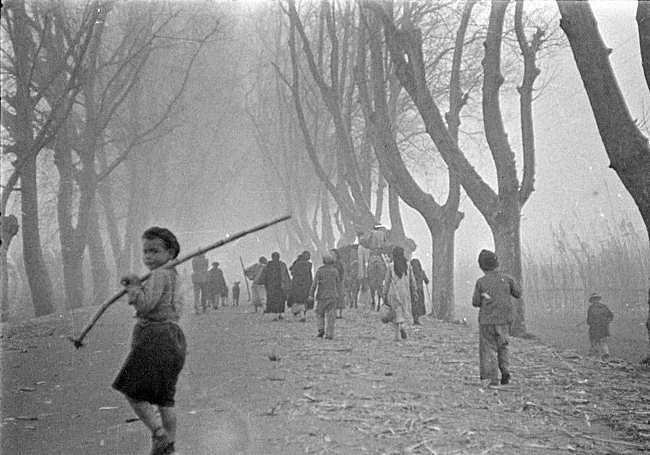
As Nationalist forces entered Malaga on 7 and 8 February, tens of thousands of civilians, accompanied by retreating Republican soldiers, streamed eastward along the narrow coastal road toward Almeria in search of safety. Instead, they found devastation.
During the flight that became known as La Desbandá, columns of refugees came under relentless attack from Nationalist warships offshore, aircraft overhead, artillery batteries, and advancing ground troops. Thousands of civilians perished, transforming the incident into one of the most devastating massacres of non-combatants during the Spanish Civil War.
![[]](http://static.vocstatic.com/voc26/latest/assets/images/favicon/surinenglish/apple-touch-icon-57x57.png)