
Gardening in southern Spain
Ilex verticillata
Extremely hardy and heat tolerant, this moderate-sized plant has scarlet berries in the autumn and winter
Denise Bush
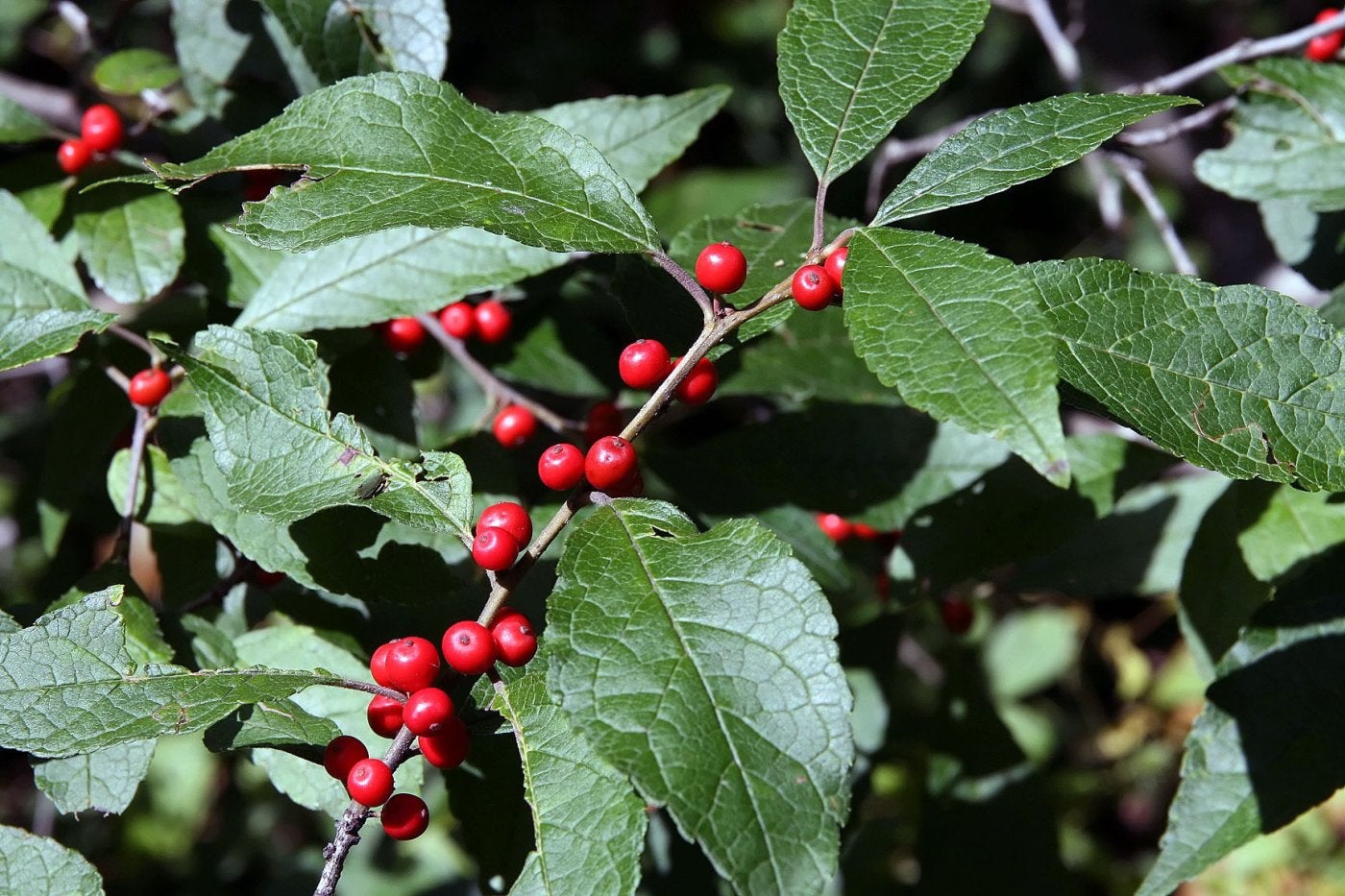
Winterberry holly (Ilex verticillata) is a tough, deciduous shrub native to North America, spanning from eastern Canada down to Texas. Extremely hardy and heat tolerant, this moderate-sized plant grows with an erect, upright, spreading crown, with cultivars ranging in height from one to four metres.
Its slender gray-brown stems and smooth gray to black bark feature distinct knobby lenticels (small, raised, pore-like spots or splits in the bark or stems), while its dark green foliage turns yellow in autumn before dropping to reveal dense clusters of scarlet to orange berries. Many varieties are prone to suckering and need space to spread out.
This dioecious species relies on separate male and female plants for pollination, with fruit developing exclusively on female specimens after the small greenish-white flowers bloom between April and July. It takes around three years for a young plant to produce flowers, at which point the gender of the shrub can be identified.
Once pollinated, the tiny fruit matures into small round berries. While these attractive fruits are poisonous to humans, they provide a vital food source for small mammals and birds.
Its lovely winter colour makes the shrub very popular for landscaping. For optimal fruit production, winterberry requires full sun to light shade, benefiting from four to eight hours of daily sunlight. Deep shade significantly reduces flowering and fruiting.
Ilex verticillata thrives naturally in moist, poorly drained or boggy conditions, although established specimens can tolerate short periods of drought. Soil must be acidic, as neutral or alkaline soils can cause yellowing of the leaves.
Mulching around the base helps retain moisture and suppress weeds. It is not a heavy feeder, but an application of a balanced, slow-release fertiliser in spring will promote healthy growth.
Dead or diseased branches and straggly growth can be removed in late winter or early spring before new shoots emerge. Aim to maintain a compact shape and promote airflow. However, because the shrub forms its flower buds for the following year on old wood, pruning should stop once flowering begins. Branches are often cut in winter for festive Christmas decorations.
The shrub can be propagated through seeds, rooted stem divisions or cuttings. Seed propagation is very slow; harvested berries must be fermented in a plastic bag until soft, enabling the three to five small seeds inside to be extracted from the pulp which then need to be stratified (exposed to several weeks in a cold place) before sowing.
![[]](http://static.vocstatic.com/voc26/latest/assets/images/favicon/surinenglish/apple-touch-icon-57x57.png)