
Health
Andalucía to fund treatment of rare skin disease affecting 45 young patients across the region
The regional health service (SAS) will cover the pioneering gene therapy Vyjuvek for 45 children, making Andalusia the first Spanish region to provide the treatment for this rare and painful disease

Seville
The Andalusian regional government will fund a treatment for butterfly skin (epidermolysis bullosa, or EB), a rare, incurable disease affecting 45 children and young adults across Andalucía. EB causes intense pain in the epidermis upon any contact.
The drug, called Vyjuvek, has just been authorised by the European authorities, although its extremely high cost, around 100,000 euros per month, makes it unaffordable for families of sufferers. It is estimated that, as patients undergo this treatment, both their quality of life and their clinical condition improve, thus lowering the cost. The treatment lasts approximately one year.
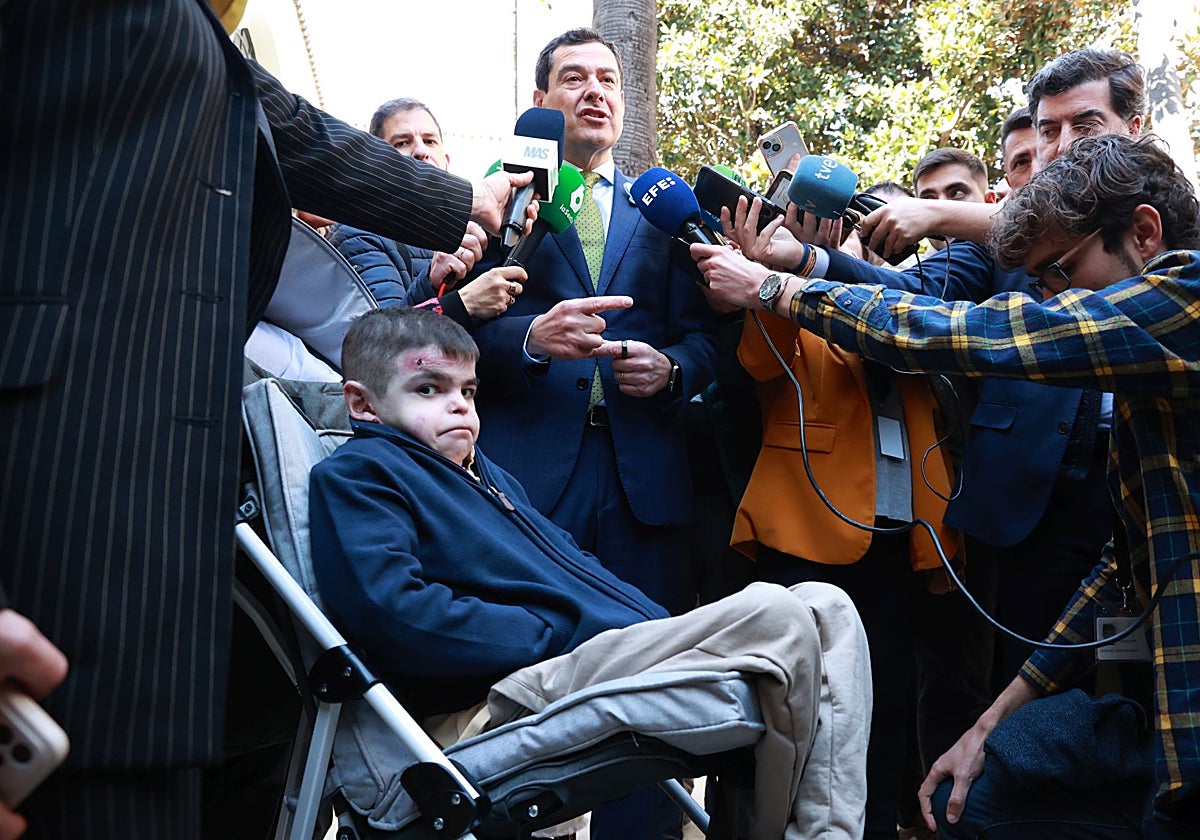
Junta president Juanma Moreno announced the decision last Thursday after meeting Leo at the regional parliament in Seville. Leo is a 12-year-old boy from Seville who suffers from this disease and he met Moreno along with his family and other members of the association Debra Piel de Mariposa (Debra butterfly skin).
Leo gained some notoriety the previous week after attending the European Parliament to advocate for the EU authorities to approve the treatment, which they did.
FAQ: Andalusia’s funding of Vyjuvek for Butterfly Skin
-
What is Butterfly Skin (Epidermolysis Bullosa)?
-
Butterfly skin is a rare, incurable genetic condition that makes the skin as fragile as a butterfly's wings. Even minor contact or friction can cause painful blisters and open wounds on the epidermis.
-
What is the new treatment Vyjuvek?
-
Vyjuvek is a pioneering gene therapy gel recently authorised by European health authorities. It is designed to promote wound healing and improve the clinical condition of patients with dystrophic epidermolysis bullosa.
-
How much does the Butterfly Skin treatment cost?
-
The treatment is extremely expensive, costing approximately €100,000 per month. However, because it is a pioneering therapy, costs are expected to decrease as demand and production increase across Spain and Europe.
-
Who is eligible for the funding in Andalusia?
-
The Andalusian Health Service (SAS) has committed to funding the treatment for 45 children and young adults currently living with the condition across the region.
-
Is Vyjuvek available in the rest of Spain?
-
While not yet part of the national health system's standard portfolio, Andalusia's decision to provide "exceptional" funding is expected to set a precedent, encouraging other Spanish regions and the national government to include the drug in the public health catalog.Next Steps for surinenglish.com
Moreno praised the work done by the boy's family and other members of the association, which made it possible to reach this point. He assured them that, thanks to them, the Andalusian Health Service (SAS) has managed to find an exceptional way to purchase "a very pioneering treatment that is not included in the national health system's portfolio".
He added that this medication serves "not only to alleviate, cure and improve" Leo's situation, but also that of other children in the same situation.
Going nationwide?
Moreno pointed out that Andalucía leading this move will enable other regions to follow suit and, "therefore, the national health system will also include it and we can ensure this medicine is distributed throughout Spain. Also, that the cost of this medicine, which is currently excessive, will decrease", although he did not specify numbers.
"These types of drugs are expensive because they are very innovative and not yet commercially available", he stated. He predicted that the price will go down as other regions begin to demand this particular drug. "As soon as there is more demand for this medication, I believe that the cost will come down, that's what we want and what we need."
Moreno also called on the pharmaceutical industry to take into consideration that, with these types of rare diseases, the cheaper the necessary treatment, the easier it will be to make it more widely available.
![[]](http://static.vocstatic.com/voc26/latest/assets/images/favicon/surinenglish/apple-touch-icon-57x57.png)