
Health
Malaga Hospital Regional patients wait on average 111 days for CT scans and 101 days for ultrasounds, report says
The UGT union says that the maximum delay stands at 684 and 496 days, respectively, while the hospital maintains that these figures do not match its official records
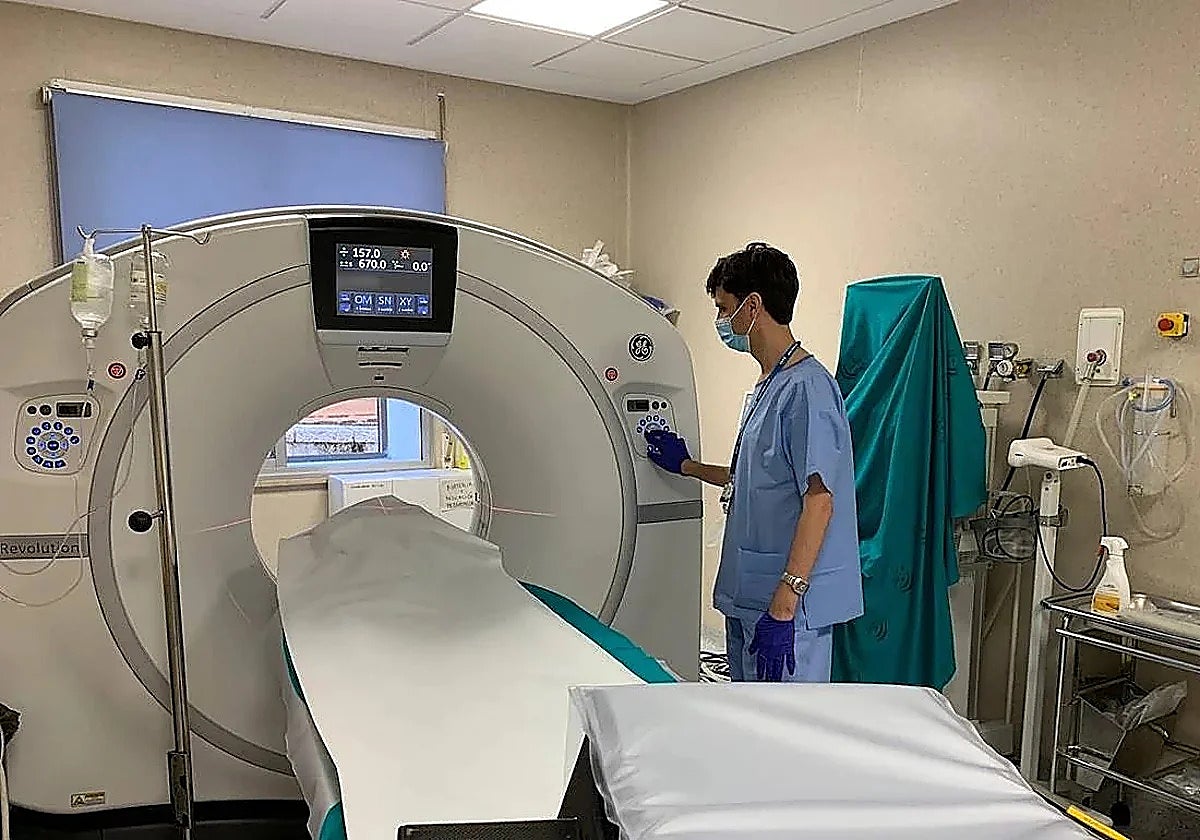

A patient might wait 111 days on average for a CT scan at any of the centres run by Regional Universitario hospital in Malaga or ... 101 days for an ultrasound. The wait for an MRI scan also 101 days and 166 days for an X-ray.
This is according to the UGT trade union's report from 15 July 2026. The same source lists maximum waiting times of up to 496 days for an ultrasound, 684 for a CT scan, 836 for an X-ray and 660 days for an MRI scan.
SUR asked the hospital, which is part of the Andalusian health service (SAS), whether it plans to take any measures to reduce waiting lists.
The hospital responded: "The figures do not match the centre's official records." It didn't, however, provide its records.
Essential tests
Concha Quintana Tejada, organisational secretary of the UGT trade union branch at the hospital, said that "the difference between the average and peak demand is alarming, as in every case the maximum demand is approximately five or six times the average, which points to a build-up of requests during specific periods, overloaded schedules, insufficient technical and human resources and the risk of delays in diagnosis".
All four areas of the report are essential tests for diagnosing a wide range of diseases.
"An analysis of the activity indicators for the radiodiagnostics service reveals extreme pressure on healthcare provision," Quintana said.
According to her, the data comes from the SAS's own corporate system, highlighting "a structural overload that directly affects the quality of care, response times and the working conditions of healthcare professionals".
According to the UGT, there are 4,815 people waiting an MRI scan, 4,382 for X-rays, 3,628 for a CT scan and 2,299 for an ultrasound scan. "These four areas account for the bulk of the hospital's diagnostic activity and bear the brunt of the pressure on healthcare services," Quintana said.
The tests
Magnetic resonance imaging (MRI) is essential for diagnosing neurological conditions, spinal and joint injuries, tumours, muscular disorders and abdominal or pelvic conditions. CT scans are vital for detecting tumours, strokes, haemorrhages, trauma and lung or abdominal conditions.
Ultrasound examines the liver, gallbladder, kidneys, thyroid, prostate, uterus and ovaries, as well as being the key test for pregnancy. It is also used to assess muscle or tendon injuries.
A plain X-ray, meanwhile, is the most common and quickest imaging test. X-rays are used to diagnose fractures, dislocations, osteoarthritis, pneumonia, spinal disorders and other bone and lung conditions.
Workload
"Peaks in demand compromise the service's ability to handle requests in a timely manner, directly impacting the care of patients with urgent or priority conditions," Quintana said.
She warned that "extreme variability in the workload increases the likelihood of errors, particularly in highly complex tests such as CT scans or MRI scans".
According to the UGT, this leads to "psychosocial risks, work-related fatigue, a deterioration in working conditions and increased operational stress during critical shifts".
Consequently, staff in the radiodiagnostic service "are working beyond their actual capacity, within a structure that is not commensurate with the volume of work they are required to handle".
Quintana is calling for an immediate increase in technical and medical staff, the extension of opening hours and shifts in the most strained departments, an update and expansion of the technological infrastructure, a review of referral processes and prioritisation of tests, an urgent assessment of the psychosocial risks arising from overwork and the development of an emergency plan to reduce the "extreme variability" in demand.
"The public should be aware that healthcare professionals are keeping the service running under extreme pressure and that immediate action is essential to guarantee the quality of care and the safety of patients and staff," Quintana said.
Included in the decree
The laws of the regional government of Andalucía set a maximum response time of 30 days for diagnostic procedures.
Not all diagnostic tests carry the same clinical priority. Urgent tests take place immediately and priority tests within shorter timeframes, while scheduled tests are usually the ones that make up the waiting lists. The data does not specify which type of requests the delays in question relate to.
Medical sources have explained that delays sometimes force them to request several diagnostic tests at once in order to reduce the patient's total waiting time and avoid delays in treatment and diagnosis.
![[]](http://static.vocstatic.com/voc26/latest/assets/images/favicon/surinenglish/apple-touch-icon-57x57.png)