
Health
Quirónsalud Málaga launches hip surgery unit specialising in robotic techniques
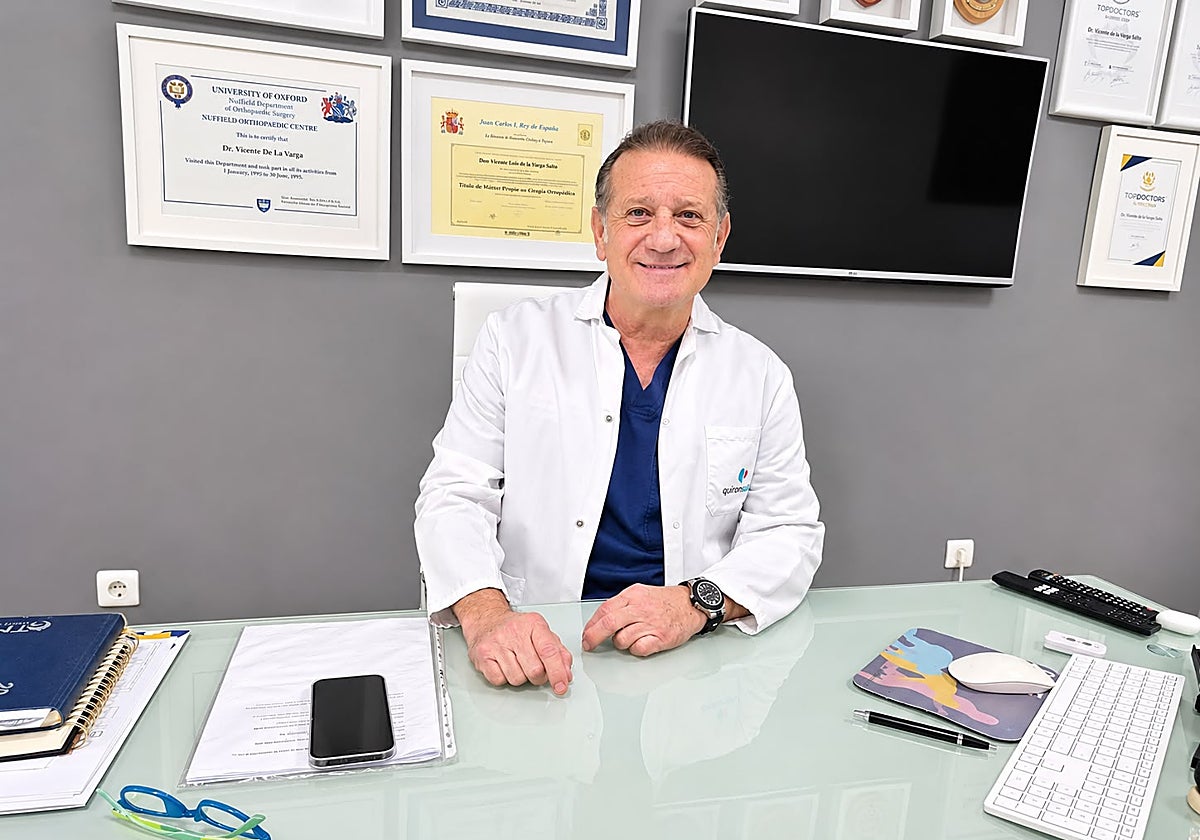
Dr Vicente De la Varga, a leading figure both nationally and internationally in the treatment of hip conditions, is joining the orthopaedic surgery and traumatology department to conduct these procedures
SUR
The Quirónsalud Málaga hospital is taking a further step in its commitment to highly specialised medicine with the creation of the advanced hip surgery unit, ... dedicated to the diagnosis and treatment of hip conditions. It incorporates the most advanced surgical techniques and the latest technological innovations, with a particular focus on robotic surgery.
The new unit, headed by Dr Vicente De la Varga, forms part of the orthopaedic surgery and traumatology department. It strengthens the team's clinical capacity and expands its range of highly specialised procedures.
The launch of this project represents a significant step forward for healthcare in Malaga, as it brings together, within a single centre, the expertise of specialists in hip surgery, state-of-the-art technology and a comprehensive, personalised care model.
Its creation responds to a growing need for advanced solutions to an increasingly active and long-living population, in which degenerative hip conditions, sports injuries and complex joint disorders have a direct impact on independence and quality of life.
One of the key distinguishing features of the hip surgery unit is its "exclusive focus on hip conditions. "A model of super-specialisation that allows expertise, knowledge, technology and human resources to be concentrated on a single joint," Dr Vicente De la Varga says.
The hospital unit's portfolio
The unit covers virtually all diseases and injuries that can affect the hip: osteoarthritis, avascular necrosis of the femoral head, dysplasia, femoroacetabular impingement, labral tears, sports injuries, anatomical abnormalities, post-traumatic sequelae and complications arising from previously implanted prostheses.
The centre offers a full range of treatment options, from conservative treatments and joint-preserving techniques to hip arthroscopy, primary joint replacements, revision surgery and particularly complex reconstructive procedures.
This approach enables the team to tailor treatment decisions and select the most appropriate procedure based on each patient's age, anatomy, physical activity, expectations and needs. As Dr Vicente De la Varga explains, "our aim is not simply to operate on hips, but to offer each patient the best solution to regain their mobility, relieve pain and enjoy life once again. Our specialisation enables us to tackle even the most complex cases with a personalised approach".
Robotic surgery
Robotic surgery for hip replacement is one of the key distinguishing features of the new unit and one of its most significant technological advancements.
This technology enables personalised surgical planning, tailored to each patient's anatomy, and provides support tools that help the surgeon to optimise the orientation and positioning of the prosthetic components.
Robotic surgery represents an evolution of conventional prosthetic surgery, as it provides additional information and greater control over certain parameters during the procedure, always under the surgeon's guidance. As the head of the hip surgery unit points out, "robotics does not replace the surgeon's experience, but rather enhances it".
"It allows us to bring personalised planning into the operating theatre and to control key aspects of the procedure with greater precision. It is the combination of experience and technology that truly delivers value to the patient," Dr De la Varga says.
Alongside robotics, the hospital is committed to other advanced techniques, such as hip resurfacing prostheses, short-stem implants and personalised reconstructive solutions, which are particularly relevant for young, active patients or those with specific anatomical requirements.
Another of the cornerstones of the hip surgery unit is the use of minimally invasive surgical techniques, particularly the direct anterior hip approach, a procedure in which Dr De la Varga has extensive experience. This "allows access to the joint via anatomical planes that help to preserve the muscular structures and, in selected patients, may facilitate an earlier return to function".
Combined with specific protocols for anaesthesia, pain management, early mobilisation and rehabilitation, "it forms the basis of a fast-track recovery programme, designed to minimise the impact of the surgery and facilitate a return to everyday activities".
In certain patients, these protocols enable them to start walking within a few hours of the surgery and be discharged from hospital the following day, provided their state allows them.
The care the hip surgery unit provides does not end in the operating theatre. The process begins with a thorough assessment and personalised treatment plan, continues throughout the patient's hospital stay and is followed up with a structured aftercare programme and an individualised rehabilitation programme.
Beyond technological innovation, the hip surgery unit was established with one key aim: to improve the quality of life of people suffering from pain, functional limitations or loss of mobility as a result of a hip condition.
"We want a hip surgery unit that (...) is on a par with the leading international centres: a place where every patient can find expertise, innovation, safety and, above all, a warm and personalised approach," Dr Vicente De la Varga concludes.
