
Health
Olive pollen peaks in Malaga, with grass pollen season fast approaching
The flowering of olive trees in the Costa del Sol province is beginning to subside. Meanwhile, pollen levels from nettles, cork and holm oaks are setting off alarm bells for hayfever sufferers
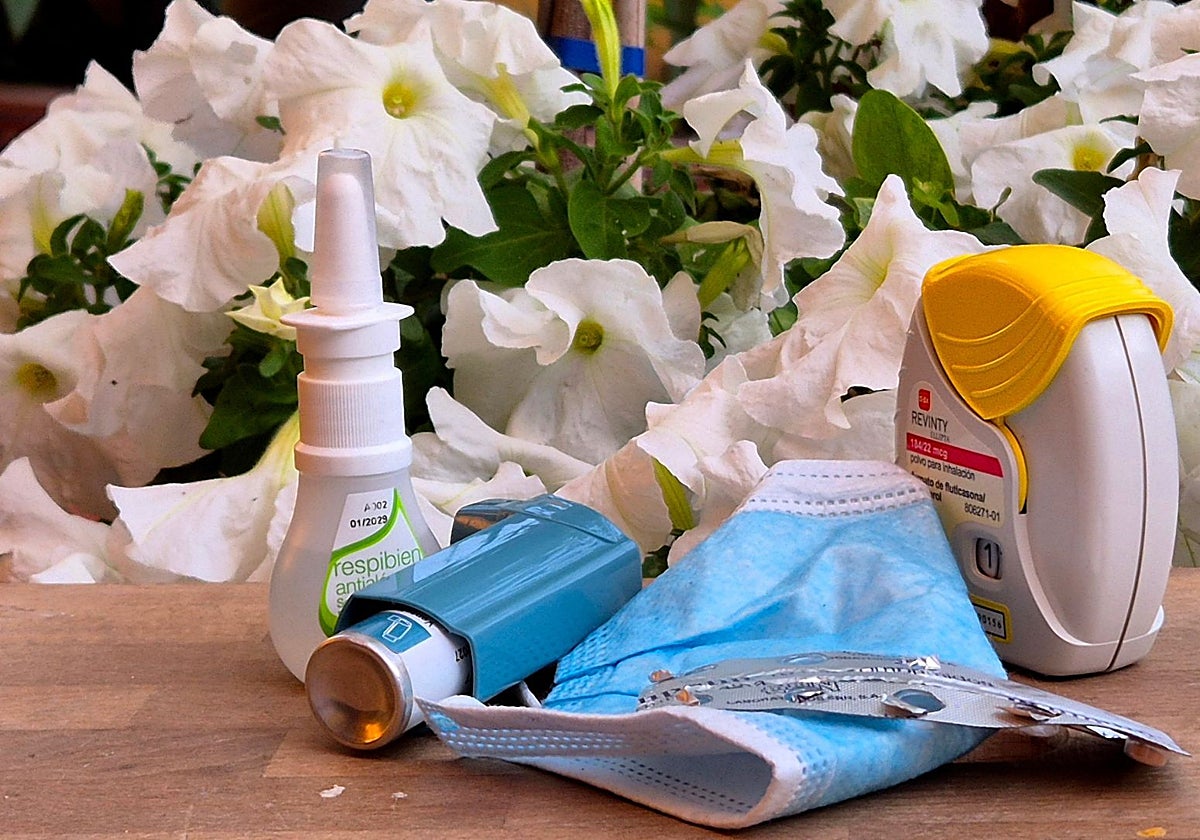

It's a hot topic of conversation in the workplace, on the streets and, of course, in lifts. Itchy eyes and skin, frequent sneezing, streaming ... eyes, rhinitis and even asthma in the worst cases.
Everyone deals with allergies as best they can and people will hear the all-too-common refrain: "This year's the worst ever!" In the end, however, the data tends to disprove that assertion, but with an important nuance: allergy symptoms do not solely depend on the pollen count. Factors like pollution and other particles in the air we breathe also play a role.
Other commentators debate the significance of wind direction: the claim that, if it blows from the Levante, the pollen gets swept away, 'resetting' the air, but if it's the Poniente, then the opposite happens. What is mathematically certain is that pollen from olive trees, with its high allergenic potential, has reached extreme levels in recent days: 500 grains per cubic metre of air.
"Olive pollen levels are expected to gradually decrease starting next week. For other pollen types, similar concentrations to those observed this week are expected," said Antonio Picornell, assistant professor and botanist with the botany and plant physiology department at the University of Malaga (UMA). Each week he meticulously compiles the data recorded by the pollen station located on the Teatinos campus in Malaga city.
Weekly measurements
Pollen samples are updated every Wednesday. They are mounted and stained in the laboratory and then manually counted by a technician in the department using an optical microscope. Thus, one week's pollen is processed and then counted in the following week.
So, why is it that sometimes the data is not alarming, yet allergy symptoms are rife? Put simply, pollen isn't the only cause of respiratory allergies. Many people experience symptoms due to fungal spores or dust (the abundance of which can also be influenced by different weather conditions).
Furthermore, sensitivity to pollen allergens varies from person to person, with some being more sensitive than others. The clinical presentation, which also varies throughout life, can range from insidious to very severe. Moreover, reactivity to a single pollen type is not typical, which further complicates treatment and substantially alters the duration of symptoms.
500
grains of olive pollen per cubic metre of air
is the level reached this spring in Malaga city
Solutions involve mitigating the symptoms with hygiene and lifestyle changes to minimise exposure to the allergen (for example, heading to the coast and avoiding outdoor sports). Also, prescribing certain drug treatments, depending on the severity of symptoms (for instance, inhalers, bronchodilators, nasal sprays, antihistamines, eye drops and so on). However, there is only one treatment that addresses the root of the problem: immunotherapy or vaccines.
Pollen calendar
The pollen season in Malaga province is critical between April and June. Olive and grass pollens, the two main plant allergens in Andalucía, coincide during this period. In the case of olive pollen, the most extreme level in this year's season was reached last Thursday and Friday. It will now remain stable at these levels for a few days and then a drastic drop is expected in two weeks' time. Olive trees tend to produce severe symptoms when the pollen count is high. Grasses, which affect the largest population of sufferers, will reach their peak at the end of this month and their symptoms usually persist for longer. They are currently at moderate levels.
Springtime in Malaga also sees the flowering of nettles, plantains and holm and cork oaks, soon to be reaching their peak. They are also currently at moderate levels.
Springtime in Malaga also has nettles and oaks at their flowering peak
By summer, pollen concentrations will decrease drastically, although nettles and grasses may hang on in certain places.
Another factor that has triggered allergies this year has been the series of storms and low-pressure systems recorded at the end of last year and the beginning of 2026. In some cases, this brought forward the flowering process by up to two weeks.
Looking back at the weather records, we gain an interesting snapshot of the most critical periods for each pollen type. Again, olive pollen is the most prevalent. The absolute record was recorded in Antequera on 14 May 1999 with 4,688 pollen grains per cubic metre of air. In Malaga city, 3,752 pollen grains were counted in April 1997.
4,668
pollen grains per cubic metre of air
This is the record for olive pollen in the air for Malaga, recorded in Antequera in March 1999.
Meanwhile, pollen from the cypress reached 2,410 grains per cubic metre of air in Antequera (also in March 1999) and 1,071 grains in Malaga city (February 2000). Quercus trees (holm oak/cork oak) recorded 1,586 grains in March 1997.
The London plane tree ('plátano de sombra' in Spanish) shows a significant difference between different areas, with 893 pollen grains in Antequera compared to 63 in Malaga city (March 1999). Meanwhile, the Casuarina (Australian pine) tree reached 518 pollen grains per cubic metre of air in Malaga in October 1997.
815
pollen grains per cubic metre of air
was the grass pollen count for Malaga city in May 2003.
Although with lower figures than trees, the allergenic capacity of grasses and shrubs is very significant. For grasses, the provincial peak for Malaga was 815 grains (Malaga city, May 2003). Nettles reached their highest level to date in Nerja, with 261 grains (April 2000). In the provincial capital, the peak was 66 grains (April 1996).
As for herbaceous plants, the Plantago (plantain), it reached 143 grains in Malaga (April 1996); Chenopodium (goosefoot) and Amaranth (pigweed), registered 139 pollen grains per cubic metre of air in Malaga (May 1999).
![[]](http://static.vocstatic.com/voc26/latest/assets/images/favicon/surinenglish/apple-touch-icon-57x57.png)