
Wellness
Mountain meditation: learning to hold steady through it all
How can you find some inner stability when your thoughts and feelings are constantly changing? That's what mountain meditation invites you to practise
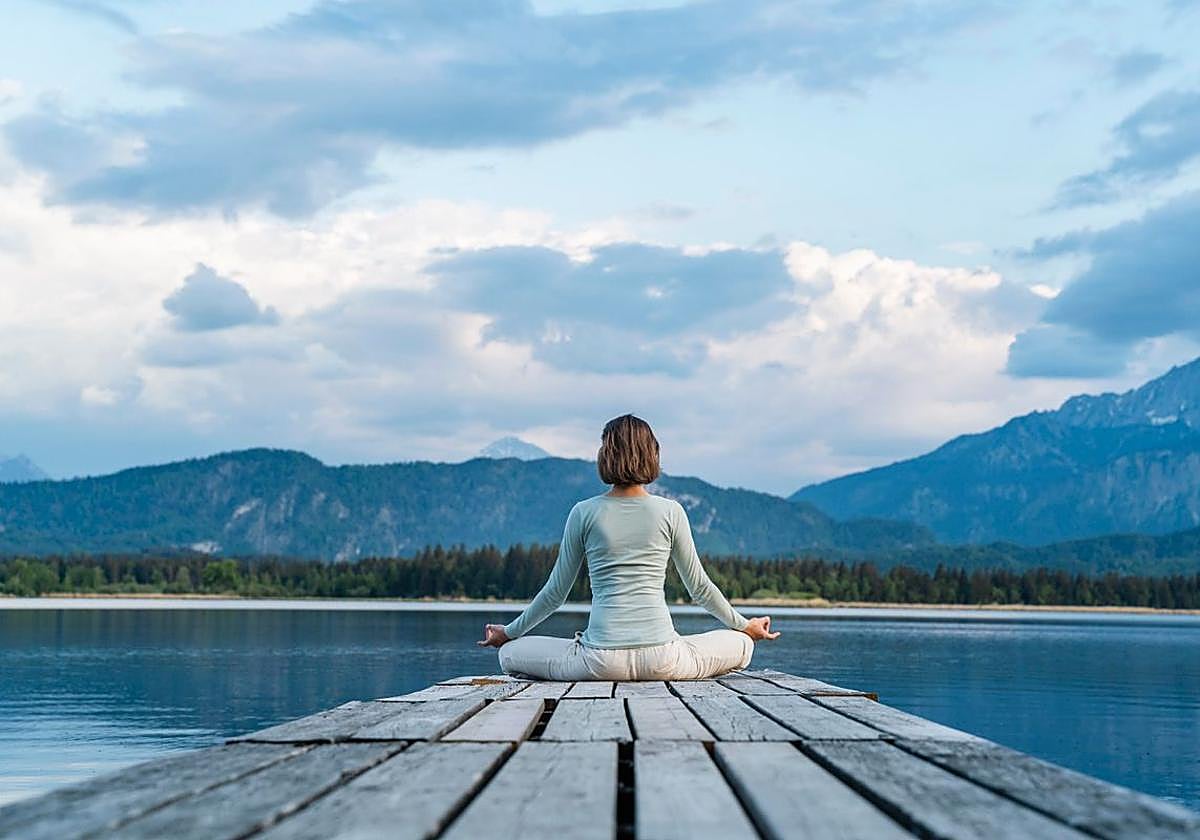
DPA
There's nothing many a stressed soul would like more than a little inner peace and tranquility. But how to get there? Mindfulness and meditation are known to help people find calm, ground themselves and stabilize a life out of kilter.
The key is holding steady no matter what life throws at you. Is there anything that might inspire emulation? How about a mountain?
Mountain meditation is part of the Mindfulness-Based Stress Reduction (MBSR) programme developed by Jon Kabat-Zinn at the University of Massachusetts Medical School. Kabat-Zinn, who has a doctorate in molecular biology, is professor of medicine emeritus at the school, where he founded the Mindfulness-Based Stress Reduction Clinic in 1979 and the Center for Mindfulness in Medicine, Health Care, and Society in 1995.
Mountain meditation doesn't require sitting cross-legged, guru-like, atop a mountain. It's a visualization technique that typically takes about 15 minutes. If you think that's too long and could be sped up, remember: MBSR, which incorporates elements of yoga and Zen, is effective only when it's unhurried.
More broadly, meditation can not only reduce symptoms of stress, but also those of anxiety disorders. It can improve emotional health and sleep quality too. According to the United Nations, people have been meditating for 7,000 years, and hundreds of millions worldwide do so today.
A step-by-step guide to mountain meditation
Sit down comfortably in an upright, dignified posture and close your eyes. Take a few moments to become aware of your breathing and settle fully into the present moment.
Now picture in your mind's eye the most beautiful mountain you know of or can imagine. Envision its shape, its peak, its broad base rooted solidly in the Earth. Take in the mountain's majesty, its permanence, how it's simply there and perfectly serene.
Feel the mountain's stability and imagine yourself becoming one with it. Your head is the peak, your shoulders and arms the slopes, your pelvis and legs the solid base. You are now the mountain, solidly rooted, stable and in the moment.
Hold this inner attitude and observe the changing times of day around you, the mountain. The sun creeps across the sky, night falls, the moon and stars appear, a new day dawns. The mountain simply remains, unchanged by the passage of time.
The seasons come and go. In spring the mountain's slopes take on a tender green hue. In summer they turn lush, and in autumn the leaves change colour. The mountain's peak becomes snow-capped in winter, but the mountain's essence is unaltered.
The weather changes: sunshine, fog, storms, rain, hail, snow, heat, cold. Sometimes the mountain's peak is clearly visible, sometimes it's shrouded in clouds. But the mountain simply stands there unmoved, firm and steadfast no matter what the conditions.
If your thoughts start to wander, redirect them to the mountain and absorb the strength in this mental picture. In your meditation - and in your life - you can embody the mountain's stability.
Thoughts, feelings, sensations, events cross your consciousness. Some are pleasant, others unpleasant or neutral. Like the mountain, you can take them as you rest in your centre. You're not your thoughts, nor feelings. You're the sentient being that's aware of them - stable, dignified, steady as a mountain.
Continue meditating for as long as seems right for you. When you're ready, let the mental picture of the mountain go and open your eyes.
Mountain meditation is easiest when it's guided. You can ask someone to read a relevant script to you while you meditate, or use an audio file. Guided mountain meditations can be found in meditation apps and on the internet.
![[]](http://static.vocstatic.com/voc26/latest/assets/images/favicon/surinenglish/apple-touch-icon-57x57.png)