
Health
Costa del Sol hospital joins charity to feed the most vulnerable babies
Mothers donating from home, a refrigerated home collection service and a state-of-the-art medical protocol ensure that no at-risk newborn is left without their dose of antibodies
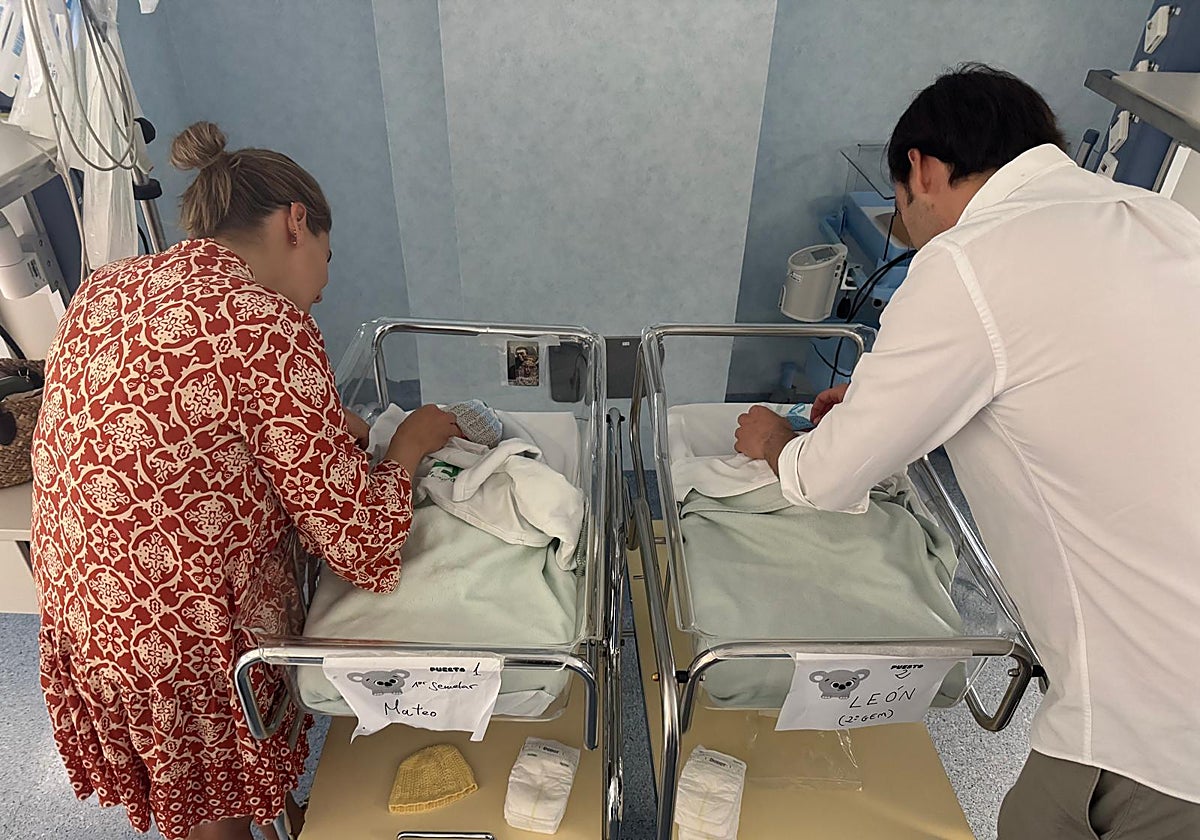

The Costa del Sol hospital in Marbella joined last May the strategic network of the human breast milk bank at the Virgen de las Nieves ... hospital in Granada: a project set up to help newborns whose mothers cannot provide their own milk, whether due to the baby's fragile health or the mother's complications.
Every millilitre saves lives and ensuring this nourishment is provided on a day-to-day basis has become a kind of charitable endeavour.
The Costa del Sol is a key collection centre in the western part of Malaga province. It already has the logistical and technical capacity to receive milk from donor mothers, transport it to the reference bank and subsequently store and administer processed milk safely to the little heroes who need it.
Mercedes Martínez, a paediatrician specialising in neonatology, says that newborns can now "receive breast milk at a particularly vulnerable time, when their own mothers may not be able to provide".
"It is a valuable resource, as it can reduce significant complications associated with prematurity, lower the risk of infections and improve neurological development," Martínez says.
Medical care
Dr Martínez states that breast milk is particularly important for the youngest and most vulnerable babies. "A premature newborn has an immature gut and is particularly susceptible to infections and digestive complications. Human milk is tailored to the needs of the newborn and contains not only nutrients but also bioactive components, such as antibodies, growth factors and probiotics, which contribute to the baby's growth and well-being. Breast milk is not just a source of nutrition: it forms part of their medical care," she explains.
The best-established benefit is against "necrotising enterocolitis, a serious intestinal complication in premature babies". The network mainly supports premature and low-birth-weight babies, particularly those weighing less than 1,500 grams or born before 32 or 34 weeks' gestation, as well as those whose mothers are unable to breastfeed for medical reasons. "It can make a very significant difference."
Since this project began, 30 newborns have already benefitted from it.
The aim of the Costa del Sol hospital is to establish a stable network of donors and ensure that there is milk for those who need it: they have already received 36 litres of donated milk to give to the children and around 20 litres of milk from donor mothers.
"Every mother donates as much as she can and for as long as she wishes: the mother expresses her milk in accordance with the bank's instructions and it is kept frozen. At our hospital, we receive the milk from donors while maintaining the cold chain and transport it, frozen, with continuous temperature monitoring to ensure it arrives in suitable condition in Granada, where it is processed and pasteurised. We then receive the processed milk back and store it until it is administered," Dr Martínez explains.
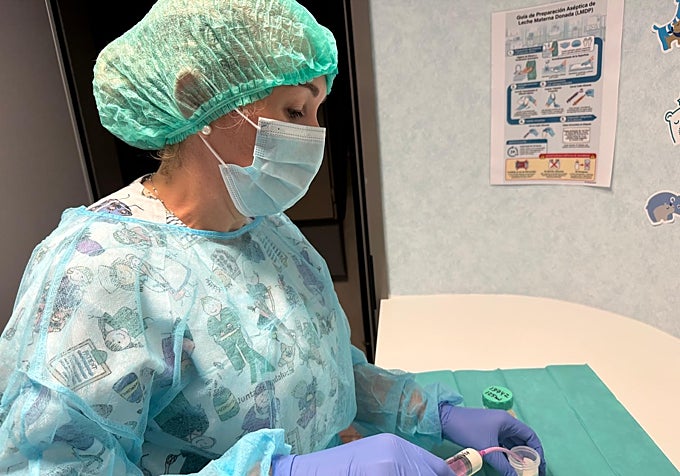
The first choice is always the mother's own milk, but when this is not available or is insufficient, "donated milk will be the best alternative". Mothers are doing something "extraordinarily generous: what may seem to us like a small gesture, for these babies who are fighting every day to survive, a few millilitres of milk makes a huge difference".
Every year, 15 premature babies weighing less than 1,500 grams are born in the Costa del Sol.
Milagros Mena became a donor mum after seeing an influencer's post. "I live in Marbella and I thought I'd have to go to Malaga to drop off the milk, but they even sent a taxi to our house to collect it."
The first time she did it was one of the best days of her life: "You don't have to stick yourself with a needle or go any further than your own home. It takes no effort at all, just a few minutes to put on the breast pump, express the milk and know that it's going to be a huge help to the children who need it. I'm absolutely delighted with the experience of being a donor mum."
Nutrients
Valle Gómez Díaz receives breast milk for the children she has had with her partner, Alfonso Cano Romero.
"In our case, as we had premature twins delivered by caesarean section who needed to be admitted to the neonatal ICU and placed in an incubator, my own breast milk supply was not sufficient to meet the babies' needs. The fact that I couldn't breastfeed them due to their circumstances reduced my milk production. Nutrient intake is essential in the first few days," the mother says.
"Both children tolerated the milk very well, regaining their birth weight in less time than expected and showing very positive progress. It is a great source of support for mums who, as in our case, find that circumstances make it difficult to produce breast milk. It alleviates some of the stress that can come from thinking you are unable to provide your little ones with the nutrients and antibodies that breast milk offers at such a crucial stage," she says.
Mabel Méndez, a nursing supervisor in paediatrics and neonatology, states: "We are the first centre in the western part of the province to offer this service. This is the gold standard (...) We are at the forefront of humanising perinatal care. It is essential for preventing serious illnesses and improving the development of the most vulnerable babies. It is a form of medicine."
Women who would like to donate can call 689354156 or email donacion.leche.hcs.sspa@andalucia.es.
