
Health
Malaga's Hospital Regional is second in Spain in number of bone marrow transplants, with almost 100 per year
The procedure uses healthy cells from donors for patients who have no other alternative for curing diseases such as leukaemia or lymphoma
-RVWjL8ns4JxJTHbdDdWSOsO-1200x840@Diario%20Sur.jpg)
Enrique Miranda
A sign above the doors of the haematopoietic stem cell transplant unit at Malaga's Hospital Regional clearly warns: 'Isolation zone, restricted access'. It separates this area of the haematology unit from the rest of the world. Inside, among masks, gowns and shoe covers, the hours seem to pass more slowly, but it is a crucial time for the patients.
Patients with blood and blood-producing organ diseases arrive there, many of them with serious illnesses such as leukaemia, lymphoma or myeloma that require a life-saving treatment: a bone marrow transplant.
For many patients, this is the only cure. The transplant can be from the same patient (called autologous) or from a donor (allogeneic). These are complex procedures, but their number has increased dramatically in recent years because the chances of success are greater.
Related story
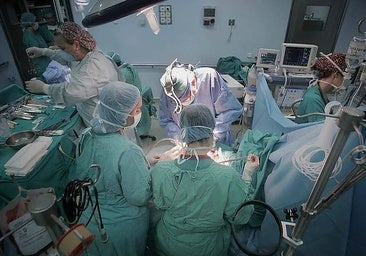
Malaga's Hospital Regional is a national leader, already approaching 100 bone marrow transplants from donors per year. In 2024, it performed 82 allogeneic transplants and then 98 in 2025, placing it at the forefront of these procedures in Andalucía and second in Spain, behind La Fe in Valencia.
In the case of complex allogeneic transplants, the hospital is first in the country. "Last year, we implemented a plan to increase resources due to the high demand we were experiencing. We went from eight beds to ten, which allowed us to do more transplants," head of the haematology department Manuel Isidro Muñoz says.
Complex treatment and isolation
The process patients undergo is lengthy and can last months, from preliminary tests and pre-transplant consultations to the search for compatible donors. Once the appropriate conditions are met, the transplant takes place, which involves infusing a liquid product containing stem cells. This is the critical part of the treatment and isolation is fundamental.
"To perform the transplant, the patient must first undergo intensive chemotherapy to deplete the bone marrow and eliminate the recipient's immunity, which would otherwise lead to rejection of the new cells. It's like formatting a computer," Dr Anabel Gallardo says.
The patient is temporarily left without immunity, without defences, making them highly vulnerable and requiring isolation to prevent any infection and the entry of germs.
During the isolation period, a patient stays in a positive pressure room, meaning that filtered, clean air is constantly pumped in and out, rather than being drawn in from outside. This pressure difference creates an outward flow when a door is opened, preventing potentially contaminated air from entering. In addition, the rooms have Hepa filters, which are airborne particle retention systems.
A vulnerable patient who must be in isolation cannot receive the same visitors as any other patient. "Visits are not allowed in this space and everyone entering must follow hygiene and sterilisation protocols, as must any objects," doctors explain.
A caregiver or companion may also be present, but they have to share much of the isolation period with the patient.
Risks
The experts in the haematology department highlight the advancement of the procedures, while acknowledging the high risks.
These risks primarily include infections and Graft-versus-Host Disease, which occurs when the donor's immune cells recognise the patient's healthy tissue as foreign and attack it.
"Final discharge is not given until five years later," doctors say. "It's impossible to give a success rate, because each patient has their own circumstances, age, underlying disease... We're not talking about 90 per cent of the people treated leaving without complications. It's a path with many obstacles," Muñoz says.
"But it's a path with no alternative," he states. Dr Muñoz firmly says that patients who do not undergo a transplant do not have "a long life expectancy".
That's why bone marrow donation campaigns and having a large global donor registry are so important, as they increase the chances of finding the desired genetic match.
The success of Hedo: the home bone marrow transplant programme
Hospital Regional's haematology and haemotherapy unit launched the Hedo home haematology programme in 2019, which allows for bone marrow transplantation in the patient's own home.
The programme has already benefitted nearly 250 patients. These are autologous transplants, using the patient's own cells, which carries lower risks, allowing part of the treatment to happen at their home.
These are selected patients who have a caregiver and receive treatment in the outpatient hospital. A nurse from the Hedo programme then administers their daily treatment at home.
"It's the hospital that comes to the patient's home," Dr Muñoz explains.
![[]](http://static.vocstatic.com/voc26/latest/assets/images/favicon/surinenglish/apple-touch-icon-57x57.png)