
Health
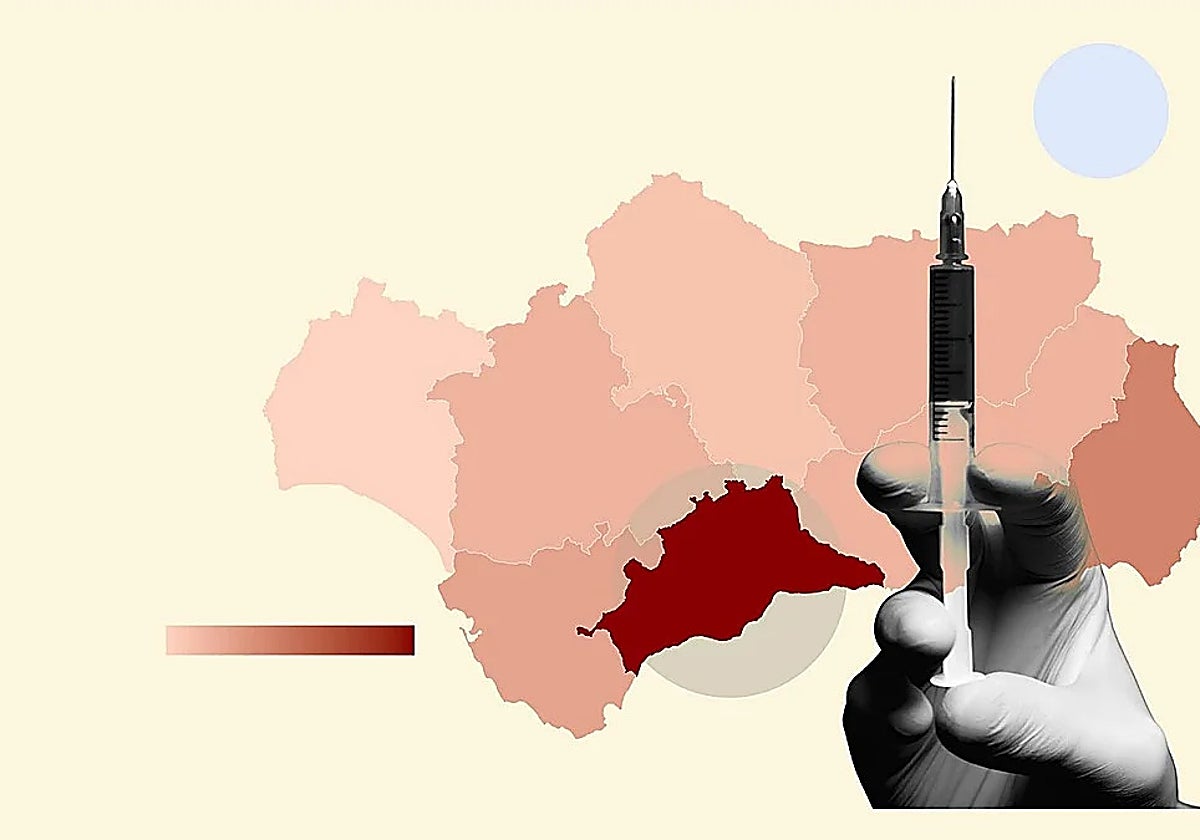
Malaga province tops ranking of euthanasia cases in Andalucía, with 13 in the last year
The province accounts for almost four out of every ten assisted dying cases in the region, but difficulties persist in finding doctors to process the applications

Requesting assisted dying involves a process of medical consultations, reports and assessments before the committee reaches a decision. Not all requests are successful. Some are ... rejected, others are withdrawn and there are patients who die while waiting.
Five years after Spain passed the euthanasia law, Malaga is the province with the highest number of assisted dying cases in Andalucía. In 2025, there were 13, accounting for almost four in ten of the regional total.
The euthanasia of 25-year-old Noelia Castillo marked this year's cases, alongside the Supreme Court ruling recognising the right of certain family members to appeal against such decisions.
Related story

The latest report from the Andalusian guarantee and evaluation commission confirms that Malaga has accounted for 13 of the 35 cases of euthanasia in the region. Almeria follows, with six, while in the other provinces the figure ranges from one to four.
The report shows a slight decrease compared with 2024, with 14 cases in Malaga province. Since 2022, the first full year of the law's implementation, 41 people have received assistance in dying in the province. Across Andalucía as a whole, the figure stands at 114.
Malaga also tops the list in terms of processed cases, with 24 of the 61 during the last financial year. For chairman of the DMD association (right to die with dignity) in Andaluía Gabriel Sánchez Bellón, the higher concentration of cases is due not only to the region's population but also to the commitment of healthcare workers. He highlights the experience of doctors, nurses and social workers in the Malaga-Guadalhorce area. "I think perhaps the mindset of healthcare staff in Malaga is more open," he states.
Requesting euthanasia
The law allows those suffering from a serious and incurable illness or a serious, chronic and debilitating condition to request euthanasia.
As a general rule, the patient must submit two voluntary written requests, at least 15 days apart. A doctor assesses their situation, informs them of the available treatment options and palliative care and seeks the opinion of another doctor.
Before authorisation, the guarantee and assessment committee, comprising healthcare professionals and legal experts, is consulted. A doctor and a legal expert appointed by this body verify that the legal requirements have been met.
The commission also adjudicates on appeals from those who receive a negative decision. The applicant may withdraw or defer their decision at any time.
Andalucía recorded 112 applications in 2025 and 35 cases of euthanasia, although four of these related to cases initiated the previous year. Among those who did not complete the procedure were patients who died before their case was opened, withdrew their application or received a negative decision.
Neurological conditions are most common among applicants, accounting for almost half of all cases, followed by cancer and psychiatric conditions. The majority of cases are in the 60-79 age group. General practitioners are responsible for more than 80 per cent of the procedures, a role which, according to DMD, is not always easy to fulfil.
"That is still the fundamental bottleneck," Sánchez Bellón says, referring to the difficulties in finding professionals willing to take on these cases. He explains that, on occasions, it is necessary to call upon doctors from other healthcare areas and even from different provinces.
He attributes part of the problem to a lack of training and excessive workloads. Although he believes that Andalucía was slow to implement the legislation, he says that progress has been made, particularly with the creation in 2025 of teams of specialist healthcare leaders.
The average waiting time between the initial application and authorisation has fallen to 47.68 days, compared with nearly 66 days in 2024 and 82 days in 2022. On top of this, it takes a further 22 days on average to receive assistance.
In 2025, the majority of euthanasia procedures in Andalucía took place in hospitals, although eleven patients received them at home. In all cases, the medication was administered directly by healthcare professionals. There were no instances of self-administration, a procedure known as medically assisted suicide.
One of the most controversial issues remains the assessment of suffering. In 2025, 14 appeals were lodged with the Andalusian commission against unfavourable decisions. Only one was upheld, while ten were rejected. In another case, an order was made to review previous proceedings. One person died before receiving a response and another withdrew their appeal.
"The problem lies in assessing suffering," the chairman of DMD says. He acknowledges the difficulty of assessing these cases and the need to examine the available treatments, but states that chronic psychological suffering should not automatically be excluded from the procedure when the legal requirements are met.
The association also expresses concern about those who, after having their application rejected, may attempt to take their own lives. Sánchez Bellón highlights the need to investigate what happens to these people. "What we want is to prevent such tragic incidents," he says.
Conscientious objection is another challenge. In 2025, 244 new healthcare workers registered as conscientious objectors in Andalucía. Malaga province ranked second, with 60, just behind Seville, with 65.
Sánchez Bellón warns against what is known as "objection of convenience or circumstantial objection", which, he explains, occurs when workers who have not declared themselves as objectors refuse to carry out a procedure upon receiving a specific request, sometimes due to a lack of training or excessive workload.
Noelia's case
The application of the law once again took centre stage in the legal debate this year due to the case of Noelia Castillo. The young woman from Barcelona, who was paraplegic and had a history of mental health problems, underwent euthanasia on 26 March at the age of 25, following two years of legal proceedings due to her father's opposition. Her request had been authorised, but successive legal appeals delayed its implementation.
Shortly afterwards, the Supreme Court recognised, in separate proceedings, that people with a particularly close relationship to an applicant may have standing to challenge an authorisation for euthanasia in court.
The ruling has given rise to conflicting views. Retired judge Alfredo Elías Mondeja, author of a book on the criminal implications of assisted suicide and euthanasia, supports the decision. He believes that close relatives can provide relevant information to verify that the patient's wishes are free and informed.
Elías Mondeja is critical of regulations he describes as "hasty and incomplete". He advocates a more thorough psychological assessment and believes that a prognosis of a necessarily fatal illness should be required.
While he acknowledges that legal appeals may prolong suffering, he calls for a reform that would allow such cases to be resolved urgently. "Because a life is at stake and this is an irreversible matter," he states.
The position of the DMD organisation is different. Sánchez Bellón believes that allowing family members to challenge an authorisation interferes with a personal decision that has already passed the required medical and administrative assessments.
"No one has the right to deprive a person of the exercise of a legally recognised right," he states. He warns that these procedures can delay the process for months or years and advocates limiting appeals to a single court, with much shorter time limits.
In Andalucía, only three administrative appeals have been lodged since the law came into force, all of which have been dismissed by final rulings. None were lodged in 2024 or 2025.
