
Mental health
Malaga sees striking increase in hospital admissions for mental health issues among minors
Hospitalisation has increased eightfold in a decade, with self-harm behaviours, previously considered "rare", on the rise
Susana Zamora
The increase in hospital admissions for mental health issues among minors at Malaga's Hospital Regional strikingly contrasts the situation from a decade ago. While in 2015 there were between 15 and 20 admissions annually, current projections (based on the rate observed after the opening in January of a short-stay hospitalisation unit for adolescents) point to figures that could reach between 110 and 120 cases by the end of the year or 150 if children under 14 admitted to Hospital Materno Infantil are included. In other words, the statistics could increase tenfold if the current trend continues.
Director of the hospital's mental health unit Antonio Bordallo acknowledges that initial estimates, which predicted between 70 and 80 patients annually, have been far exceeded.
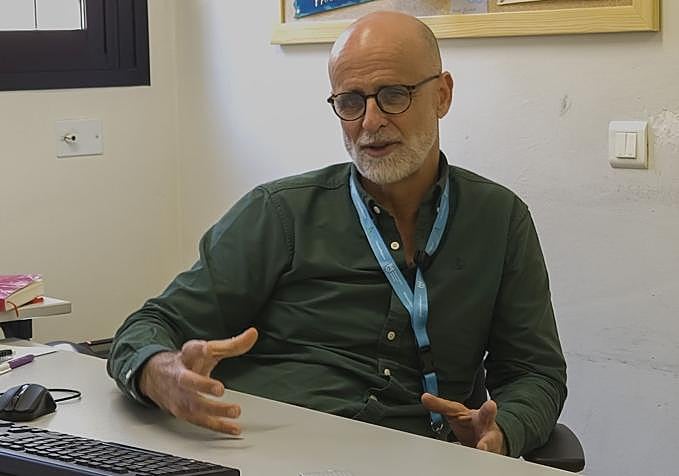
However, this phenomenon is not solely a consequence of the pandemic. Bordallo says that the increase has been developing for at least the last decade, although the health crisis has acted as a catalyst, making visible a reality that was already present.
The most significant change lies not so much in classic disorders (psychotic or severe depressive disorders, whose rates have remained relatively stable) as in other types of conditions that have grown exponentially. "There is an epidemic in self-harm," Bordallo states. "This is followed by suicide attempts, behavioural disorders and eating disorders."
In fact, self-harm, "often without suicidal intent, but other times with that objective", has gone from being "a minor issue" to becoming the main reason for hospital admissions. Currently, between 60 and 70 per cent of hospitalisations are due to self-harm. "It's an expression of the unease this generation is experiencing," Bordallo states.
Following these types of admissions, the next most frequent causes are behavioural disorders, often linked to aggression or uncontrolled behaviour, and psychotic episodes, which in many cases appear interrelated.
Bordallo highlights the diagnostic complexity at these ages: "In childhood and adolescence, establishing very rigid diagnostic categories is much more complex because the brain is in a state of flux."
An expansion of resources has fortunately accompanied the increase in cases. Until a few months ago, Malaga had six beds specifically for minors (two at Hospital Materno for children under 14 and four at Hospital Regional for adolescents). The opening of the new unit at Hospital Regional has increased that number to 12 beds, although the pressure on healthcare services remains high.
Regarding the healthcare response, the strategy involves short hospital stays, lasting a week or ten days, focused on stabilising acute states. "We don't want the children to get used to solving their problems through hospitalisation," Bordallo says.
After discharging the children, the hospital provides intensive follow-up and resources such as the day hospital, with the aim of maintaining care within the community.
Coordinator of the community health unit in Marbella Miguel Guerrero referes to 2019 as the year they began to perceive a slight increase in demands for mental health care from adolescents. However, it was in 2020, with the outbreak of the Covid-19 pandemic, that cases rose by 35 per cent. This increase was not only in community care but also in primary care, with a rise in psychiatric emergencies, hospital admissions and calls to emergency services.
"This increase in demand for mental health care has not decreased and we have not returned to the pre-pandemic baseline. This is very significant. There are days when minors account for 90 per cent of the initial consultations referred from primary care. This was extremely rare five or six years ago," Guerrero says.
The AEP Spanish association of paediatrics asserts its role as a "fundamental figure" in the development of children. "We are another mental health professional, different from the psychiatrist and the clinical psychologist, but with a very important role, along with primary care, in identifying the problem and supporting families in that process," coordinator Paula Armero says.
What lies behind this worrying statistic? According to Guerrero, the context in which teenagers grow up has changed in recent years. "We live in a faster-paced, more demanding, competitive and extremely individualistic society. Society is also lonelier," he says.
The current cultural context also plays a role, in his opinion. "This postmodernism promotes values that, in many cases, become a breeding ground for psychological distress: increasingly fragile relationships, an excessive worship of technology, constant hyperconnectivity, the pressure to perform and be constantly productive and the dictatorship of mandatory happiness that seems to deny pain and vulnerability. Added to this is continuous exposure to unrealistic body standards and constant comparison, especially on social media. All of this creates a reality where many teenagers grow up feeling that they always have to be okay, perform better and appear perfect, but with fewer real spaces for listening, compassion and emotional support," Guerrero says.
Patient profile
Girls account for a higher number of admissions, especially those related to self-harm, suicide attempts and emotional disorders. "Everything related to the world of emotions is much more frequent in women," Bordallo says. He links this trend precisely to greater social pressure and increasing demands.

Bordallo says that many families are experiencing less time and more stress and schools have had to deal with emotional and social problems for which they are not always adequately prepared. "Furthermore, we are now better at identifying and naming psychological distress, which is a positive development."
This is what happened to Jorge. Diagnosed with Social Anxiety Disorder and OCD, he had a complex history. He suffered bullying at school and from a young age began experimenting with marijuana and alcohol. It was precisely a "bad hangover" that triggered his phobia. It happened overnight. The next day, his anxiety level in class was so high that he was unable to sign his name when the teacher took attendance. He froze. "That experience stuck with me. From then on, I was incapable of doing anything, even something as simple as picking up a glass, just for fear of it happening again, of freezing up," Jorge says in Digitas, a content transfer tool from the University of Jaén designed to address emotional problems among adolescents.
Avoidance is one of the manifestations of social phobia, so from that moment on, his body began to reject what he perceived as a threat. It was his defence mechanism: to flee. Tremors, sweating, tense muscles. He didn't understand anything. "What's wrong with my head? Since I couldn't find the answer, I never confronted it and that, in turn, caused me more anxiety," Jorge says.
For three years he suffered in silence. He didn't know how to tell his parents what was happening to him, that any physical activity or social experience filled him with dread, until he finally mustered the courage to do so.
"The lockdown was the best thing that ever happened to me. I didn't have to avoid anyone." Months later, he confided in his mother about what he was going through. It was his way out, it felt freeing.
Later came psychological treatment, understanding what was happening to him and working on confronting his fears (going to crowded places, greeting someone he knew, looking someone in the eye, going to work). Without family support, the process "would have been overwhelming". "The fear is still there, but I've learned to live with it. Nothing paralyses me anymore," he says proudly.
More than 1.5 million young people between the ages of 12 and 18 across Spain are at risk of or experiencing emotional problems, according to the network for the promotion of health and emotional well-being (Proemo) - an initiative launched of the University of Jaén that collaborates with seven Spanish universities, including the University of Malaga. These are "devastating" figures from an analysis that once again highlights the rising trend of problems such as anxiety, depression and related behaviours (eating disorders, excessive social media use and suicidal ideation).
"We shouldn't wait to address these issues when the problem has already taken hold," psychology PhD researcher Lourdes Espinosa says. She highlights the importance of early detection of symptoms, like those Jorge began experiencing and for which he couldn't find an explanation. "Delayed intervention means greater disruption to the young person's life and their family environment," Espinosa says.
Guerrero adds that it's important to be attentive to warning signs, such as significant changes in behaviour: isolation, persistent irritability, loss of interest in usual activities, sleep or appetite disturbances, a sudden drop in school performance and the presence of self-harm or expressions of hopelessness.
"If they notice these signs, family and friends should act with empathy and without judgment, creating spaces for conversation, validating the distress and seeking professional help if necessary. Listening, supporting and not minimising the suffering are the first forms of protection," Guerrero says.
Despite the magnitude of the phenomenon, Bordallo warns of the need to act without alarming. "We cannot look the other way," he says, stressing the importance of addressing this problem from a health, educational and social perspective.
According to Guerrero, epidemiological studies support the claim that approximately half of the mental disorders diagnosed in adulthood have their onset in adolescence. "Therefore, identifying and intervening at this stage is key to mental health prevention," Guerrero states.
![[]](http://static.vocstatic.com/voc26/latest/assets/images/favicon/surinenglish/apple-touch-icon-57x57.png)