
Health
Malaga science and health experts address pressing questions about hantavirus outbreak
Professor Ana Grande and Dr Julián Olalla advise against drawing parallels with the coronavirus and say that transmission among humans is rare
José Antonio Sau
The health crisis on the MV Hondius cruise ship, currently docked in Cape Verde awaiting departure for the Canary Islands, has sparked concern among the Spanish population, which still vividly remembers the impact of the Covid-19 pandemic. Although there are similarities between the two situations, experts advise against drawing parallels because, in this case, human-to-human transmission is "infrequent" or "rare".
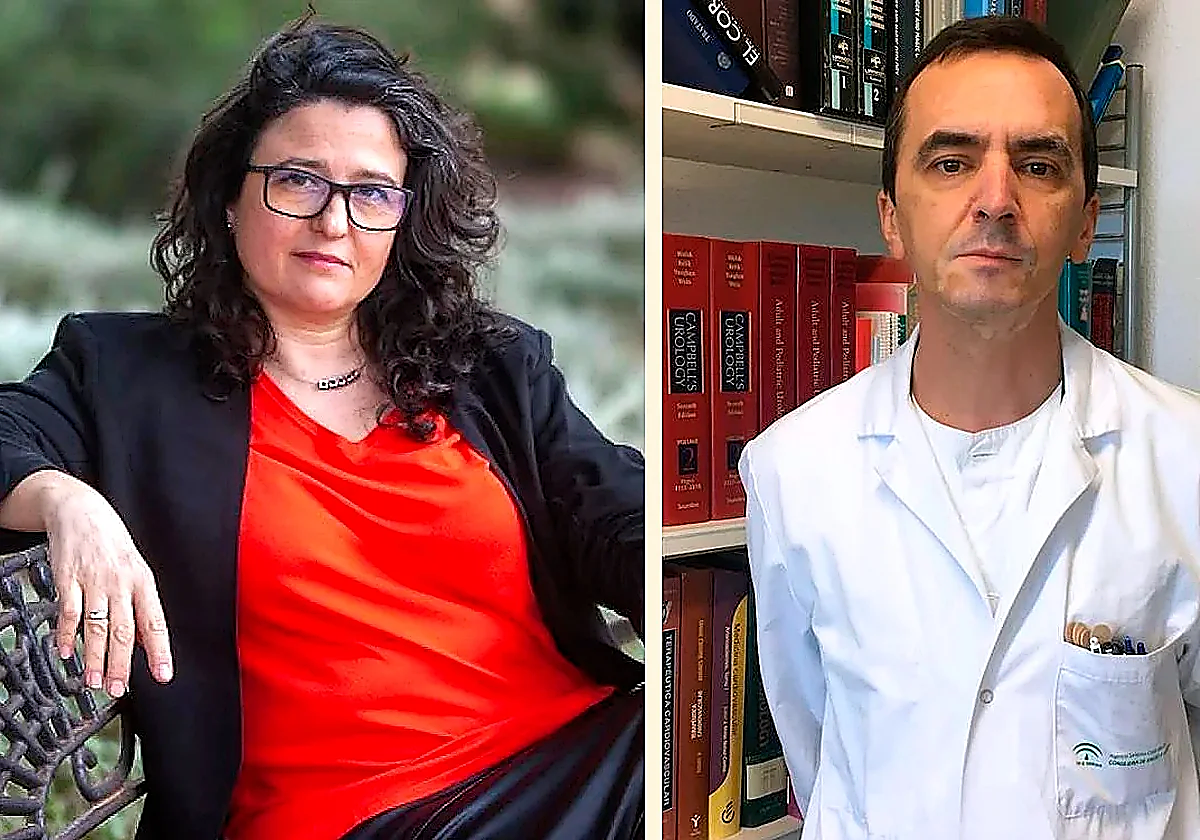
To shed some light on the matter, SUR speaks with two renowned experts. Ana Grande is Professor of Genetics at the University of Malaga, with a brilliant career in the fields of molecular biology and virolog. Julián Olalla is an internist specialising in infectious diseases at Hospital Costa del Sol, who chaired the scientific committee of the first national Covid-19 conference in 2020.
What is the hantavirus? Grande says that "they are a group of viruses that are mainly transmitted from rodents to humans". This is called a zoonosis. "Infection usually occurs by inhaling particles of urine, faeces or saliva from infected animals," she says.
The MV Hondius cruise ship has detected the Andes variant (ANDV) - "a hantavirus that circulates in South America and whose natural reservoir is the long-tailed pygmy rice rat". This means that "the virus can be transmitted between people, although this type of transmission is rare and requires close and prolonged contact".
Contact with rodents
Dr Olalla says that humans can get the virus primarily "through contact with rodents: rats, mice or moles". These act as reservoirs for the virus. The Andean variant in South America causes a number of cases each year through bites or contact with bodily fluids. Experts believe that people can also get it "through inhalation".
Hantaviruses, Professor Ana Grande says, "can cause two types of illness: pulmonary syndrome (more common in the Americas) and haemorrhagic fever with kidney complications (more common in Europe and Asia)". "In this case, given that it is the Andes virus, pulmonary syndrome is the most likely outcome," she states.
It usually begins with fever, muscle pain, fatigue, headache and sometimes digestive symptoms. "In some cases, it can progress to respiratory distress within a few days. The warning sign is this rapid deterioration, which requires urgent medical attention," she states.
Incubation period
Dr Olalla says there is an incubation period of two to four weeks, up to 40 days, and the typical symptoms begin with abdominal and joint pain and fever. This stage lasts between seven and eight days. "The trouble starts when the entire immune system kicks in," causing organ damage.
Dr Olalla states: "Human-to-human transmission is rare: after those 40 days in which it would be possible to be incubating a virus, if it hasn't appeared, it's not going to appear."
Professor Ana Grande believes it is most likely that the first patient got the virus before boarding, "especially given that the voyage included areas where hantavirus is circulating". Transmission between individuals can occur "in close-knit settings such as cabins or spaces shared for extended periods. Furthermore, although the long-tailed mouse is the usual host, no evidence of its presence has been found on the ship," Grande says. It therefore appears to be "an isolated and localised situation".
Quarantine
Upon the ship's arrival in Tenerife, Spain will activate international health protocols, "with a medical evaluation on board before disembarkation is allowed". "Suspected cases are isolated and, if necessary, transferred to referral hospitals." Furthermore, close contacts are identified and monitored, "with follow-up for several weeks in line with the virus's incubation period".
Dr Olalla says that the health authorities will quarantine people with symptoms and carry out a thorough check-up.
Low risk to the general public
Is there a real risk to Spaniards? "The risk to the population in Spain is very low. This is a very localised outbreak, linked to a specific group on the cruise ship and under health control from the beginning. The authorities locate people who may have been exposed and isolate and monitor their cases for weeks. Furthermore, the Andes variant is not circulating in Spain, so it is not considered a threat to the general population," Professor Ana Grande tells SUR.
"This virus does not have a serious contagion rate like Covid-19. It can be transmitted from person to person, but it is much more difficult and we are familiar with it." The problem is its high mortality rate, "from 30 to 40 per cent".
Related story
-
Fatal cruise
Gerard Couzens
Both experts rule out the possibility that the cruise ship's arrival in the Canary Islands could cause a pandemic. "It's not comparable to Covid-19. The pandemic was caused by a novel coronavirus, an emerging virus that was easily transmitted through the respiratory tract between people. In contrast, hantavirus, and specifically the Andes variant, is a known virus that is not easily transmitted between people and, when it does occur, it usually requires very close and prolonged contact. Furthermore, its main route of transmission remains contact with infected rodents, so it doesn't have the capacity to generate a global spread like common respiratory viruses," Professor Grande says.
Not comparable to the coronavirus
Dr Olalla says: "The rate of transmission between people is not high. Once the quarantine period is over, what needs to be done is done. It's unlikely this will cause another pandemic. We need to take the necessary measures to contain this, that's all."
He states that humanity has been living with this virus for a long time. "In the US, hantavirus cases are reported every year, some few, some many." The same is true in China. "It's not something you can catch by talking," he says. The reason why it has spread to a few people on the cruise ship is because the setting is one of "very close contact".
"In Spain, there is no significant community transmission, with very rare cases that are generally imported, so there is no talk of an increase here. Health surveillance and greater public awareness following the Covid-19 pandemic have an impact nowadays," Professor Grande says.
According to her, Spanish residents do not need to change their daily lives or take extraordinary measures. "It is an isolated and controlled outbreak. It is advisable to avoid contact with rodents and ventilate enclosed spaces before cleaning them. These are basic precautions more geared towards rural areas or travel to area where this type of virus is more common," she concludes.
Saliva
Regarding aerosol transmission, Dr Olalla points out that "some studies say the virus can be isolated in saliva, while others say they haven't been able to isolate more than the genetic material in saliva".
"It is isolated in blood, though. Also in urine. For practical purposes, it doesn't really matter. I repeat, these people will be in quarantine, isolated. Blood, saliva and urine samples will be taken from them every few days, etc. If the samples show viral replication in saliva, we will obviously say that transmission is possible, but some studies say yes and others say no," he states.
![[]](http://static.vocstatic.com/voc26/latest/assets/images/favicon/surinenglish/apple-touch-icon-57x57.png)