
Health
Malaga oncologists test ground-breaking drug that sheds light on pancreatic cancer
The survival rate for patients in advanced stages is 15 per cent
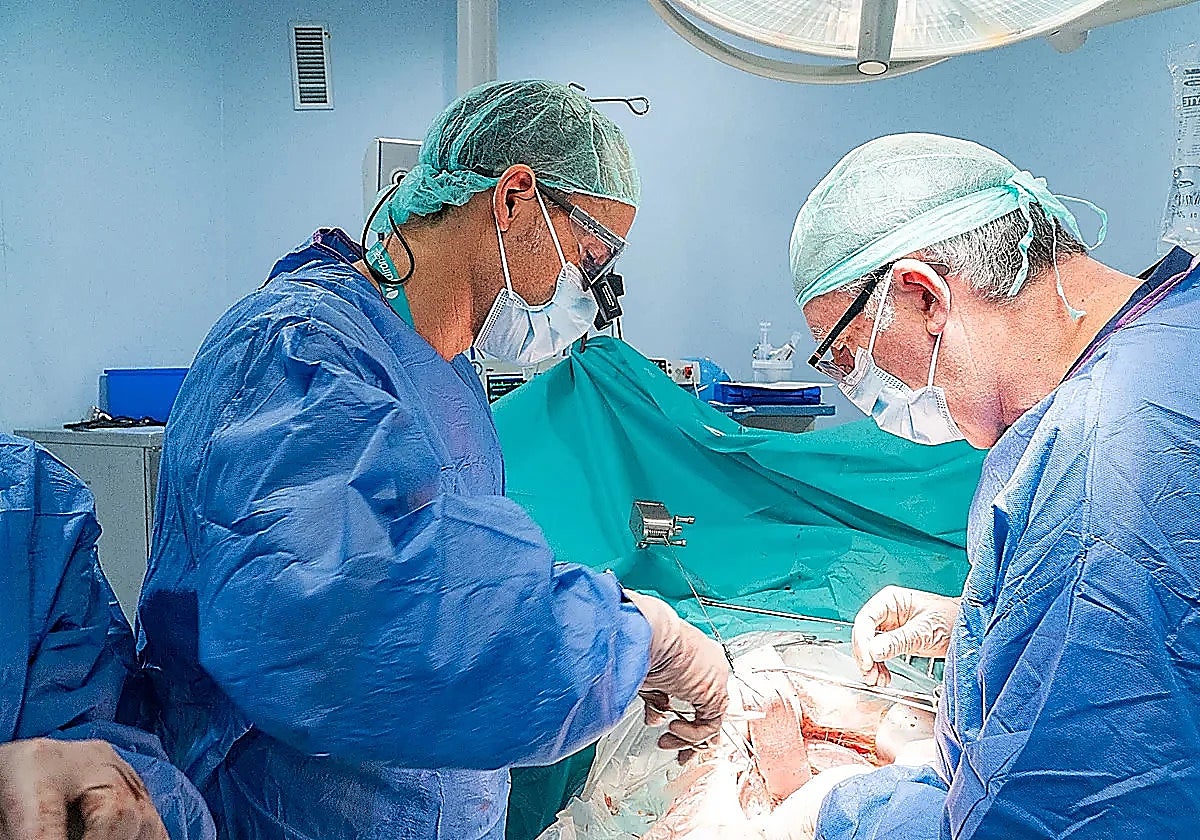
José Antonio Sau
Malaga oncologists are currently testing an American drug that could significantly change pancreatic cancer prognosis.
Pancreatic cancer, of which more than 300 cases are diagnosed each year in Malaga province (around 120 in the city of Malaga), is one of the tumours with the worst prognosis. In advanced adenocarcinomas that are inoperable, the five-year survival rate barely reaches 15 per cent, even with the best treatments.
The new drug, daraxonrasib, has for the first time managed to block the KRAS protein: a key protein in the development of the disease that until now had been inaccessible to medications.
In patients whose cancer had progressed after a first line of chemotherapy and was metastatic, the treatment has managed to double the average survival, from 6.7 to 13.2 months, according to the research.
It may seem like a small increase in life expectancy, but for Javier Díaz Santos, head of the oncology unit at HM Hospitals in Malaga, "it will change the landscape of second-line pancreatic cancer treatment" and potentially lead to significant improvements in the fight against a cancer that has proven resistant to oncologists' attempts to control it.
"The way it has been developed and the concept behind it means (...) there will be a new avenue for improvement," Dr Díaz Santos says.
American biotechnology company Revolution Medicine has developed the drug. It presented it at the American Society of Clinical Oncology (ASCO) conference in early June.
"It's a cancer with a poor prognosis because the pancreas is an organ without a lining. When a tumour appears, it easily invades the surrounding blood vessels, making it difficult to operate on. When symptoms begin, such as pain, it means the tumour has invaded a structure that we won't be able to operate on," Dr Díaz Santos explains.
Between 80 and 90 per cent of pancreatic cancers "have a mutation in their cells, which is the KRAS gene, related to the way the tumour behaves and develops".
"We could not act with a drug on this mutation that would stop all those changes that make the cell aggressive and invasive," Dr Díaz Santos says.
Head of the oncology department at Hospital Regional Álvaro Montesa says: "Until now, we thought that the KRAS protein could hardly be targeted by treatments, but we have managed to inhibit this protein, whose function promotes cell growth."
The drug is already investigated in various KRAS-driven cancers to see "which ones it works in and which ones it doesn't". "One of them was pancreatic cancer. This study has shown that in patients with metastatic pancreatic cancer, at a stage where the disease is incurable, survival rates have been significantly increased," Montessa explains.
The idea is to apply this treatment "in earlier stages to achieve a cure". Right now, it's all just promises, but at least there's more hope than there was just a few months ago.
"If we know that of the pancreatic cancers we operate on, which are generally curable, a percentage will relapse, what if we give those patients the drug at that moment, for a period of time, let's say six months? Let's see if we can achieve a higher cure rate, and that's an advance that would obviously be more significant," he states.
Dr Díaz Santos points out that when pancreatic cancer presents with symptoms, it usually means "that it is advanced".
"It often begins with painless jaundice, that is, turning yellow without any pain, or with constant, insidious epigastric pain, in the upper abdomen, which is clearly not relieved by meals and frequently radiates to the back," he says.
Three types
Specialists classify pancreatic cancer into three types: resectable, "which can be operated on immediately"; unresectable, which cannot be operated on; and borderline, "which is when (...) affects certain blood vessels, but not extensively".
In the third case, the patient undergoes chemotherapy to see if the tumour can shrink enough to warrant surgery.
In the case of unresectable tumors, the disease is controlled with chemotherapy. "It's true that, unfortunately, those that are resectable are diagnosed incidentally," Dr Díaz Santos says.
Review public health, medical care and clinical news
![[]](http://static.vocstatic.com/voc26/latest/assets/images/favicon/surinenglish/apple-touch-icon-57x57.png)