
Health
Spanish lifeguards warn that simply knowing how to swim doesn't prevent drowning
Most of those who died last year knew how to swim, so the key lies in other factors, such as overestimating your own abilities, experts warn
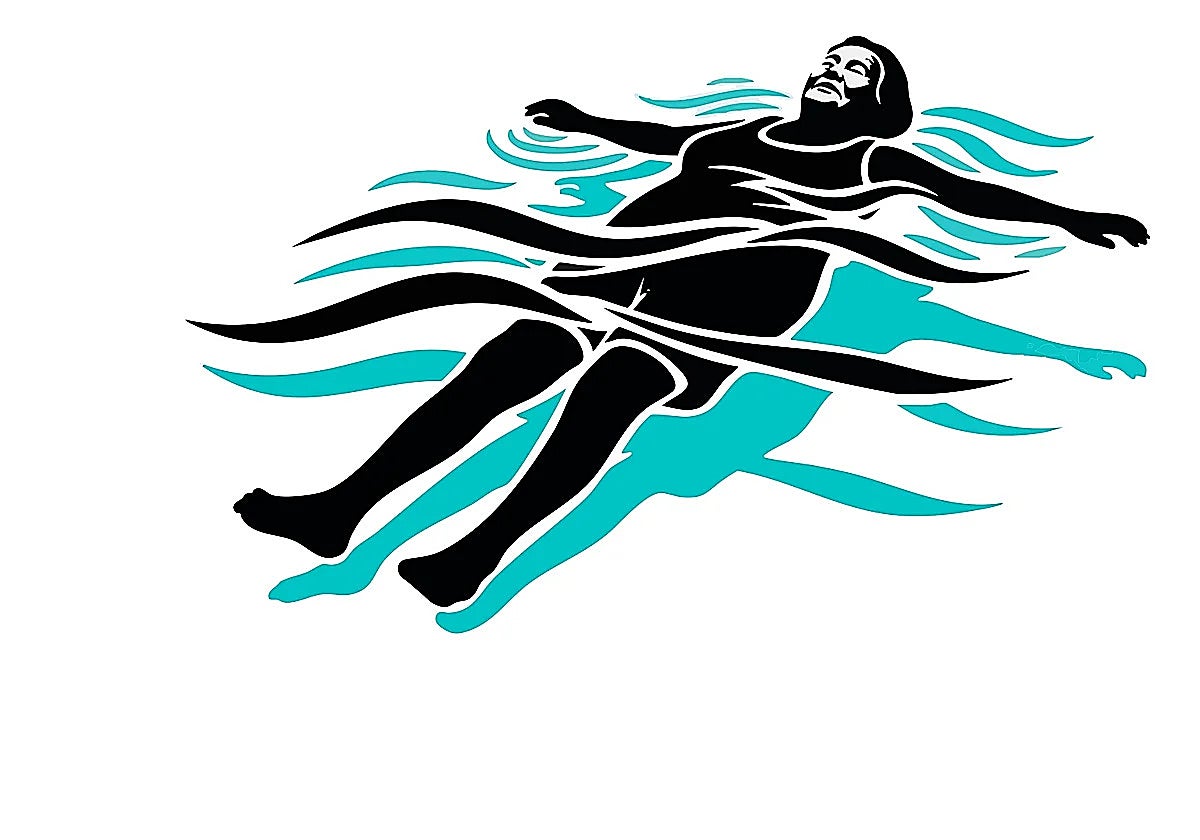

Most people believe that the danger of drowning disappears once they learn to swim. Unfortunately, this is not the case and most people who ... drown in Spain are great swimmers.
A total of 472 people drowned last year, according to the annual drowning report of the Spanish lifeguards association. The disparity between the sexes is striking: 392 men and 88 women.
Where do these incidents occur? Beaches account for 241 of these deaths, rivers for 88 and swimming pools for 49. Nearly 100 fall under the 'other' category. In the vast majority of cases, these were locations without a lifeguard.
Related story

Related story
-

112 incident
Carmen Remírez and Lucas Domaica
There are no figures on how many of these 472 victims could swim, but lifeguards are in no doubt: the vast majority. These days, children even learn to swim at school.
The cause lies elsewhere. Perception of risk is one of the main factors.
"We misjudge our physical fitness. We overestimate it and forget that it changes, for example, during a heatwave," lifeguards coordinator Koldo Larrazabal says.
There are older people who believe themselves to be immune to ageing. They often reckon that, if five years ago they could easily reach the furthest islet off the beach, there is no reason why they shouldn't be able to do so now to celebrate their 70th birthday.
The warning, however, also applies to young people. "Even an athlete or someone in very good physical shape experiences a decline" in their abilities in the sweltering heat.
Swimming does not protect one from the risk of drowning. A sudden change in depth or a strong current can put a person in a tight spot. On Spanish beaches, particularly those in the north, there are often areas bounded by currents and also by breakers. Swimming laps is banned in these areas. "Being struck by a wave can cause trauma and leave one unable to breathe," Larrazabal says.
Better in company
Everything is more fun in company and, what's more, it's safer. No one is immune to an accidental knock, fainting or a sudden incident, such as a heart attack. In these situations, having someone keeping an eye on you makes all the difference.
However, there are some basic rules to bear in mind: if you experience any sudden discomfort, "you must get out of the water immediately".
Be careful, too, when helping someone else: the first thing to do is alert the lifeguards, if there are any. If they are not present at that moment, throwing flotation aids from outside the water is better than attempting a rescue on your own. It wouldn't be the first time such a situation has ended in a double drowning.
Is there an age at which it is more dangerous to go into the water? To answer this question, let's first look at the statistics. According to the records, the 65-74 age group tops drowning figures, with 89 victims, followed by over-75s, accounting for 72 cases.
The remaining fatalities fall within an age group where one would expect people to be in good or acceptable physical condition: there were around 100 deaths in the 18-44 age group and a similar number among those up to the age of 64. Infants account for 13 cases and children between eleven and 17 years of age for 24 deaths.
The causes of accidents vary from one age group to another. "Older people drown when they are ill or have a physical problem," Larrazabal says. Among young people, there is a certain influence from peer pressure and TikTok challenges.
"When we think about the things we used to do when we were kids, we realise that most of them were riskier than we realised at the time and we certainly wouldn't do them now as adults," Larrazabal admits.
The consumption of alcohol and illegal substances significantly increases the risk.
Although the number of people swimming in rivers is much lower than that of people swimming in pools, rivers account for more fatal accidents.
"In both rivers and reservoirs, we don't know what the riverbed is like. We might see calm waters on the surface, but underneath there are currents, vegetation and other features where we can get caught in and drown," Larrazabal warns.
Diving also hides a lot of risks. "When we go to rivers at this time of year, it's common to see people who aren't from the area jumping into the water without even asking the locals where the water is deepest," Larrazabal says.
Avoiding any area without lifeguards greatly minimises the risks. When you think about it, it seems like common sense. It's almost hard to understand why something that seems relatively simple claims half a thousand lives in Spain every year. But perhaps there really is truth in the saying that common sense is the least common of the senses.
If I'm already in the current, how do I get out?
The natural tendency on a beach is to head straight for the currents. Humans, we don't always have our instincts well-tuned.
Suddenly, you find yourself right in the lion's den and that's when panic kick in. What do you do in these situations? "You have to call for help as soon as possible," Larrazabal says.
Don't try to be brave and worry about how badly you'll look in front of your friends. Every second counts: "Our lives are at stake."
Since the water usually pushes you out to sea, many try to fight the current to get out, but that's a mistake. "The best thing is to swim parallel to the beach, not against it."
Stay calm sounds easy but isn't always.
![[]](http://static.vocstatic.com/voc26/latest/assets/images/favicon/surinenglish/apple-touch-icon-57x57.png)