
Health
Malaga paediatricians see surge in impetigo skin infections during summer
Experts warn of a rise in cases and explain how to recognise, prevent and treat this highly contagious infection
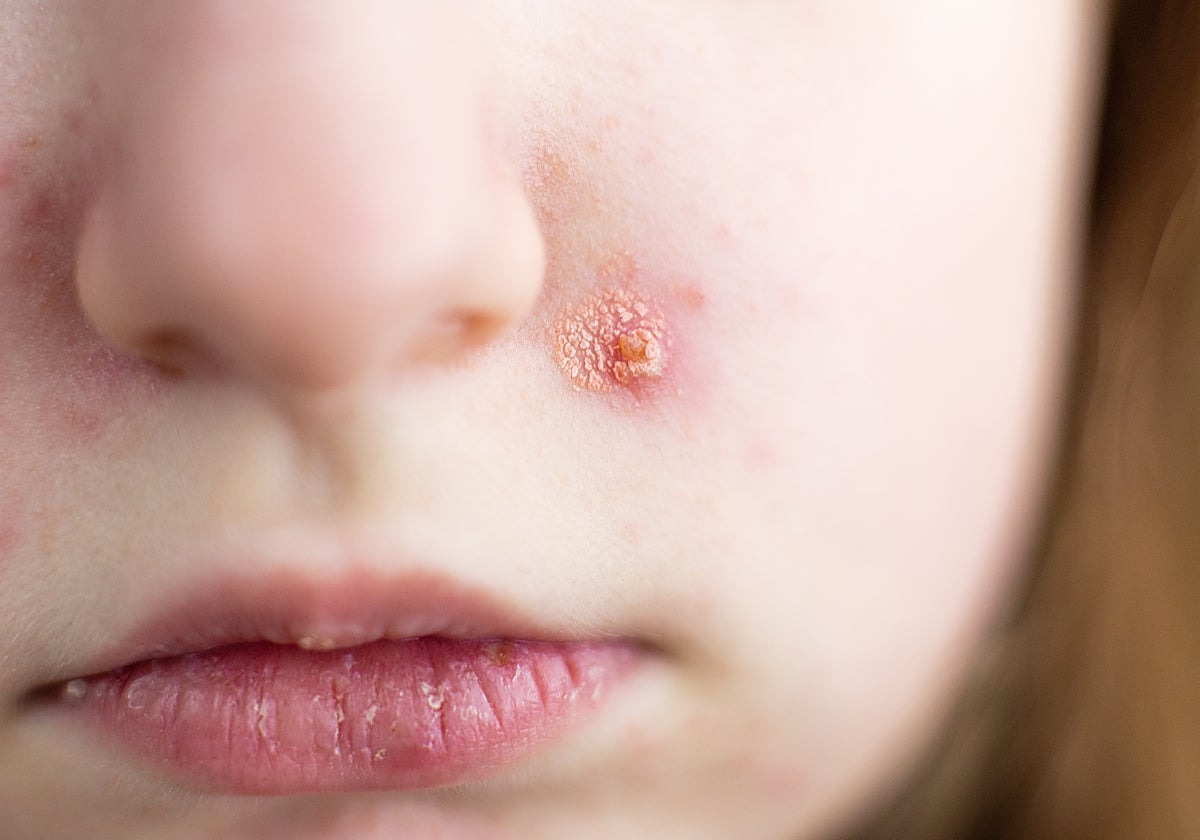

Impetigo is a "mild but highly contagious" skin infection that becomes more prevalent during the warmer months. As head of paediatrics at Vithas Málaga and ... Vithas Xanit Internacional Dr José Enrique Sánchez Martínez says, a prompt treatment is key in impetigo cases.
It mainly affects children, who are often at the centre of a chain of infections and re-infections. It can end up affecting the whole family if left unchecked.
In summer, paediatricians in Malaga see a surge in impetigo cases. "It is the most common bacterial skin infection in childhood, caused mainly by staphylococci and streptococci. It presents as reddish patches that form blisters and yellowish scabs, with a characteristic honey-coloured appearance, usually around the nose and mouth and on the hands and legs. It is highly contagious, although generally mild," Dr Sánchez says.
Paediatrician María González, from HM Hospitales, adds: "The number of consultations for impetigo rises dramatically in the summer. It's a secondary infection of a bite or a wound, caused by bacteria that live on our skin: generally, very young children scratch their bites and wounds indiscriminately and end up infecting the area themselves. Once you've touched that area, where the bacteria have already multiplied, and then scratch somewhere else, a new lesion appears and spreads."
In the vast majority of cases, Dr Sánchez says, it "heals without any problems", although "in rare cases it can spread and lead to deeper skin infections such as cellulitis or ecthyma and, on rare occasions, affect the kidneys (glomerulonephritis)".
"That is why we recommend treating it promptly and preventing the child from scratching the lesions," Dr Sánchez states.
Prevention
The way to prevent impetigo is through some very simple hygiene measures.
"Frequent hand washing, keeping nails short and clean and cleaning and covering minor cuts and bites," Dr Sánchez recommends.
Furthermore, it is important "not to share towels, sponges or clothes: if a child is infected, they should be kept away from school, camp or the swimming pool for 24 to 48 hours after starting treatment".
Dr González points out that impetigo "spreads very easily in swimming pools, at ball parks and even at home, which is why it's more common in the summer". "It needs to be kept under control, because it can sometimes cause serious infections that spread very quickly," she says.
What is the treatment?
"If it is localised, by disinfecting the area and using a topical antibiotic, such as an antibiotic ointment, but once it has spread, oral antibiotics are often needed and, in the most severe cases, hospital admission and intravenous antibiotic treatment may be required, although this is very rare," Dr González says.
Insect bites
If an insect bites or stings a child, the parents should try to prevent any scratching.
"In the case of a sting, you generally don't need to apply anything or you could use a specific ointment that usually contains an antihistamine or a mild corticosteroid to reduce the swelling," Dr González recommends.
The paediatrician also warns: "If you notice that your child is already scratching the area and a sore has developed or if you see a yellowish discharge and a scab forming, it may already have become secondarily infected. In such cases, always wash the area with soap and water and apply an antiseptic spray, such as Cristalmina or chlorhexidine, and monitor how it develops. If you notice it getting worse, go to A&E or see your paediatrician in case they need antibiotics."
Dr González advises parents to wash everything, including beach towels, at high temperatures.
Dr Sánchez agrees with his colleague: when there are only a few lesions, they only need a gentle cleanse and an antibiotic cream such as mupirocin or fusidic acid. "If they are widespread or deep, the paediatrician may prescribe an oral antibiotic."
With the right treatment, improvement usually takes a few days.
The heat and humidity of summer provide "the ideal conditions" for the spread of impetigo, compounded by direct contact between children, swimming pools and the sharing of towels.
"The bacteria enter through small cuts, bites, grazes or existing skin conditions and scratching acts as a catalyst, as it spreads the infection to other parts of the body and makes it easier for other children to catch it."
![[]](http://static.vocstatic.com/voc26/latest/assets/images/favicon/surinenglish/apple-touch-icon-57x57.png)