
Health
Malaga University discovers method for predicting Ebola outbreaks up to a year in advance
Researchers have identified four global macroclimatic oscillations as early warning signs for preventing epidemics in Africa
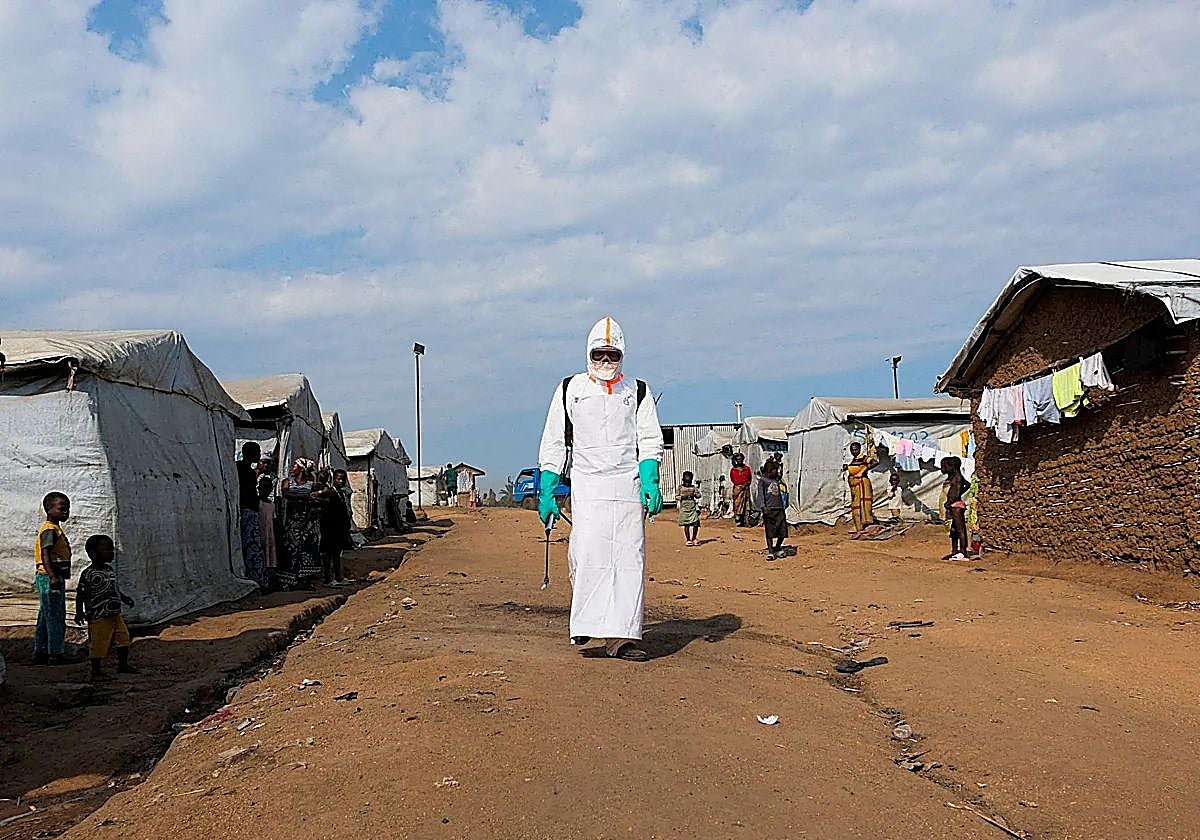

The areas where Ebola virus outbreaks may occur are set to expand in the future due to climate change, with outbreaks becoming more likely. This ... is the case regardless of the climate change scenario at the base, according to a study by the UMA (Malaga University).
A research team led by UMA scientists, in collaboration with Instituto Español de Oceanografía, Manchester Metropolitan University and the Center for International Forestry Research, have discovered that Ebola virus outbreaks do not occur at random over time.
The research, published in the journal Stochastic Environmental Research and Risk Assessment by Springer Nature, shows that the emergence of this zoonotic disease is linked to large-scale weather patterns ("climatic teleconnections"), which occur thousands of kilometres away from the African continent.
The method
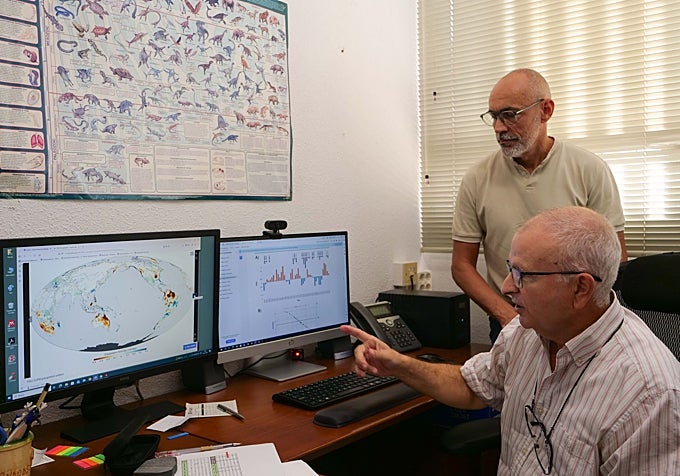
To reach this conclusion, the researchers analysed data from 49 outbreaks that happened in Africa between 1976 and 2025 and cross-referenced it with 26 climate oscillation indices. The model was calibrated using data collected up to 2018 and used the period 2019-2025 to test its predictive ability.
The analysis identified four major indicators associated with the distribution of the disease: the PDO (Pacific Decadal Oscillation), which is the most decisive and recurrent factor, the IOD (Indian Ocean Dipole), the QBO (quasi-biennial oscillation of stratospheric winds) and the CAR (Caribbean Sea surface temperature).
These large-scale global fluctuations alter local weather patterns, such as rainfall levels in Central Africa, changing the ecological conditions that facilitate interaction between wildlife and human populations. Although these fluctuations do not directly cause the virus, they act as environmental indicators that provide a lead time of between six and twelve months.
This timeframe enables health systems to implement surveillance and preparedness measures in specific high-risk regions and periods.
This finding is particularly significant in the context of the epidemic in the Democratic Republic of the Congo, where public health has recorded more than 8,000 confirmed cases and 3,901 deaths, with a case fatality rate of around 50 per cent.
The authors of the study are continuing to work on the development of a comprehensive monitoring system that combines macroclimate, local meteorology, deforestation and wildlife biogeography to improve the early detection of epidemics.
