
Health
Malaga mother pioneers research into daughter's rare condition
Malaga University is developing a bioinformatics tool that compares the clinical and genetic profiles of hundreds of patients to advance the development of personalised treatments for SYNGAP1 and RASopathies

Celia is a 26-year-old woman from Malaga living with the Syngap1 syndrome: a rare condition caused by a mutation in the Syngap1 gene, ... located on chromosome six.
There are 1,500 diagnosed cases worldwide, but thousands more remain undiagnosed, as the symptoms can be mistaken for other conditions and genetic testing is not always accessible.
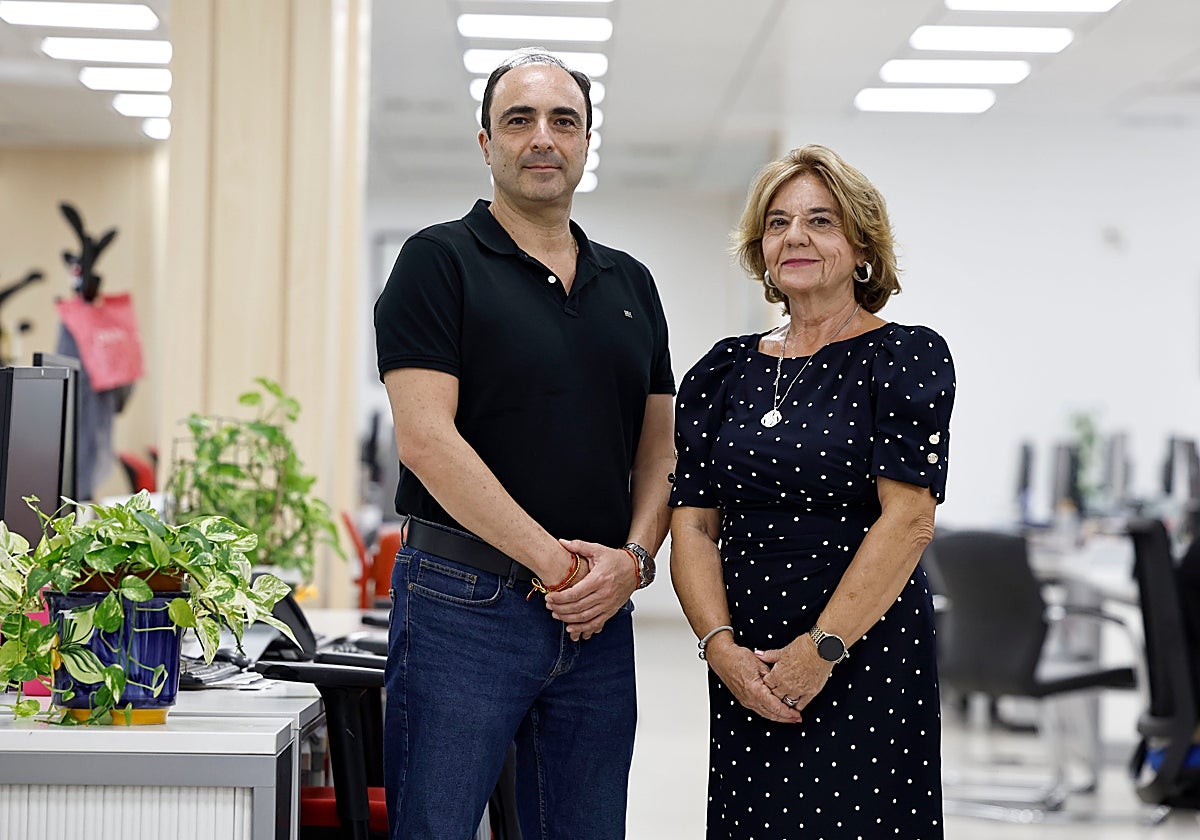
Celia's mother, Encarnación Postigo is a Professor of Translation at Malaga University (UMA). She has been fighting to raise awareness of her daughter's condition and her drive has enabled the UMA to take part in a European project called Euras.
The initiative aims to advance personalised treatments through an international patient registry that allows for the comparison of symptoms, genetics and response to medication.
The contribution from Malaga involves developing bioinformatics tools capable of comparing the clinical and genetic profiles of hundreds of patients, grouping them according to their characteristics and helping identify which treatments might work best for each group.
The gene is responsible for providing instructions for the production of the Syngap protein, which is essential for the proper development of the nervous system and the connections between neurons.
When the protein is missing or abnormal, Postigo tells SUR, a series of severe neurological disorders occur: intellectual disability, epilepsy, psychomotor retardation and severe language difficulties. "There is no cure," Postigo says with resignation.
In her early years, Celia was frequently admitted to hospital and attended state schools. When she began to experience severe epilepsy, however, she was unable to continue her education.
By chance, the family learned that Dr Elizabet Gabau, a geneticist from Sabadell, was working on a project to establish a diagnosis. They travelled to the Catalan city, underwent the tests and, a year later, the cause of Celia's condition was identified.
The young woman's mutation was not inherited and did not affect her siblings. "From the age of 18, her epileptic seizures worsened exponentially and she lost her physical mobility drastically. Her life is now very restricted," the mother says.
The young woman requires constant supervision and care and is also highly sensitive to stimuli.
Circumstances
"Given her circumstances, it is not possible for her to attend any centre, because she needs constant care and, let's be realistic, there are no resources, no budgets, no planning and no specialist expertise to cater for patients of this kind," Postigo explains.
Many medicines are not funded. "Our hope lies in research," Celia's mother says. In Malaga province, there are only four people with this condition.
Molecular Biology Professor Juan Antonio García Ranea is a researcher at the Ciber for rare diseases. He is spearheading the European Euras project, which focuses on RASopathies and the development of bioinformatics tools that can also be applied to other genetic disorders such as Syngap1 syndrome.
"The Ras protein plays a fundamental role in cell signalling and in the functioning of many organs, including the brain," García Ranea explains. In the case of Celia's condition, there has been an overactivation.
Researchers from Germany, Austria, France and the UK are taking part in this project. "We are working on phenotyping, that is, characterising the symptoms of all patients in a registry. It now includes 500 patients across Europe. We determine their characteristics and look for similarities between them in order to classify them into groups," García Ranea explains.
"This is very important when it comes to identifying the physiological basis and understanding the differential mechanisms. It is the path to personalised medicine," he adds.
Bioinformatics
All of this is achieved through bioinformatics and systems biology, which enable us to integrate large amounts of data and create models that simulate the behaviour of these systems.
"It allows you to explore new avenues, looking for links with what already exists," the researcher says. Once the molecular basis of the disease is better understood, the possibility of identifying new approaches opens up.
Once the patients have been classified and placed into affinity groups, the closed-label trials for each group begin. "This runs in parallel with other groups that develop cellular models, organoids or animal models in which to test treatments and medicines. We play a role in this because, in many of these models, the treatment is administered in an attempt to find something that will alleviate these patients' problems."
This Thursday and Friday, the UMA has been hosting a workshop on rasopathies (IWRAS 2026), attended by Professor Robert A. Levy from the Allen Institute for Brain Science in Seattle.
"Levy has managed, using an adenovirus that crosses the blood-brain barrier, to introduce a correct copy of the altered gene. The technique has worked in mouse models and has improved symptoms associated with epilepsy," García Ranea says.
"We are going to assess how we can use this patient registry to design the clinical trials: we want to identify those who are most likely to respond."
The UMA researcher says they "have made considerable progress". "Perhaps we're pioneers on a global scale," he states.
The UMA is also looking at how to repurpose existing drugs and predict, based on each patient's characteristics, which ones might prove most effective.
![[]](http://static.vocstatic.com/voc26/latest/assets/images/favicon/surinenglish/apple-touch-icon-57x57.png)