
Health and wellness
The Costa del Sol Hospital introduces an innovative device for thyroid surgery
The centre has acquired a probe that makes it easier to locate parathyroid tissue during high-risk surgery, thereby reducing complications

Marbella
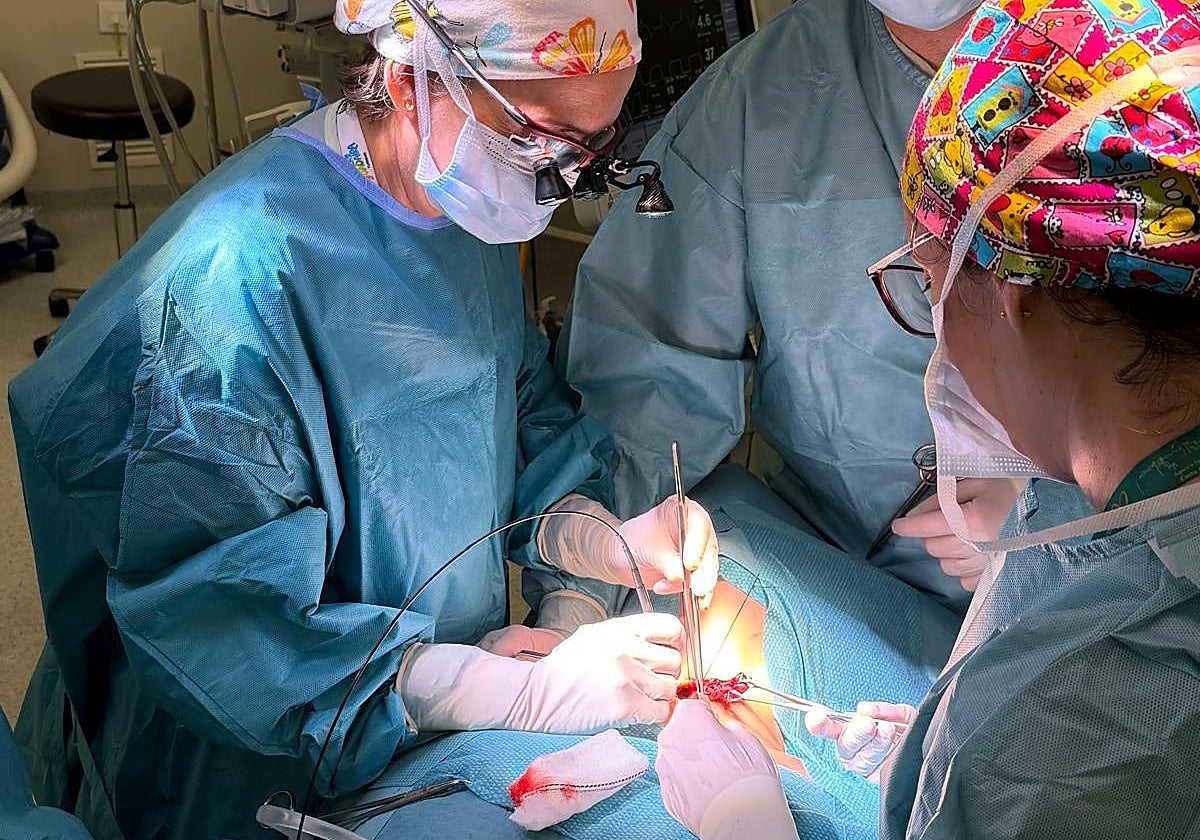
The Costa del Sol University Hospital (HUCS) has taken a further step forward in surgical innovation and quality of care with the introduction of an ... innovative device designed to locate and preserve the parathyroid glands during thyroid surgery. This is the PTeye autofluorescence probe, an instrument specifically designed for procedures carrying a ‘high risk’ of post-operative hypocalcaemia, as explained by the hospital. The Costa del Sol thus joins other Andalusian hospitals that already use this technique in thyroid surgery.
The parathyroid glands are four small structures situated at the back of the thyroid gland, whose main function is to regulate calcium levels in the body. “Given their extreme fragility and small size, it is crucial for patients that they are accurately detected and identified during surgery,” say staff at Marbella Hospital. An inadvertent injury to or removal of these glands - they explain - can lead to hypoparathyroidism, which may be temporary but, in some cases, can also be permanent, forcing the patient to take lifelong medication to regulate calcium levels, which would affect their quality of life.
PTeye technology utilises the property of autofluorescence to assist the surgical team in identifying parathyroid tissue and distinguishing it from other adjacent tissues in real time during the operation, without the need to administer a contrast agent. When the surgeon brings the PTeye probe close to a parathyroid gland, it emits a laser signal at a specific wavelength which excites the gland; the gland responds with a signal, which the console quantifies and translates into an acoustic signal.
The technique has been used in two cancer-related procedures, with ‘fully satisfactory’ results
The General and Digestive Surgery Department at HUCS has already used this technique on an ad hoc basis in two complex oncological procedures, with ‘fully satisfactory’ results. In both cases, they state, “the use of the PTeye probe facilitated the localisation and preservation of the parathyroid glands” and the patients were discharged within 24 hours with no impairment of parathyroid function. “These results are preliminary, but they suggest a potential benefit of the technique in the most complex cases,” they add.
Quality of surgery
“There is no doubt that his appointment will help to improve the quality of the surgery carried out at our centre and, as a result, enhance our patients’ quality of life,” says Cristina Martínez Santos, a specialist in endocrine surgery at the Costa del Sol University Hospital and the driving force behind this initiative.
With the introduction of this autofluorescence detection system, the Endocrine Surgery Department at HUCS is reinforcing its commitment to excellence in patient care, positioning itself “at the forefront of surgical practice in the management of complex thyroid conditions and enhancing patient safety”.
The thyroid conditions most commonly seen in hospitals in Malaga are hyperparathyroidism (a condition affecting the glands situated next to the thyroid), malignant and benign thyroid conditions and thyroid nodules. Experts such as Dieter Morales García, a surgeon in the Endocrine, Metabolic and Sarcoma Surgery Unit at the Virgen de la Victoria University Hospital in Malaga, have warned that "we are seeing more and more cases", many of which are discovered during routine tests such as blood tests or check-ups, or during ultrasound scans that patients undergo because they are experiencing shoulder pain.
![[]](http://static.vocstatic.com/voc26/latest/assets/images/favicon/surinenglish/apple-touch-icon-57x57.png)