
Health and wellness
Why do we get cold sores on our lips and how can we get rid of them?
There is no cure for cold sores, but there are treatments that help to control outbreaks and alleviate the severity of the symptoms
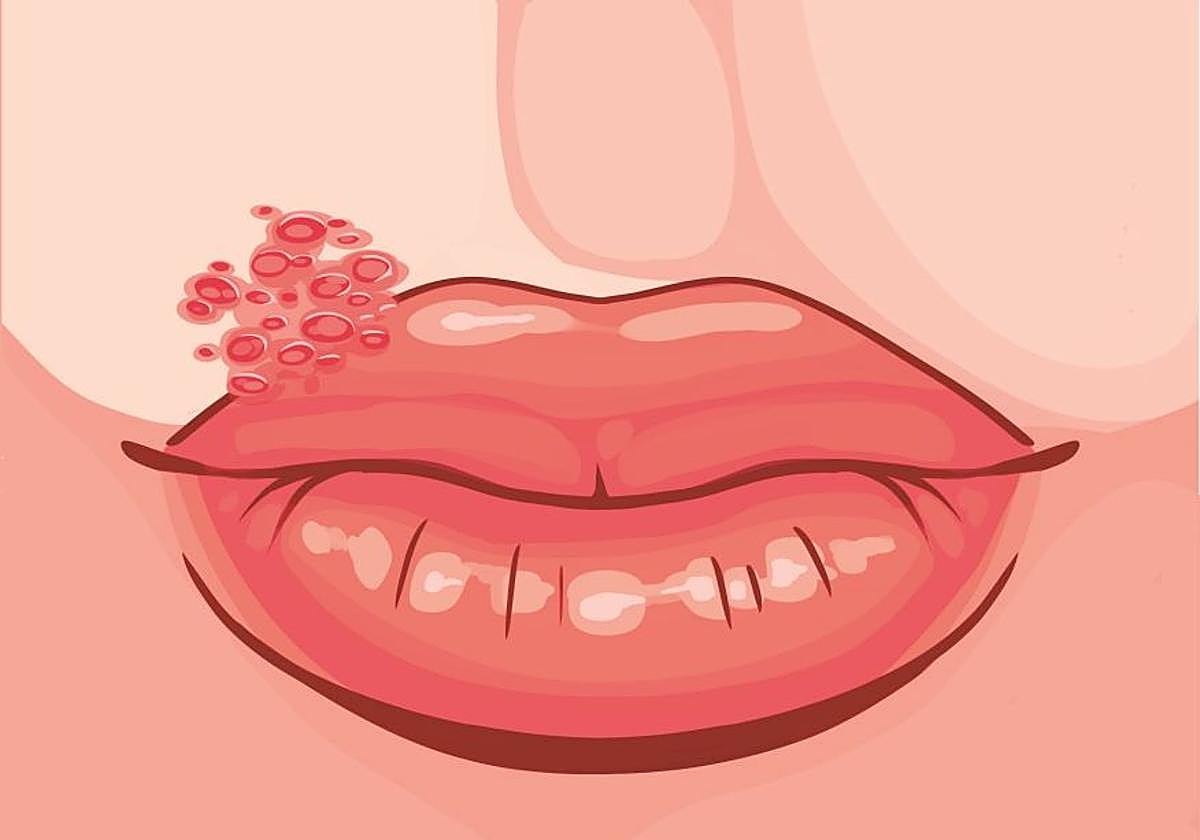

They’re annoying, a nuisance, unsightly… and to top it all, they have a nasty habit of flaring up at the worst possible moment. People ... prone to herpes can sense them coming even before they break out. First you notice a slight tingling sensation, then you feel a sort of throbbing on your lip, and within a few hours… There it is: a most uncomfortable cold sore that will stick with you for the next fortnight, at best. And not just you. Because this viral infection, which usually occurs in and around the mouth but can also affect the genitals, affects more than half the world’s population.
“The herpes simplex virus (HSV) is highly contagious and is transmitted via saliva, mucous membranes and direct contact with the sores themselves, so we must take extreme precautions to avoid spreading the infection even further,” warns the Academia Española de Dermatología y Venereología (AEDV).
Cold sores, also known as lip blisters or lip ulcers, have no cure, but there are treatments that can help control outbreaks and alleviate the severity of the symptoms, which are often ‘extremely uncomfortable’: blisters, scabs, itching, pain, a burning sensation and even a fever and general malaise. But why do some people get cold sores on their lips three or four times a year, whilst others have never even experienced one?
Most people infected with HSV are completely asymptomatic, but there are many others who, the first time they come into contact with this virus (primary infection), not only develop a cold sore, but whose bodies react more intensely with spikes in temperature, headaches, swollen lymph nodes, general malaise… "In the case of children under the age of five, herpetic lesions may also appear inside the mouth, which are often mistaken for mouth ulcers," the AEDV points out.
What happens after that initial exposure - and which also explains why the blisters almost always appear in the same place - is that the virus lodges in the nerve endings of the infected area "in a sort of dormant state, until it finds a favourable situation to reactivate itself,, according to the Clínica Universidad de Navarra (CUN).
The first infection
Among the factors that trigger a recurrence of herpes simplex are "stress, trauma to the affected area, fatigue, prolonged exposure to the sun or wind (use sun cream on your lips) and changes in both hormone levels (particularly during menstruation) and the immune system,” the experts agree. What remains unknown is why herpes reactivates in some people but not in others, particularly in cases where flare-ups are more frequent. Some studies link the severity and intensity of the symptoms of the initial infection to the frequency with which cold sores recur.
To prevent the onset of the condition, practise thorough hand hygiene. It is essential to keep your hands clean, especially if you are going to touch babies. Another measure, however obvious it may seem, is to avoid kissing. The virus spreads more easily when the blisters leak fluid.
“In the case of genital lesions, it is not advisable to have sexual intercourse and, if you do, use a condom,” the AEDV advises. You should also avoid sharing personal items such as towels, cutlery, lip balms, etc.
Home remedies?
People with recurrent herpes often turn to home remedies recommended by family or friends in the hope of getting rid of the cold sore as quickly as possible (ice, warm compresses, toothpaste, alcohol, aloe vera, tea tree oil...) – but these aren’t always a good idea. “When cold sores are recurrent - more than nine times a year - painful or even debilitating, oral antiviral medicines work very well, especially if taken within the first 48 hours and always on prescription,” advise Gavín Dermatólogos.
In the case of topical antiviral creams - the classic ointments for blisters - "there is no scientific evidence that they speed up healing. They may alleviate the symptoms somewhat (itching, burning, etc.), but little else. Something similar applies to adhesive plasters: they do not treat the lesion, they simply help to prevent it from spreading so easily. The important thing in these cases - adds the specialist - is to keep the wound clean to prevent secondary infection. In general, topical antiseptics or antibiotics such as chlorhexidine or povidone-iodine (Betadine) can be used.”
Complications
In some people, this virus can cause ‘problems’ in other parts of the body, such as the fingertips (this is common in children who suck their thumbs) or the eyes. If the infections are recurrent, they can cause scarring and lesions that could seriously affect eyesight.
"Patients with atopic dermatitis are at greater risk of cold sores spreading to other parts of the body," warn dermatologists.
Ageing, vaccines and shingles
The vaccine against herpes zoster, commonly known as shingles, not only provides effective protection against this painful infection, but may also slow down the ageing process. This is the conclusion reached by a group of scientists at the University of Southern California (US) after studying nearly 4,000 people aged over 70 who had taken part in a national study on health and retirement in 2016. “The findings are interesting, but this is not a clinical trial. It does not establish a cause-and-effect relationship, nor does it mean that the vaccine automatically protects against the signs of ageing. What this study does, however, is provide clues, highlighting associations between the vaccine and improvements in certain indicators related to ageing. And that opens the door to further research,” state representatives of the Spanish Society of Immunology (SEI).
