
Health and wellness
A 30 per cent increase in survival rates: the Clínico shows patients how to ‘restart’ their lives after a heart attack
Since 2000, more than 5,000 people have been treated at the Cardiac Rehabilitation Unit, which teaches patients how to retrain their hearts, manage risk factors and improve their quality of life
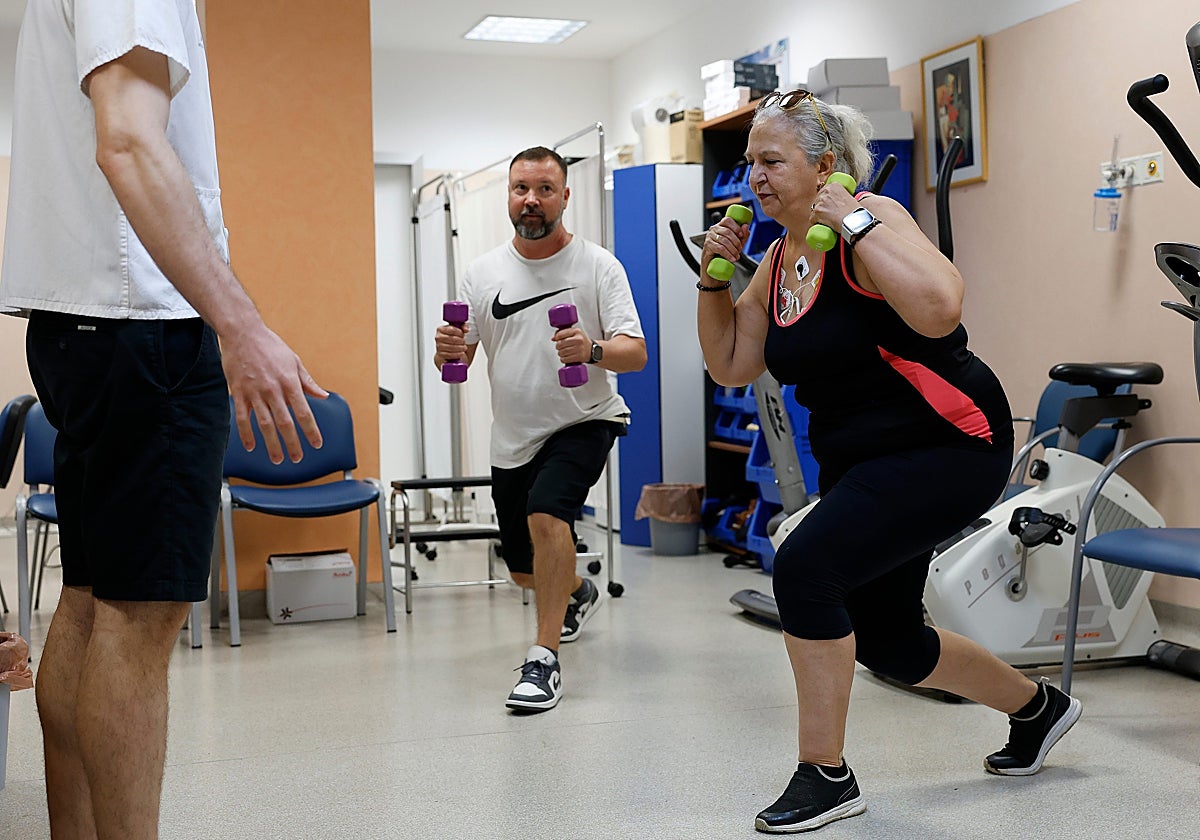

Since its establishment in 2000, the Cardiac Rehabilitation Unit at the Virgen de la Victoria University Clinical Hospital in Malaga has treated more than five ... thousand people. This is a multidisciplinary unit where patients who have suffered a heart attack or ischaemic heart disease, who have undergone heart bypass surgery or surgery for valvular heart disease, or who are suffering from heart failure, undertake a programme combining strength and aerobic exercises tailored to their condition, psychological counselling, health education and adjustment of medication, as well as management of cardiovascular risk factors, as Adela Gómez González, the unit’s coordinator and director of the Department of Physical Medicine and Rehabilitation, explained to SUR.
This work has such a significant impact on these people’s lives that their survival rate improves by up to 30 per cent. There is a clear before and after when it comes to attending this unit. Dr Gómez explains that this programme was established around 1960, as it was found that simply resting was not beneficial for heart attack patients. “Studies concluded that physical exercise was the right approach: it is a multidisciplinary strategy that involves a thorough assessment of the patient to ensure their heart is in the best possible condition. We aim to help them change their lifestyle, managing all risk factors to prevent further heart attacks,” she explains.
Dr Gómez adds that the programme therefore reduces mortality among heart patients and the incidence of cardiac events; there are fewer hospital admissions; risk factors are managed; and there are improvements in diabetes, cholesterol levels, high blood pressure and a sedentary lifestyle – and, in particular, in quality of life. “The exercise-based cardiac rehabilitation programme reduces mortality by 30 per cent,” she states. “A single MET – which is a unit of functional capacity – increases survival by 12 per cent,” she adds.
Programme
The programme is run for 300 people over two months, with sessions three days a week. This amounts to around 1,000 patients every twelve months. Over the past 26 years, 10,000 people have been seen in consultation. Depending on whether the risk is moderate, low or high, patients are either monitored in person or included in a home-based rehabilitation programme.
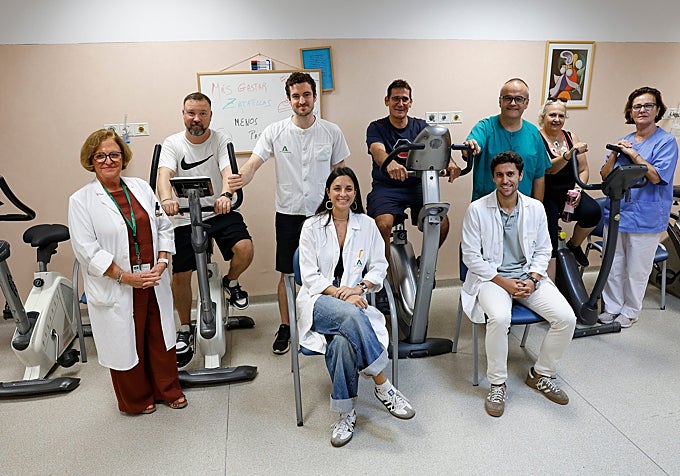
Cardiologist Ángel Montilla emphasises: “The programme is tailored to each patient to help them return to their normal lives and improve their quality of life. Exercise is also used as part of the treatment for the condition, alongside psychological therapy and dietary therapy. Patients often arrive feeling anxious and uncertain, but most end up very satisfied with the multidisciplinary approach.”
The team comprises cardiologists, rehabilitation specialists, physiotherapists, psychologists, nutritionists, endocrinologists, GPs, nurses and urologists. In addition to the unit at El Clínico, there is another unit at a health centre in Alhaurín el Grande.
Eight out of ten patients see an improvement in their risk factors after attending the unit: from blood pressure to diet, including smoking and diabetes
Dr Gómez adds that the typical patient is a 53-year-old man who has suffered a heart attack and undergone revascularisation via angioplasty, and who has high blood pressure and dyslipidaemia. “Eighty per cent see an improvement in their functional capacity,” she points out; their blood pressure returns to normal, they give up smoking, and around half are able to adjust their diet to a healthy one, although there are always 20 per cent of people who do not adhere to the treatment. There is a gender bias: many women do not attend this unit because they prefer to continue looking after the rest of their family rather than themselves. To address this, classes tailored to their timetables were organised with the aim of involving them in their own wellbeing.
“On World Heart Day, we need to remind people that they must look after themselves from the outset, not only once they’ve had a heart attack,” says Dr Gómez.
Physiotherapy
Alberto Toval is the physiotherapist leading Monday’s session with four patients. First, they do a warm-up using resistance bands and then they pick up some small weights and lift their legs in turn. One of them is feeling a bit off and has to stop. They get on the exercise bike and then walk on the treadmill for half an hour. A telemetry device measures their vital signs and displays them on the computer for the staff to see. They must not exceed a certain heart rate. “The fourth exercise is flamenco,” says Toval. There are squats, followed by relaxation exercises to finish off.
Sebastián Fuentes Álvarez is 48 years old and comes from Malaga. He had a double bypass on 23 February. “I had a blockage; they tried to perform two catheterisations on me, but as they couldn’t insert the stents, they had to operate,” he tells SUR. “I’m getting better now. I know my limitations – the heart rate I can reach whilst exercising: 100, 102, no more. Here we do cycling, stretching, light weights – very gentle exercises,” he says with clinical detachment. He now has greater flexibility and, above all, his mental state has improved. “You come into contact with more patients who are in the same situation as you; it makes you feel supported,” he says.
Women continue to be left behind: many say they do not have time to look after themselves so that they can continue to care for their families
Mari Nieves Hernández, originally from Madrid and who has lived in Malaga for 15 years, suffered a heart attack in March and has since had heart surgery. “They want us to see exercise as just another part of our daily routine; I’ve been doing it all September. Now I don’t get as tired when I walk, and I’m more keen to say: ‘I’ll get up and go for a walk’ – they help us a lot here.”
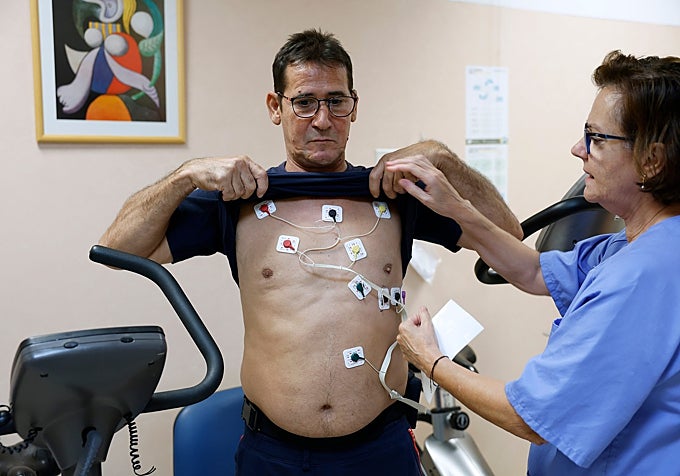
Salvador Peralta, aged 51, has heart failure. His heart was functioning at 36 per cent. “I walk a little; they told me not to overexert myself. They monitor this on a screen. I feel better when I’m on the exercise bike or treadmill. My heart can’t go above 90 beats per minute; when it reaches 85, you know it’s under control.” “I have two children, one aged three and the other six; I have to fight for them. Sometimes I get desperate thinking about their future – today’s the eldest’s birthday,” he says, smiling as he promises to look after his ailing heart so he’ll never let his little ones down. I’m sure he’ll manage it.
![[]](http://static.vocstatic.com/voc26/latest/assets/images/favicon/surinenglish/apple-touch-icon-57x57.png)