
Health
Malaga hospital treats 91 patients using CAR-T. which radically changes blood cancer prognosis
This type of personalised medicine has transformed the outlook for some patients with haematological tumours since it was first introduced in Malaga
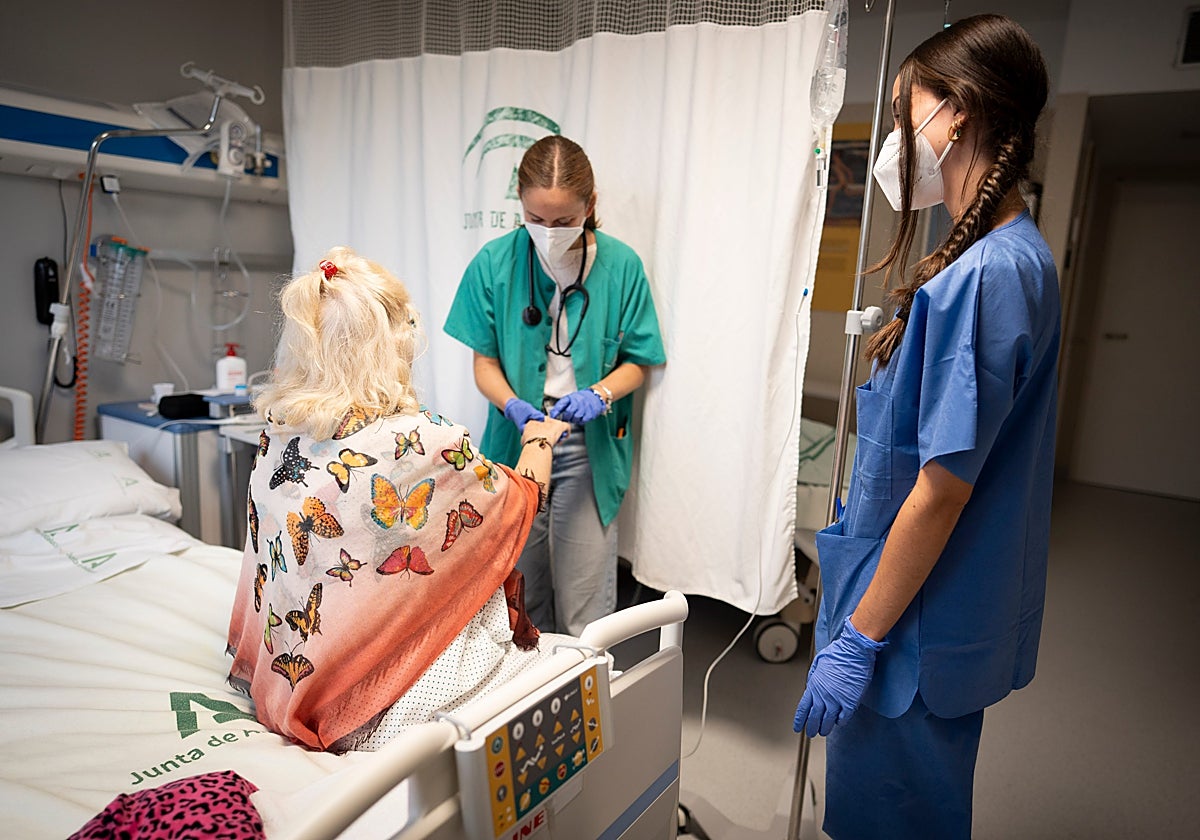

CAR-T therapies represent the cutting edge of medicine in the treatment of certain blood cancers: they use the patient's own cells to attack ... these tumours.
The haematology and haemotherapy department at Malaga's Hospital Regional has treated 91 patients since June 2023, when the treatment first became available (eight in the first year, 18 in 2024, 25 in 2025 and 40 this year). According to data, there are 110 approved applications.
"What we have achieved with CAR-T therapy is to radically improve the prognosis for certain patients who, until a few years ago, had very limited treatment options," Dr Carola Díaz Aizpun, clinical coordinator of the programme at the Malaga hospital, says.
What does the treatment involve? It is a personalised therapy "in which we use the patient's own immune system to fight their cancer. We extract T-lymphocytes via apheresis. These are then genetically modified in the laboratory to introduce a receptor called CAR, which enables them to recognise tumour cells more specifically and destroy them," Dr Díaz Aizpun explains. After modifying and multiplying them, they are administered back to the patient intravenously.
It is "a paradigm shift because, once administered, these cells can remain in the body and continue to monitor for the disease over a prolonged period".
Head of the haematology department Manuel Isidro Muñoz Pérez states that "the key change is that they can now receive treatment at their own hospital for a condition that, years ago, would have required them to travel to another specialist centre".
To provide this treatment, the hospital required an in-depth training programme for multidisciplinary teams and the provision of suitable infrastructure.
Referral hospital
Hospital Regional is the leading centre in this field for the whole of Eastern Andalucía (Granada, Almeria and Malaga). It is also a well-established centre for research and clinical trials in cell therapy.
At the hospital, CAR-T is used to treat certain B-cell lymphomas, B-cell lymphoblastic leukaemia and multiple myeloma. It is already administered to paediatric patients with acute lymphoblastic leukaemia.
It is not an experimental therapy and is gradually being incorporated into the "standard treatment" for various haematological malignancies.
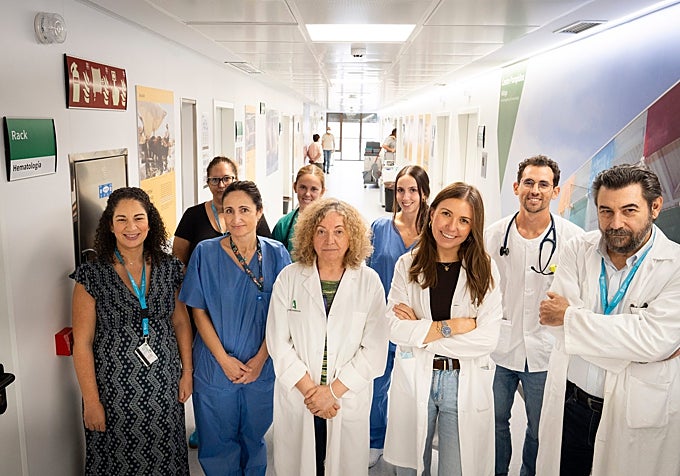
CAR-T was traditionally used in patients who had relapsed or were refractory, but its use is now extending to earlier stages. In some types of lymphoma, it is already being administered after first-line treatment when the disease is refractory or relapses early.
In multiple myeloma, the trend is also towards using it at an increasingly earlier stage, when the patient's general condition and tumour burden may allow a favourable outcome. "We should no longer view it exclusively as a last resort," Díaz Aizpun says.
According to him, the results depend very much on the disease, the patient's clinical condition and the product used. Generally speaking, "we are seeing very significant responses in a substantial proportion of patients, including those who had exhausted several lines of treatment and whose disease was no longer responding to conventional therapies".
Multiple myeloma
In multiple myeloma, for example, "the response rate in the first three months is 100 per cent, but we need more time to see whether these patients can be cured".
"In lymphoma, our response rate is around 70 per cent and we already have patients who have been followed up for longer periods without the disease returning," Dr Díaz Aizpun states. "There are patients who achieve complete remissions for years, but we also know that not everyone responds and that some may relapse after an initial response."
In other words, "the prognosis for certain patients", who years ago had limited treatment options, has changed radically, but he warns that we must be cautious when using the word "cure". Long-term follow-up is required.
"What we can say is that there are patients who have shown no evidence of disease for years following CAR-T therapy, something that was previously very difficult to achieve in certain scenarios," Dr Díaz Aizpun celebrates.
The initial phase of treatment is demanding, but afterwards "many patients gradually resume their usual activities" and are able to lead a "relatively normal life within a few weeks, while for others recovery is slower and may take several months".
"Once they have come through the whole process, we see patients returning to work, travelling, enjoying family life and resuming activities they had had to give up," the doctor says.
In order for a patient to be eligible for this treatment, their doctors have to collect all their data, document their condition and history of treatment responses and then send them to the Ministry of Health. The The departments involved include haematology, nursing, pharmacy, intensive care medicine, neurology, immunology, the blood, tissue and cell transfusion centre, etc.
The use of CAR-T also requires close monitoring for potential complications such as cytokine release syndrome and neurotoxicity. Its use, initially reserved for patients who have relapsed or are refractory, is moving towards earlier stages: currently, most patients receiving CAR-T therapy have undergone one or two previous lines of treatment.
CAR-T is advancing very rapidly and will increasingly be used to treat more diseases at earlier stages, while the treatments will become more effective and safer. "The future will not be a single CAR-T treatment for all diseases, but increasingly personalised medicine," Dr Díaz Aizpun says.
![[]](http://static.vocstatic.com/voc26/latest/assets/images/favicon/surinenglish/apple-touch-icon-57x57.png)