
Health
Only 12 of Malaga city's 27 health centres have security staff this summer
Between January and 22 July 2026, Malaga reached 64 per cent of all assaults on medical staff in 2025
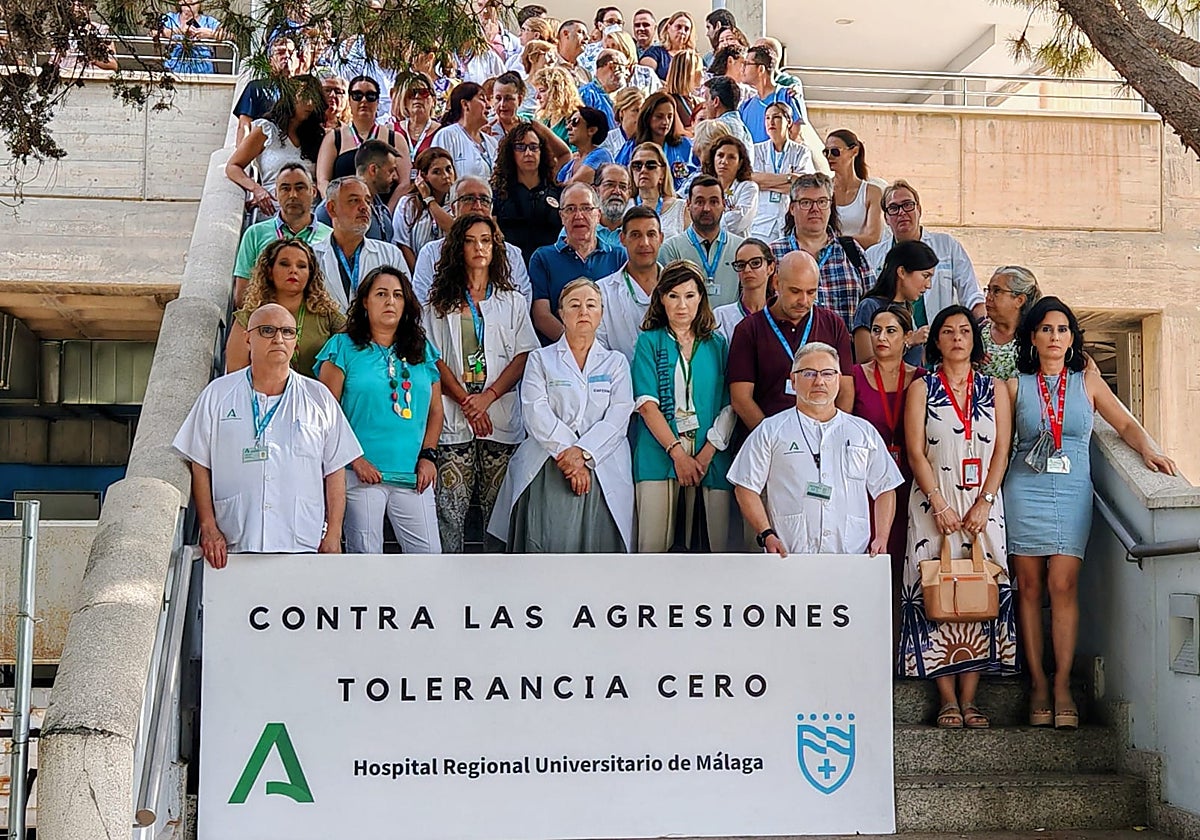

Medical associations in Malaga have provided some concerning data according to which there have been 46 assaults on medical staff between January and 22 July ... 2026. This is 64 per cent of all the assaults recorded in the whole of 2025.
"He punched me in the nose and tried to kick me." These are the words of a GP who works at the Villanueva del Rosario centre and is among one of the many healthcare workers assaulted by patients.
Teresa Valle from the SMM union of Malaga healthcare workers told SUR that, of the 27 health centres in the Costa del Sol capital, only 12 have escape routes and the same number have security staff, although not for the entire time they are open.
Related story
-
Health
José Antonio Sau
"More than half of the health centres in Malaga city have neither security staff nor escape routes," she stated.
Valle told SUR that "during peak periods, the number of assaults is higher".
"We urge people to report all incidents because, without figures, no action is taken," she said. Valle believes that this year's figure will far exceed the 72 assaults recorded in 2025.
President of the medical association Pedro J. Navarro said: "It's been a rather chaotic summer because we're seeing almost one assault a day and the situation is very concerning." Navarro is calling for tougher penalties.
New law
Regional minister of health Antonio Sanz wants to introduce a law "with immediate effect" to protect healthcare staff, with much stiffer fines of up to 60,000 euros, "restricting aggressors' access to their healthcare centres and their doctor".
Navarro believes that this measure should go a step further. "For example, they should carry out community service in care homes, so that they can see what healthcare is really like from the inside," he said.
Navarro stated that healthcare workers are not to blame for the state of the healthcare system, as they suffer from waiting lists just as much, if not more, than patients do.
Sanz has stated that the bill he is drafting "will include a specific system of penalties aimed at protecting workers, covering verbal abuse (insults, harassment, threats and coercion), physical assault and attacks via digital media or social media".
Penalties "will be determined depending on whether the offences are minor or serious". Furthermore, the regional ministry is considering "additional measures (...) such as restricting or imposing conditions on access to healthcare facilities, changing the facility or healthcare professional assigned to the perpetrator or coordinating with any judicial measures that may be taken".
Female doctors under the age of 35 working in primary care are the most likely to be assaulted. Of the 72 incidents in 2025, 64 per cent of the victims were women. All incidents involved elements of verbal abuse (threats, coercion or insults) and 21.7 per cent of them involved physical violence.
Seeing a doctor
Psychiatrist José Miguel Pena Andreu is the provincial and regional coordinator of the comprehensive care plan for doctors with health problems (PAIME): a programme that provides confidential support to doctors experiencing mental health issues, addictions, psychological disorders or who have been the victims of assault.
According to him, the initial impact following an assault causes anxiety. If this reaction is left untreated or persists over time, it leads to depression.
Furthermore, some doctors are afraid of returning to work, of encountering their attacker or reliving the incident through nightmares and recurring memories.
Most doctors return to work, but "there is a kind of psychological wound" that does not go away, which contributes to burnout.
"Burnout in this profession is extremely dangerous, particularly for patients," Pena says. A burnt-out professional loses motivation and builds up a psychological defence mechanism in the face of patients' suffering. "This leads to a decline in the profession itself."
Pena says that such attacks have a collective impact. When a healthcare professional is repeatedly subjected to violence, the emotional toll extends to the rest of the team, particularly in primary care.
The regional government's measures
The regional government of Andalucía has stated that it is introducing security measures in healthcare centres and has stepped up its efforts to train staff to deal with such incidents.
Malaga has more than 7,500 security devices and measures in place across its healthcare centres, including nearly 600 CCTV cameras, more than 3,000 panic-alarm software systems, almost 1,400 alarm bells in consultation rooms and around 200 personal alarms.
In addition, healthcare workers are currently attending courses on managing conflict situations and on the plan for the prevention of and response to assaults on in the Andalusian public health system.
Over 800 Andalusian healthcare workers have been trained as 'support professionals': a key role of accompanying, advising on administrative procedures and providing support to staff who have been the victims of an assault.
Andalusian healthcare also provides swift and efficient channels to ensure that anyone who suffers an assault, whether verbal or physical, is not left on their own after the incident.
The regional ministry of health offers psychological support for as long as necessary, along with legal advice for those who decide to report the incident.
![[]](http://static.vocstatic.com/voc26/latest/assets/images/favicon/surinenglish/apple-touch-icon-57x57.png)