
Health
Costa del Sol hospital uses only five per cent of its state-of-the-art cancer treatment resources
The medical union says that staff shortages are leaving equipment worth more than four million euros idle
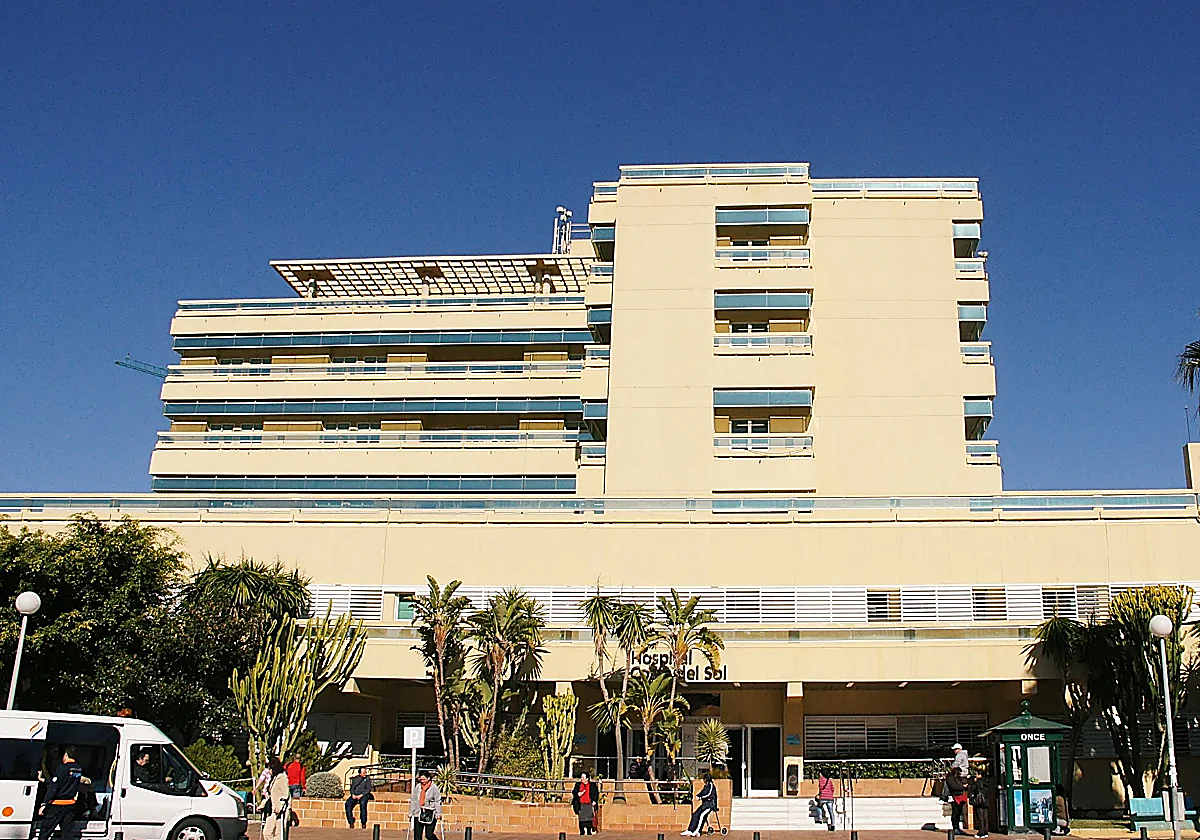

The Malaga medical union (SMM) reported on Thursday that the Costa del Sol hospital in Marbella is under-utilising state-of-the-art equipment for ... cancer treatments, with the facility operating at just five per cent of its capacity.
This, the union says, jeopardises "patient treatment". The SMM attributes it to the lack of specialists.
The radiotherapy oncology department would face "a potential week-long halt to its operations due to a lack of planning regarding the provision of essential staff".
Related story
The trade union confederation states that an unscheduled interruption to radiotherapy can "seriously compromise the chances of a cure and the response to the treatment, as well as hinder the management of pain, bleeding, compression of vital structures and neurological deficits".
Marbella SMM representative Cristina Guitard described the situation as "extremely serious". She stated that, for more than 30 years, "cancer patients have had to travel to hospitals in Malaga city to receive their radiotherapy treatments".
Guitard stated that these are "vulnerable people who have to travel to the city either by ambulance or accompanied by family members, enduring endless days spent waiting for hours on end to receive treatments that take barely a few minutes each day".
"In other words, it is completely unfair and inhumane," she stated.
In November 2024, the Marbella hospital appointed "the first specialist in radiation oncology and the first specialist in radiophysics", both of whom are essential for the commissioning of two pieces of equipment: linear accelerators and a brachytherapy unit, funded by the EU.
However, "it was not until June 2026 that a minimal level of care for cancer patients began, due to a failure to recruit the necessary staff". "We could say that these fantastic machines, which are so expensive and beneficial to cancer patients, are currently operating at just five per cent of their capacity," Guitard explained.
"Due to staff shortages, the service began operating exclusively for palliative care, and other patients continue to be systematically referred to the Clínico. (...) this forces people in a state of great physical and emotional fragility to make daily journeys of more than 50 kilometres for courses of treatment comprising up to 30 or more sessions," the SMM spokesperson said.
This equipment has an estimated average lifespan of 12 years. "We have lost two years and the underutilisation of this equipment represents a serious inefficiency in the management of public resources and a direct detriment to the public, who are being denied treatment just a few minutes' journey from their homes."
Guitard fears "a complete breakdown of the service due to a lack of planning of shifts", which could happen at any moment. "This poses a direct threat both to the continuity of treatments that have already begun and to the care of new patients who require urgent cancer treatment," she said.
The SMM is calling for staff levels that can ensure the sustainability of the service and the quality of care. "Cancer care requires complex multidisciplinary coordination that cannot be maintained under a system of organisational instability," she stated.
Consequently, "we must ensure that care is provided in a humane manner, avoiding unnecessary travel for vulnerable people". The trade union is calling for the service to be fully operational, "with both linear accelerators running at 100 per cent capacity".
The Costa del Sol hospital has not responded to SUR's requests for a comment.
![[]](http://static.vocstatic.com/voc26/latest/assets/images/favicon/surinenglish/apple-touch-icon-57x57.png)