
Health
Andalusian geriatricians warn that loneliness in older people is a cardiovascular risk factor like smoking
Dr Jesús Vargas says that Andalucía is the only region that doesn't have geriatricians employed in public healthcare
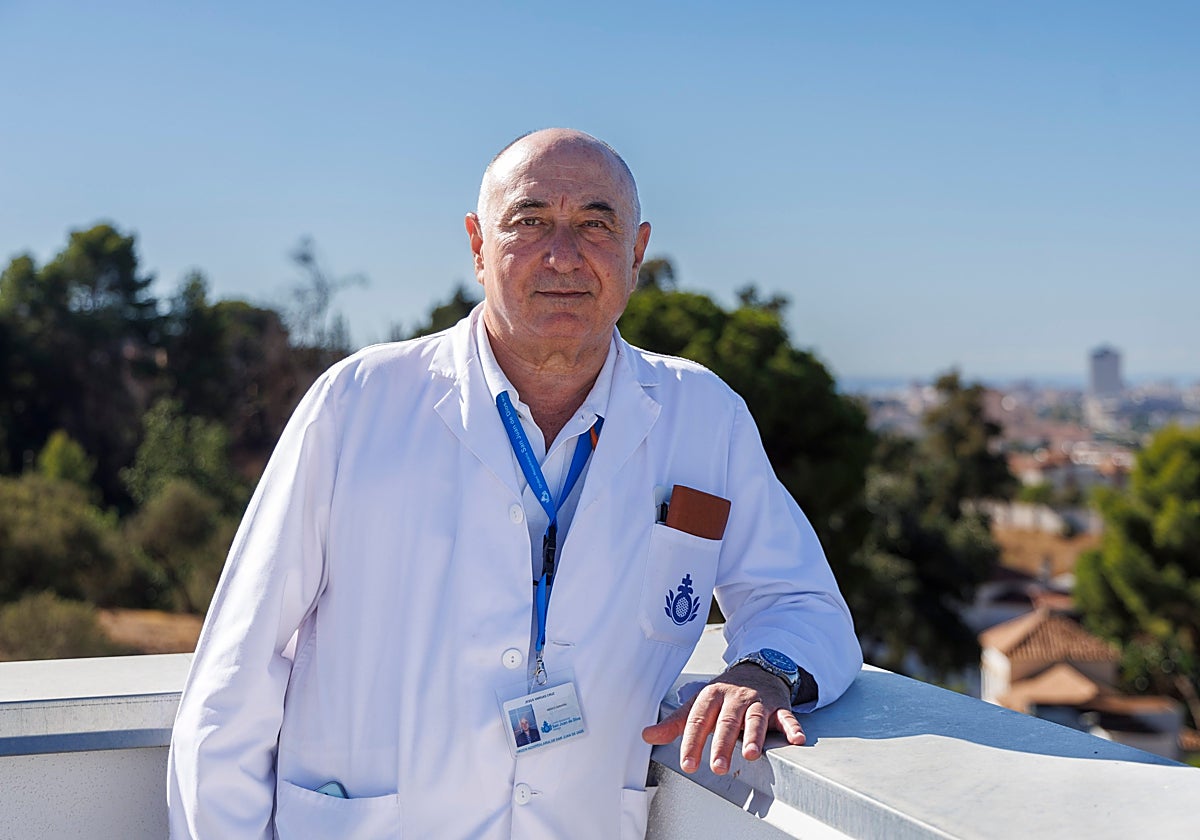

"Loneliness is a cardiovascular risk factor, just like smoking or high blood pressure, but it also has a psycho-emotional impact, leading to depression ... and a loss of quality of life," president of Sagg (Andalusian society of geriatricians) Dr Jesús Vargas says.
This Thursday, 1 October, marks the International Day of Older Persons, a very important date for over-65, who represent 19 per cent of Malaga province's population. Loneliness is a phenomenon that is "complex to tackle" because that involves the individual, their community and the society that surrounds them, which implies public investment.
Dr Jesús Vargas states that Andalucía "remains the only region that has no geriatricians in its public health system". "When you turn your back on a medical speciality whose doctors are trained through the MIR system to care for a specific section of the population, you are not helping to provide the care they need. It is an outstanding issue," he says.
"Ever since the training unit in Seville was closed (it used to produce two specialist trainees a year) we have been left in this situation. But even without a training unit, the system does not allow Andalusian geriatricians who want to return from other regions, for example, to come back and practise here," Dr Vargas states.
As for the healthcare system itself, he praises the SAS (Andalusian health service) chronic disease management plan. "But the new generations reaching old age want to carry on doing what they have always done and remain within their local communities. That requires a whole range of resources to allow people to remain in that environment for as long as possible," he says.
Challenges
Another challenge for the system is integrating health and social care. "The person has to be at the centre of care, and you cannot fragment the support they receive," he says.
So what is the best predictor of how a person will age? "The best predictor of how we will age starts in the cradle. For example, we can look at where we are at the age of 25 in terms of our cognitive and overall physical health, as well as our emotional wellbeing, because mental health is becoming increasingly important," Dr Vargas explains.
He calls for people not to be subjected to "limitations simply because they have had another birthday: they have the same rights and concerns". In his view, "society is living longer and ageing better".
There are many challenges to growing older, particularly "adaptive" ones. "How we prepare for change and how we respond to certain changes that are inevitable. These include nutritional, physical, exercise-related, emotional and psycho-affective aspects, as well as how we have lived, the kind of social relationships we have maintained and our life plans," he says.
"Although things are changing, retirement is still something abrupt and very chronological. It does not fit with the way we reach these ages today. We have to prepare for loneliness and look for hobbies and alternatives to what our working lives have been. People are living longer. From the age of 65 onwards, there are many years left to live, and we need to reshape our life plans," Dr Vargas states.
In his view, the main mistake people make as they grow older "is to let themselves drift and not challenge a culture of discrimination: social and institutional ageism, which also includes gender-related issues affecting women".
Old age begins when "our functional capacity becomes compromised" "It is when we become physically frail or clearly at risk of dependency." Biologically, biochemically and neuroendocrinologically, however, ageing begins earlier, he adds.
Independence
Asked whether people can regain some independence in their 70s or 80s, he says "there is always room for improvement". But his advice to someone who is 60 and wants to reach 80 in good health is clear: "Whatever you have not done before, start doing it, because it is worth it. You need to maintain an active life, eat a healthy and balanced diet, take regular physical exercise, stimulate your cognitive abilities and work on and foster interpersonal relationships and family and social ties in general."
At the same time, he warns that "ageing is being medicalised and turned into a business". "You cannot turn everything into a medical condition and even less so age itself. There are solutions that depend on us and are not medical."
When should a family start to suspect that someone is beginning to lose their independence? "We stop going out," Dr Vargas explains. There may also be "a decline in personal care". "We stop carrying out certain activities or household tasks. We gradually disconnect from our relationships outside the home and from the things we do at home."
Many people reaching this stage of life now want to continue living in their own homes, but some "overestimate their abilities and what they are capable of doing, while their relatives can feel somewhat lost". "We must respect people's life histories and life plans. There are borderline situations, such as the onset of cognitive decline, which make it very difficult to know how to respond," he states.
Finally, he recommends exercises focused on "strength, endurance, balance and a little aerobic exercise". There is a concept associated with frailty called sarcopenia (the loss not just of muscle mass but of muscle strength), which is why active ageing policies and interventions before dependency sets in are so important.
Frailty, therefore, "can be reversible if it is not accompanied by serious illness".
![[]](http://static.vocstatic.com/voc26/latest/assets/images/favicon/surinenglish/apple-touch-icon-57x57.png)