
Andalusian escape
Fuente de los Cien Caños: one of the most visited natural monuments in Malaga
From 1985 to the present day, it has become a place of pilgrimage on weekends after heavy rains

Málaga
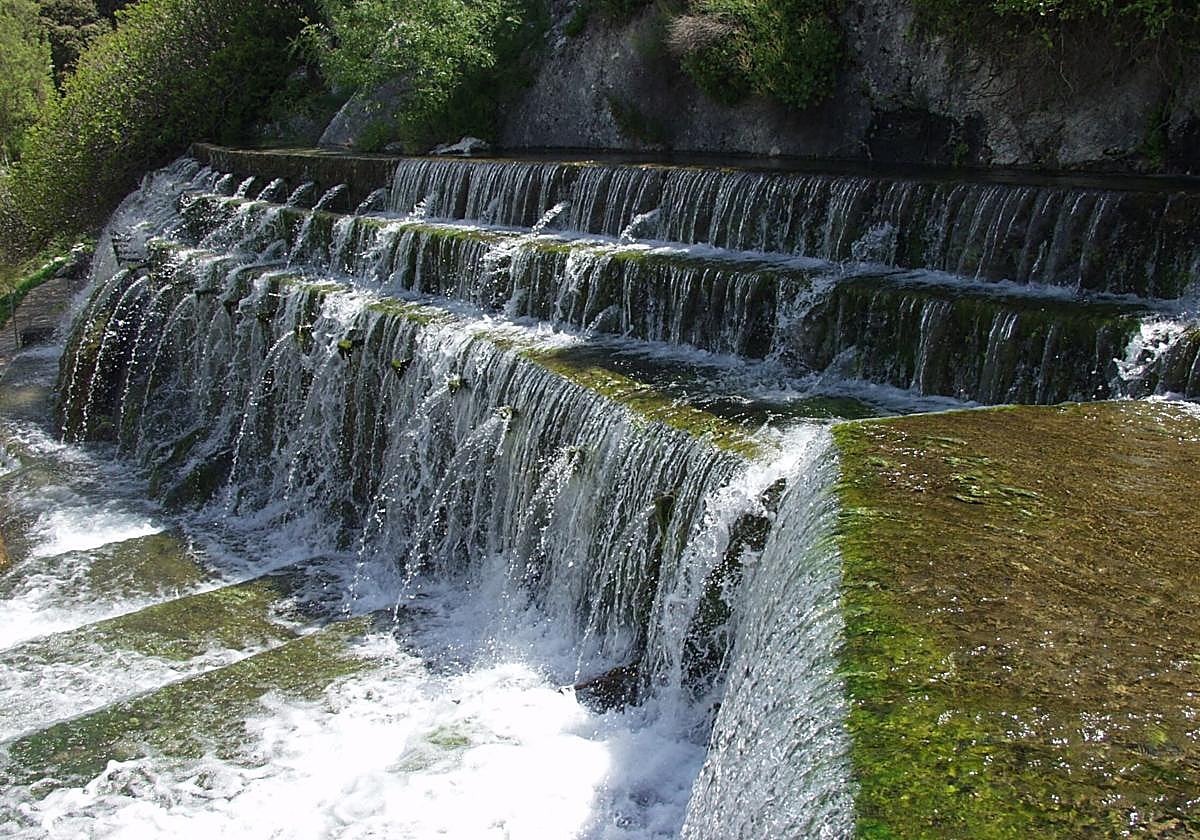
Today it is applauded, but, at the beginning, there were those who did not like the idea. Even today there are still some who criticise the fact that a 'corset' was placed on the spring. Heavy winter rainfall has brought the Fuente de los Cien Caños in Villanueva del Trabuco roaring back to life, producing the kind of breathtaking spectacle that stops scrollers in their tracks.
The water once again gushes out of dozens of spouts and the sound of the spring can be heard from several metres away. As a result, many Malaga residents have made their way to this inland corner of the province to contemplate the natural spectacle.
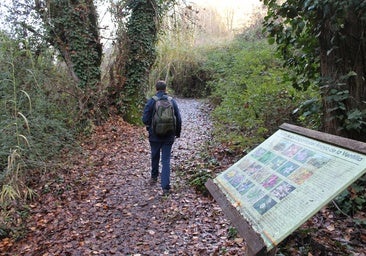
During the weekends, the influx has been so great that the access roads have even been blocked due to the large number of vehicles arriving at this enclave located at the foot of the San Jorge mountain range. It can also be reached on foot along the path that starts in Villanueva del Trabuco , although it is not advisable to do so after rainy days because of the mud.
This is nothing new. Every time the rains recharge the aquifers of this mountain range, the fountain once again becomes a kind of magnet for hikers, the curious and families looking for something different in the middle of nature. But what is now one of the most visited natural monuments in Malaga originally had quite a different history.
The water that springs in the Fuente de los Cien Caños comes from the interior of the San Jorge mountain range, a mountainous formation that forms part of the so-called Central Limestone Arc of Malaga. Beneath these mountains lies an aquifer of a karstic nature, i.e. formed by limestone rocks that act as a large natural sponge.
Related story
-
 Javier Almellones
When it rains heavily, the water infiltrates through cracks and cavities in the ground until it accumulates inside the mountain. When the pressure is sufficient, it emerges in the form of springs such as this one. This is why its behaviour is so irregular: it can offer a spectacular image in winter and spring and, on the other hand, be practically dry during the summer months or in prolonged periods of drought.
This spring is also one of the main sources of water to the Guadalhorce river, the longest and most abundant in the province of Malaga. Although the geographical origin of the river lies a few kilometres further north , in Granada territory, popular tradition has always pointed to this place as its source. This is not surprising: this is where the river really begins to gain strength. Just look at how the water flows down at the foot of the fountain.
The origin: 1985
Although the spring has always existed, the image that thousands of visitors know today is relatively recent. It was in 1985 when the Villanueva del Trabuco town hall decided to transform this place into a monumental fountain. Until then, the water flowed freely down the mountainside. The municipal project consisted of building several stepped retaining walls to channel the spring and distribute the water through a series of aligned spouts. The idea was to organise the spring and make better use of its flow.
The initiative, however, was not to everyone's liking. There were those in the village who criticised the artificial construction in the middle of nature. For a time, the fountain was the subject of debate among the villagers. Over the years, however, the opposite happened to what some feared: the construction ended up becoming the great tourist symbol of the municipality. Today it is difficult to imagine this place without this characteristic stone wall from which dozens of jets of water gush forth.
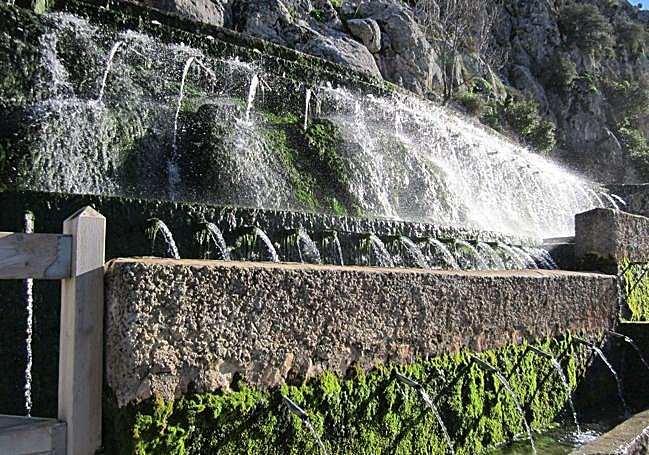
One of the most curious details of this enclave lies in its very name. Although everyone knows it as the Fuente de los Cien Caños (Fountain of the Hundred Spouts), if you stop to count them patiently you will discover something unexpected: there are actually 101 spouts. The explanation has never been entirely clear. Some believe it was simply a mistake during construction. Others argue that the last spout was added later. Be that as it may, this little anomaly has for decades fed one of the most repeated anecdotes about this place.
The landscape and geological value of the site was officially recognised when the Junta de Andalucía declared this enclave a Natural Monument in 2012. With this protection status, both the spring and the surrounding natural environment were safeguarded.
The site is also part of an area of great environmental interest linked to the Camarolos and San Jorge mountain ranges, where limestone formations, pine forests and Mediterranean scrub predominate.
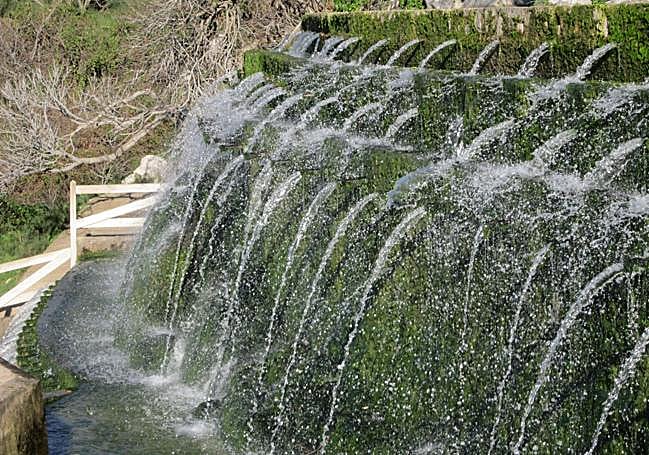
Over the years the site has become increasingly popular with hikers and walkers. Several paths start at the fountain. In addition to the one that follows the initial course of the Guadalhorce to the town of Villanueva del Trabuco itself, there is the more demanding circular trail of the San Jorge mountain range , but which rewards you with spectacular panoramic views, a small pond and even a group of horses that move freely around
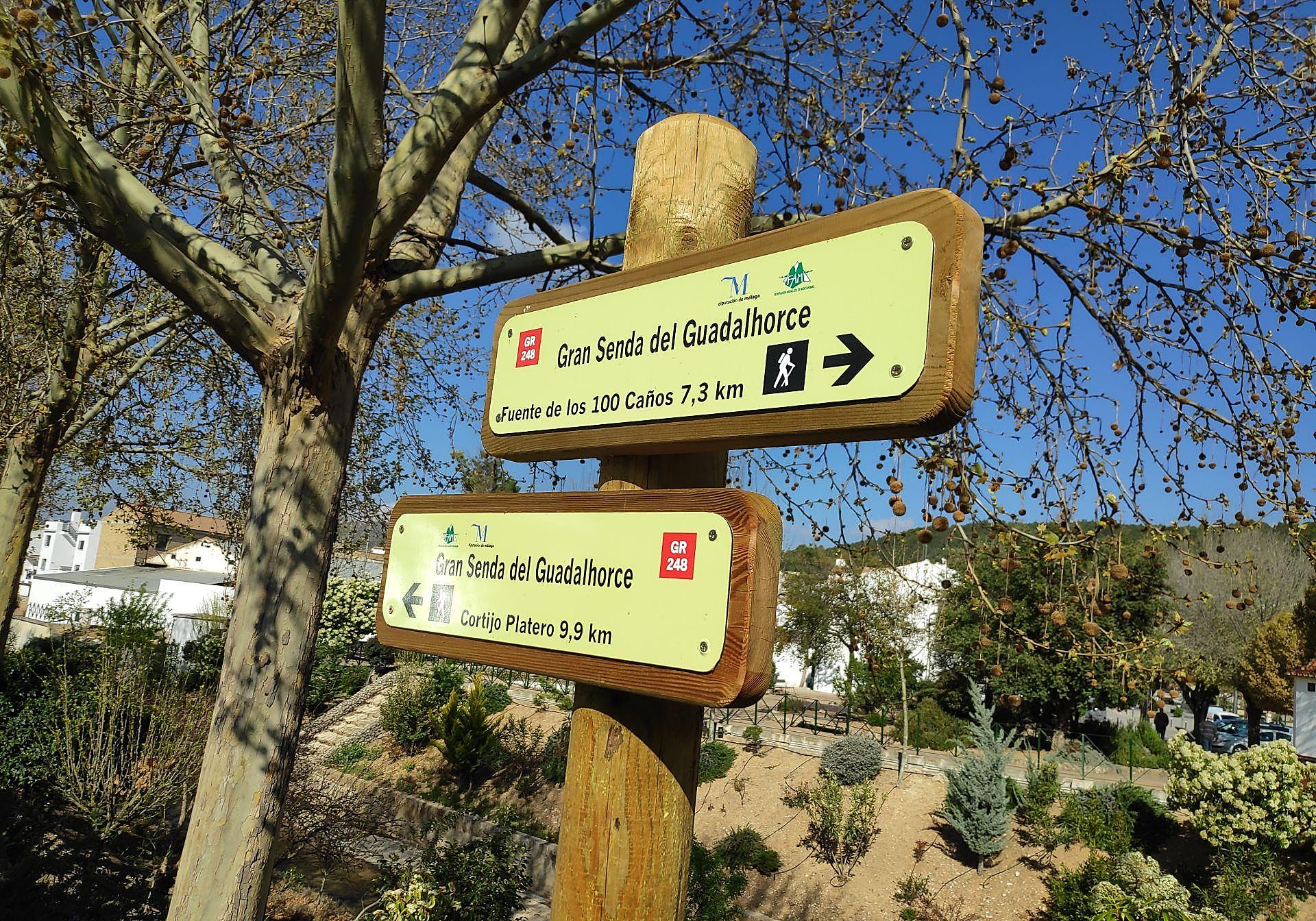
.
![[]](http://static.vocstatic.com/voc26/latest/assets/images/favicon/surinenglish/apple-touch-icon-57x57.png)