
Archaeology
From Chicago to Cerro del Villar, tracing the Phoenicians’ arrival on the Iberian Peninsula
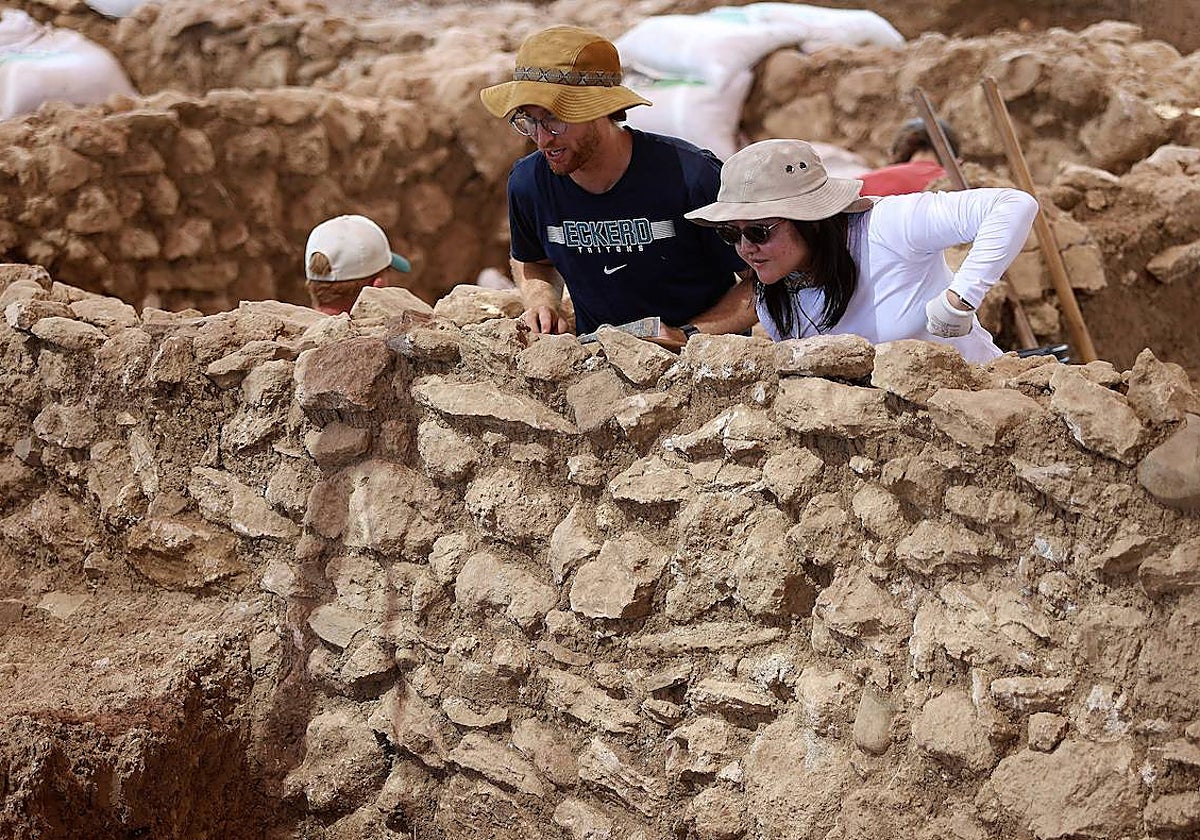
Around 50 archaeologists and volunteers from the US are working at the site on the western edge of Malaga city, excavating a large multi-purpose building dating to the 8th century BC

Malaga
Rather than a Phoenician city in Western Europe, Cerro del Villar can sometimes feel more like Mesopotamia, and, specifically, Babel and its mythical tower. In ... one corner, people remove soil while speaking German. Elsewhere, conversations take place in French, Turkish and, if you listen closely, Polish. Andalusian-accented Spanish is the most common language, closely followed by English.
This international presence stems from the University of Chicago's involvement in the return of archaeological excavations at the site five years ago, as part of a project led by the University of Malaga (UMA). Since then, the US university has maintained a presence at Cerro del Villar, contributing expertise, labour and resources.
Almost 50 archaeologists, students and volunteers from the university have been working in Sector 13 of the Phoenician settlement, located at the mouth of the Guadalhorce river on the western edge of Malaga city. There, they have uncovered a large multi-purpose building dating back almost 3,000 years. The excavated area now covers more than 250 square metres.
“We chose this site because it connects with the excavations led by archaeologist María Eugenia Aubet between 1987 and 2003, who uncovered the ancient island’s commercial street of the ancient island," explains Carolina López-Ruiz, a lecturer and researcher at the University of Chicago.
López-Ruiz proposed involving her department at the Illinois institution five years ago, after being invited by José Suárez - a colleague at the University of Malaga (UMA) and director of the current scientific project at Cerro del Villar - to join work at the best-preserved Phoenician city in the western Mediterranean.
“You see it in films and think it’s just a matter of walking around with a little brush, but it’s actually very physically demanding work,” admits Pablo Ley Duarte, from the University of Chicago expedition
"They threw themselves into it headfirst because they knew it was an archaeologically rich area," says López-Ruiz, a Spanish researcher who has lived and worked in the US for more than two decades. She is also the author of 'Los Fenicios y la Construcción del Mediterráneo' (The Phoenicians and the Construction of the Mediterranean).
Her work has made her a bridge between Spain and the US, as well as between the Phoenician period and the present day. She writes her research in English, helping to bring the ancient Mediterranean world closer to American archaeology.
'It's very physically demanding work'
The opportunity to take part in excavations at Cerro del Villar has proved popular among students at the University of Chicago, including PhD candidates, undergraduates and students studying other subjects.
250
The open excavation in Sector 13 now covers several square metres, where work is under way to determine the origins of a large multi-purpose building in which remains of ironwork and a wealth of pottery have been found.
“I’m a Classics student specialising in Latin, but when I was offered the chance to come to Malaga I didn't think twice, as I wanted to gain some practical archaeological experience,” says Paulo Ley Duarte, a native of Sinaloa in Mexico who has been studying in the United States for eight years.
After only a few days in Malaga - excavations began at the end of August - he has already unearthed several ceramic pieces, including the handle of a vessel. Working alongside his peers, he is now excavating an extension of Sector 13's major multi-purpose building. He notes that the area holds immense “potential”, as it is being opened up for the very first time, with the team hoping to reveal large stones “which would likely point to a new wall.”
"You see it in films and think it's just a matter of walking around with a little brush, but it's actually very physically demanding work. We're using pickaxes now and removing a lot of earth," Ley Duarte says. The experience has increased his respect for archaeologists. "I have so much more respect for them now," he says.
He was also surprised by how long the days are in Malaga. In the afternoons, he takes the opportunity to explore the other city, the one that remains active on the opposite side of the Guadalhorce. "Everyone recognises me by my accent and treats me very well," he says.
The work has taken its toll physically, however, leaving him tired and with back pain at the end of the day. "When I arrived at the hotel, I was disappointed that it didn't have a gym. But after the first day at the excavation, I realised I wasn't going to need one," he says with a smile.
Who were the Phoenicians?
David Schloen, a professor at the University of Chicago's Institute for the Study of Ancient Cultures, leads the expedition alongside López-Ruiz. He has extensive experience in archaeological excavations in the Near East, including Israel and Turkey, giving him broader context for interpreting the discoveries being made in Malaga.
His work exemplifies comparative archaeology, examining similarities and differences between Phoenician settlements in the western Mediterranean and those in the East.
"This site is fundamental to understanding the arrival of the Phoenicians on the Iberian Peninsula. Who were they? What did they eat? What activities did they carry out? What impact did they have on local culture and the economy?" Schloen says. "We want to understand what was happening on the western coast of the Mediterranean, which is why we wanted to work here."
He says the archaeology and urban planning of the Phoenicians in Malaga share similarities with those of settlements in the East, although the team has also identified differences.
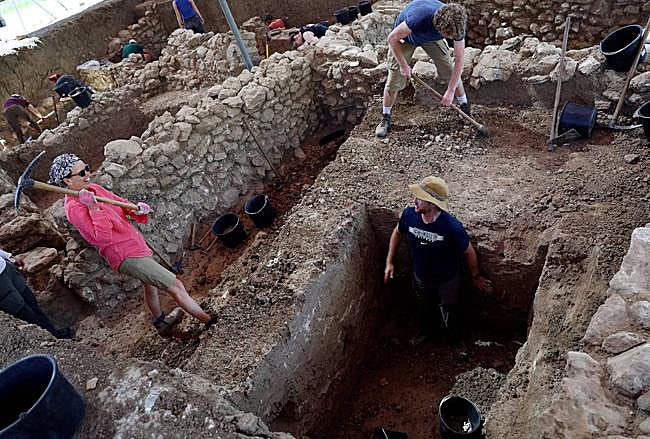
The excavation in Sector 13 now extends across 250 square metres. Researchers are investigating the origins of a large multi-purpose building where they have found evidence of metalworking and abundant pottery.
Doctoral students Jeff Cumonow and Erin Braner, who are also working in Malaga, previously took part in excavations conducted by the University of Chicago at sites on the other side of the Mediterranean.
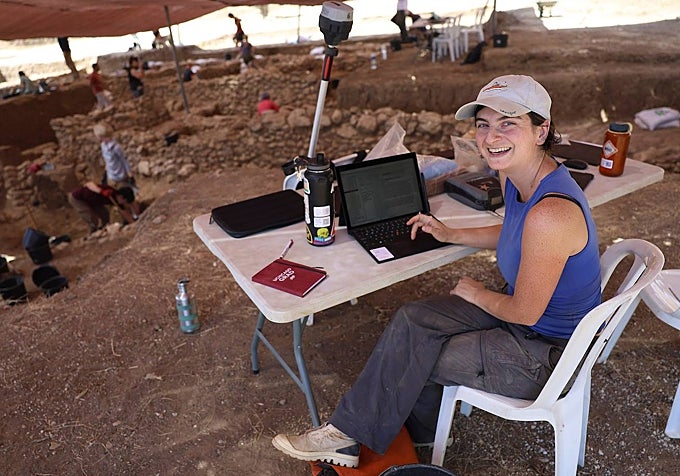
Braner records archaeological discoveries on her computer in real time. She speaks to us in Spanish, although she apologises for not being fluent. Her meaning is clear, however, and she says she is delighted to be working in Malaga. The archaeology is one reason, but she has also noticed a practical difference in daily life. "Here, we women don't have to cover up as much as we do in Mesopotamia, especially in this heat," she says.
Cumonow, the supervisor of Sector 13, has also worked with Schloen in Israel. He says working at Cerro del Villar has given him a different perspective on the Phoenician culture he has studied elsewhere. "It's very exciting to be here because it's the same Phoenician culture, but I see a different approach," he says.
Schloen argues that the differences can be explained by the interaction between settlers and the local population. "When people settled here, they began to do things differently because they integrated with the local population," he says.
![[]](http://static.vocstatic.com/voc26/latest/assets/images/favicon/surinenglish/apple-touch-icon-57x57.png)