
Cuisine
A visit to Valencia, home of paella, where locals skip the seafood
Paella is renowned as Spain's national dish, at home and abroad. But in Valencia, people shake their heads in wonder when you order one for dinner. We headed to the home town of this beloved dish to figure out why, and what we should be eating instead
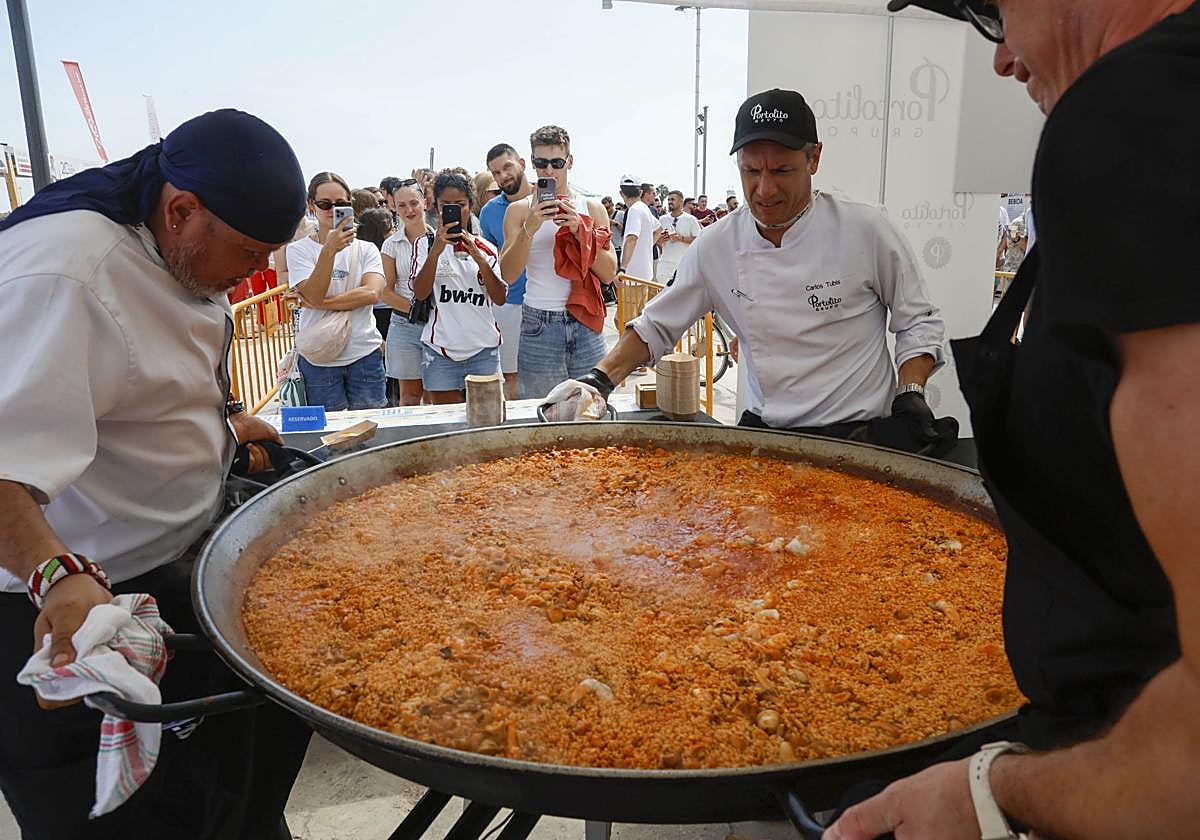
Wolfgang Stelljes, DPA
Order a seafood paella for dinner in Valencia, and locals, ever conscious of tradition, see this as making two mistakes at once.
Firstly, neither seafood nor fish belong in a paella. And secondly, the shallow pan with a handle, also called a paella, is traditionally only served here at lunchtime, preferably on Sundays.
Then everyone eats together, using wooden spoons straight from the large pan. A paella is more than just a meal; it is a social event and an occasion.
But paella in the evening? Only a tourist would consider such a thing. It sits heavy in your stomach so could disrupt a good night’s sleep, especially as people rarely eat here before 9pm.
No, in the evening, Valencians prefer to have tapas, maybe at Bar X in the Mercado de Colón, a market hall that ought to be on the itinerary for any visit to Valencia.
Valencians have a particularly close relationship with paella. After all, this is the home of this popular rice dish, though strictly speaking, its origins lie a few kilometres further south, in the Albufera. The Albufera is a nature reserve with a freshwater lake, whose water feeds the surrounding rice fields.
Moors introduced rice cultivation to Spain. “The first place was here,” says Mauro Ponsoda, an agricultural scientist and curator of the Rice Museum in Valencia.
He knows the Albufera well, and its rice fields that provide a lush green backdrop from late May right through to August.
Not all rice is the same, says Ponsoda. There are primarily three round-grain varieties from the Albufera that make for a successful paella.
The most expensive variety is Bomba rice, which grows up to 1.2 metres tall and is harvested first in September, provided it has withstood the wind. Senia rice is smaller and more productive. Finally, Albufera rice, the third in the trio, is a cross between the first two varieties.
The most important thing about rice is that it should absorb the flavour of the ingredients but not stick together, quite unlike sushi rice.
Once a meal for the poor
El Palmar lies amid the rice fields. Almost two dozen restaurants line the streets of the long, narrow village with its 800 inhabitants, including the Bon Aire. It is situated a little off the beaten track, on the edge of the rice fields.
Bon Aire serves paella in its original form, with rabbit, chicken and, on request, snails, which you remove from their shells with a toothpick. These are precisely the ingredients that farmers used to have to hand - paella was a poor man’s meal.
Now, though, this popular rice dish has long since found its way into Michelin-starred cuisine. The Llisa Negra restaurant in Valencia is one of several establishments run by Quique Dacosta, who started out as a dishwasher and is now one of the few chefs in Spain to boast three Michelin stars.
In his kitchen, his team uses almost exclusively products sourced from within a 75-kilometre radius. That also applies to most of the ingredients in the paellas. They are cooked over an open fire, with a chef constantly adding logs of pine wood - a sweat-inducing task that guests can watch through a glass pane.
Once the work is done, the layer of rice in the pan is barely a centimetre thick. The rice has absorbed all the liquid; you have to scrape a little to loosen it from the bottom of the pan. This "socarrat" – the crispy, slightly caramelized layer at the bottom – is, for many Valencians, the hallmark of a truly good paella.
Valencia celebrates paella in a major way. In March 1992, locals made a paella here for 100,000 people, earning themselves a place in the Guinness Book of Records. They used a pan with a diameter of 20 metres. By comparison, the largest pan available at the stall outside Valencia’s central market hall seems downright tiny. It measures 1.3 metres, which is enough for 200 diners, the vendor assures us.
The market hall itself, a magnificent building constructed in the Valencian Art Nouveau style, is the place to go for every paella chef. Naturally, this is also where Miguel Angel Pérez buys his ingredients when he wants to cook paella at home.
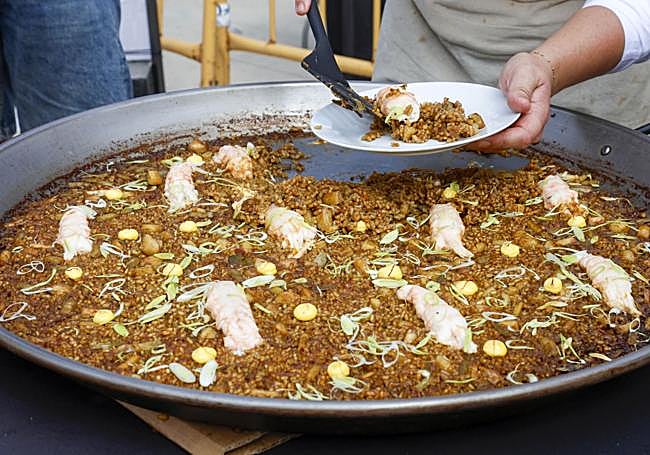
Contest draws cooks from across globe
In his professional capacity, as deputy director of Visit Valencia, Pérez's responsibilities include running World Paella Day. The contest, whose final is held every September in Valencia, attracts participants from far and wide, even from South America or Asia.
They must follow only one rule: the rice must come from Valencia. Otherwise, anything the cuisine of the respective country has to offer can go into the pan, even insects.
The first winner, Chabe Soler, beat an Italian in the 2018 final. Today, she heads Villa Indiano, a restaurant in an old country house with high, stucco-decorated ceilings on the edge of the Huerta, the garden and vegetable-growing region surrounding Valencia.
Soler is dedicated to traditional cuisine and works with local farmers who, depending on the season, supply her with just about everything she needs for her rice-based dishes, from aubergines to onions.
This lively woman, a true child of the Huerta, has even had a rice ear tattooed on her upper arm. Villa Indiano is one of the places where you can learn how to prepare a genuine Valencian paella if you sign up for a workshop. Time to grab your chef’s hat.
![[]](http://static.vocstatic.com/voc26/latest/assets/images/favicon/surinenglish/apple-touch-icon-57x57.png)