
Research
Malaga University tastes 22 wines from the Axarquía region that have been aged under the sea
Thirty-two experts are comparing 11 samples taken from underwater with another 11 from the cellar, and laboratory analyses will complete the study
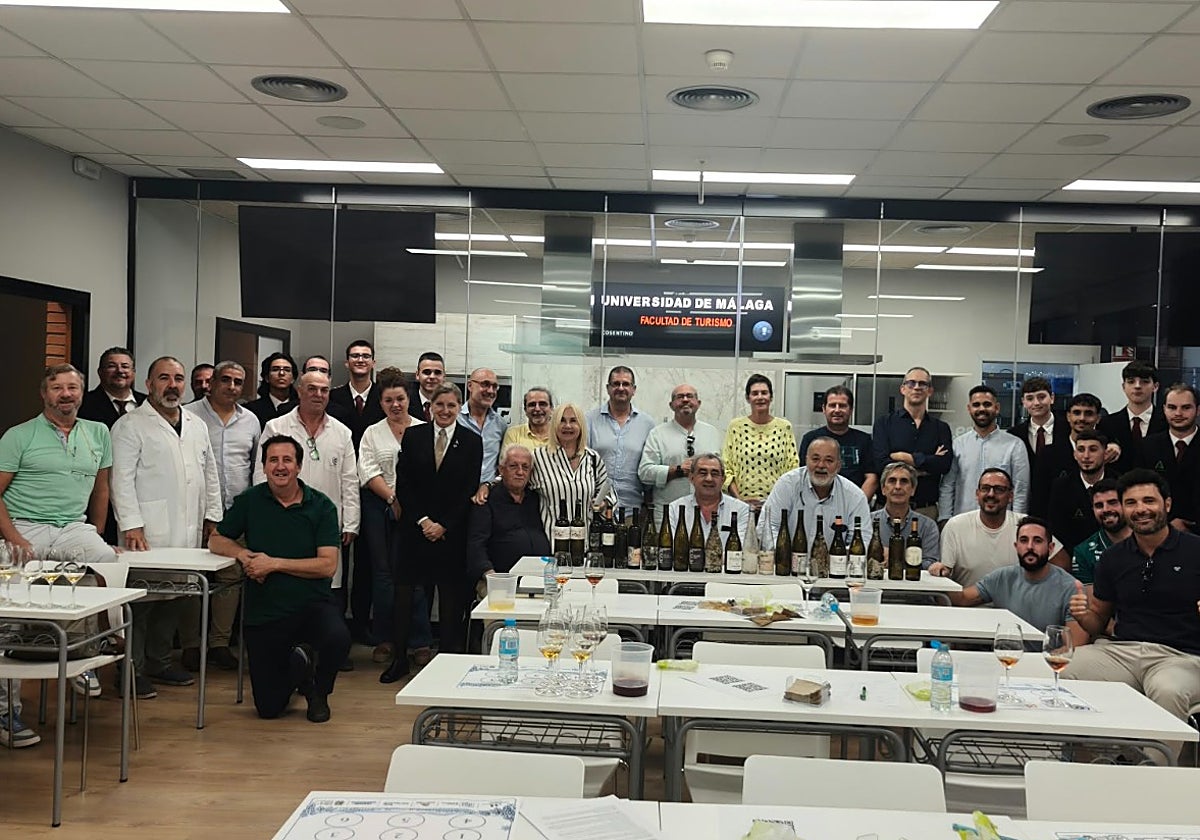

Five months after spending time under the sea, wines from the Axarquía region have reached one of the most eagerly awaited stages of an experiment ... led by the University of Malaga (UMA): a head-to-head comparison, glass by glass, with the same wines that were stored in cellars on dry land during that time. The university has brought together 32 professionals to carry out a comparative tasting, through which it will begin to determine whether the underwater environment actually alters the wine’s development.
The event took place on Wednesday, 14 October, at the Oenogastronomic Laboratory of the Faculty of Tourism at the University of Malaga (UMA) and forms part of the research being carried out by the SEJ-121 group, led by Professor Gorka Zamarreño Aramendia.
Winemakers, sommeliers, specialists, opinion leaders and representatives from various institutions took part in a tasting, the sensory results of which will now need to be verified in the laboratory.
A total of 22 wines from the Axarquía were tasted. Eleven were samples that had been submerged, while the other eleven were their counterparts stored on the wineries’ premises. The aim of the comparison is to identify any differences in colour, aroma, flavour, texture and development attributable to radically different storage conditions.
Thirty-two experts are comparing 22 wines from the Axarquía to identify any differences between those from the winery and those from the seabed
The initial findings have provided a clue that researchers consider interesting, although not yet conclusive. Zamarreño described the experience as "a day of great interest" and noted that he was particularly surprised by "the apparent development of the submerged sweet wines".
The team insists, however, that this observation must be verified through scientific analysis before any conclusions can be drawn.
The tasting was attended by representatives from wineries such as Fabio Coullet, Almijara, Bodega y Viñedos de la Axarquía, Muñoz Cabrera and Bentomiz, as well as members of the Malaga sommeliers’ association.
Also in attendance were the president of the Mancomunidad of municipalities of the eastern Costa del Sol-Axarquía, Jorge Martín, and the director of Sabor a Málaga, Leonor García-Agua, both of the PP.
Real Club Mediterráneo
The research began months earlier with the submersion of some 160 bottles of white, red and sweet wines from the Axarquía region, which remained for five months at a depth of around ten metres in the waters of the Port of Malaga, near the Real Club Mediterráneo.
The experimental tank was placed in the water in February and retrieved in July. During that period, the researchers monitored variables such as temperature, pressure, depth and water movement. At the same time, wines from the same vintages remained in the cellars to act as control samples, so that a comparison could subsequently be made under similar conditions.
From the outset, the UMA has sought to avoid jumping to conclusions: the aim is not to prove that wine aged under the sea is better. “It is not a question of confirming in advance that the wine improves, but of establishing whether it changes,” the researchers explained after retrieving the bottles. This scientific caution remains one of the project’s core principles.
The UMA analyses should clarify whether the differences observed in the tasting are due to measurable chemical changes in the wines
The tasting carried out has provided the sensory aspect of the research. The participants assessed the samples from different professional perspectives, but the impressions gained during the tasting will not, on their own, form the conclusions of the study. The bottles must now undergo a second phase of scientific analysis.
The samples collected will be analysed at the university. The analyses will make it possible to verify whether the differences observed correspond to physicochemical parameters and, where applicable, to determine the extent of these changes.
Parameters
The research examines parameters such as pH, acidity, alcohol content, polyphenols and sugars, as well as sensory characteristics. Combining these two approaches will make it possible to determine whether underwater conditions cause objective changes or whether part of the perception is influenced by the product’s unique nature and by the external appearance of bottles altered by their prolonged stay underwater.
This last point is particularly important for researchers. The recovered bottles have a distinctive appearance due to the marine debris that has become attached to them during their months underwater, a feature with obvious commercial appeal. The UMA wishes to separate this visual and emotional aspect from any actual changes that may have occurred to the contents.
The project’s significance therefore extends beyond the laboratory. If the analyses reveal consistent differences, underwater ageing could also be explored as a means of differentiation for wineries, both from a commercial perspective and in the field of wine tourism. The researchers stress that any potential commercial application must be based on evidence and not solely on the narrative surrounding a bottle that has spent months under the sea.
The project is investigating whether underwater ageing can add value to wines from Malaga, without drawing any conclusions in advance
The inclusion of sweet wines also adds a distinctive element to the Malaga trial. The list of selected wines includes varieties typical of the Axarquía region, while much of the previous research into underwater preservation has been carried out using dry, white, red or sparkling wines. It is precisely the "apparent evolution" detected in the sweet wines that the team now wishes to analyse in greater detail.
The findings will thus mark the next stage in an experiment that began underwater and is now moving definitively into the laboratory. If the experts’ assessments and the physico-chemical data are consistent, the UMA will be able to begin determining, based on evidence, to what extent five months of immersion alters the wines of the Axarquía and whether this practice could become a new tool for innovation for a sector seeking to gain added value without losing its regional identity.
