
Food and drink
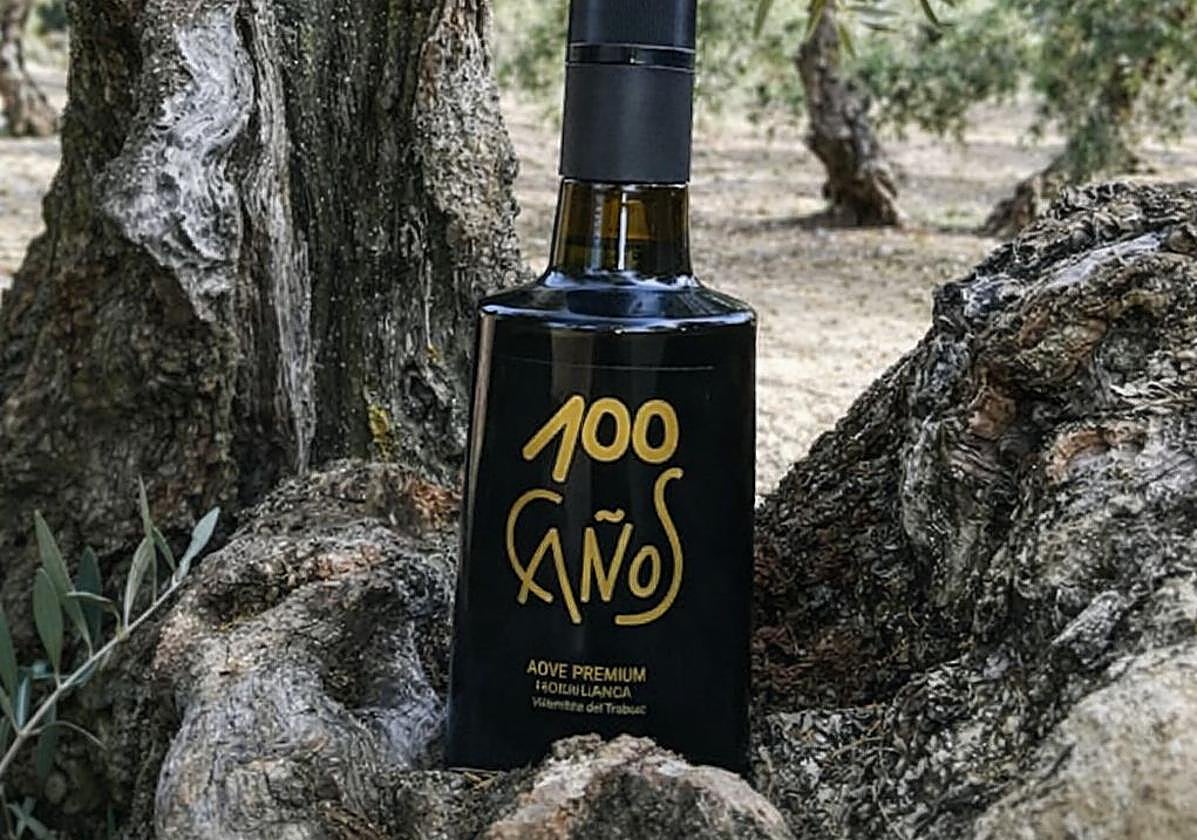
100 Caños EVOO: the early harvest hojiblanca that is among the best in Spain
This oil from a mountain olive grove in Villanueva del Trabuco achieves a rating of 9.45 and enters the 'top ten' in the category of Small Productions in the Iberoleum Guide

Malaga
At the foot of the Sierra de San Jorge, very close to the Fuente de los Cien Caños, which provides much of the flow of the Guadalhorce river in its first kilometres, there is a centuries-old, mid-mountain olive grove, accustomed to surviving solely on the water left behind by the rain.
It is a hardy olive grove, far from the irrigated plains and any agronomic comfort, which has learned to give its best in a harsher environment. From this landscape comes an oil that this year has taken an unexpected leap forward: AOVE 100 Caños, an early harvest hojiblanca that has just been ranked among the best in Spain according to the Iberoleum 2026 Guide.
This extra virgin olive oil has achieved, specifically, a 9.45 out of 10 in the Small Productions category, which leaves it in an excellent fourth place, tied with two other AOVES. In this prestigious publication, there is only one other oil from Malaga, the Arbequina from the prestigious Finca La Torre mill (Bobadilla, Antequera), which has achieved first place in the Medium Fruity category.
For Germán García, owner and manager of Molino Jabonero and head of the 100 Caños project, the news came with the astonishment of someone who does not compete with prizes in mind. "This year we were selected to participate in the guide, but we didn't know we were going to be among the top ten," he admits, still somewhat surprised.
His oil enters Iberoleum in the Small Productions category, which recognises extremely limited production - in his case, less than 3,000 litres a year - where he works with an almost surgical craftsmanship. This reduced production prevents him from entering competitions such as Sabor a Málaga, but it is also part of his identity: controlling each step with absolute precision.
What has made this hojiblanca stand out so strongly in 2026? Germán sums it up in a set of factors that converge in the same point: territory, management and resilience. The olive grove from which 100 Caños is born is centenary and is located in what he describes as "mid-mountain", at around 700 metres above sea level.
"This situation means that the tree faces more extreme conditions and does everything it can to give its best in the olives," he explains. This environmental stress provides a natural plus: "100 Caños Hojiblanca EVOO is loaded with anti-inflammatories and antioxidants," Germán points out. "Olive oil is a natural medicine that has been used for millennia," he adds.
The farm is also in its second year of organic conversion. "This has meant that we have made an extra effort to give the olive trees the best possible organic matter so that they don't notice the change," he says.
This ecological transition is not a commercial gesture: it fits in with his way of understanding the countryside since he decided to make it his life project. This coherence can be seen throughout the whole process, from the management to the attitude with which he welcomes visitors who come attracted by olive oil tourism.
Early harvesting is another of the keys. At 100 Caños, harvesting is not based on tradition or the calendar, but on data. "This year the first day was 27 October, because beforehand we were guided not by superstition but by the data that told us it was the best time," he explains.
These analyses - which measure ripeness, humidity and fat yield - determine the exact point at which the olive expresses the profile they are looking for. The entire process is in-house, from the care of the olive grove to extraction, which guarantees absolute control over the final result. In addition to the hojiblanca single variety, they also make arbequina and picudo, although the latter is out of stock.
The origin
The 100 Caños adventure began in 2012, but did not take structured form until 2017. The turning point came in March 2020, one day before the confinement, when Germán decided to buy out his partners to continue on his own.
Related story
-
 Eugenio Cabezas
This step cannot be understood without his previous trajectory: the old mill that took him out of the urban routine became his home, his creative workshop, his gym, his garden and his canvas, as he himself defined it. Today it is also rural accommodation, a space for industrial archaeology, an olive oil tourism classroom and, soon, it will once again have a restaurant. All this just a few metres from the Guadalhorce and very close to the Fuente de los Cien Caños, a symbol that sustains the identity of the project.
Where to buy it
Iberoleum's recognition comes at a time when 100 Caños is gaining presence in some of the most outstanding gastronomic spaces in the province. It can be found in restaurants of the Cervantes Group, such as El Descorche, El Nacional or Mesón de Cervantes, and has been chosen as the EVOO to celebrate the anniversary of the Hotel Palacio Miramar, where they have a personalised edition for their restaurant, the Príncipe de Asturias.
It can also be purchased in the restaurants of the aforementioned restaurant group, in the online shop La Chiquita, which specialises in products made in Malaga, and of course at the Molino Jabonero, both for those staying at the hotel and for those who come for an olive oil tourism experience. When the mill's new restaurant reopens its doors, oil will also be the conceptual basis of its gastronomic proposal.
Anyone who sees Germán today in the olive grove, explaining the behaviour of the trees in the mid-mountains or interpreting ripening analyses, would hardly imagine that before all this he lived a different life. For years he worked in advertising and marketing, a world in which he moved with professional solvency - he studied at the Complutense - but which ended up clashing with his need to live in a different way.
The turning point came when he returned to the village on holiday and discovered, in an abandoned family mill, the possibility of turning his life completely around. That was the beginning of what today is the Molino Jabonero, a project that has been growing for more than two decades based on tenacity, creativity and an iron conviction in the value of the countryside.
Click here for more food and drink stories
![[]](http://static.vocstatic.com/voc26/latest/assets/images/favicon/surinenglish/apple-touch-icon-57x57.png)