
Gardening in southern Spain
Euryops pectinatus
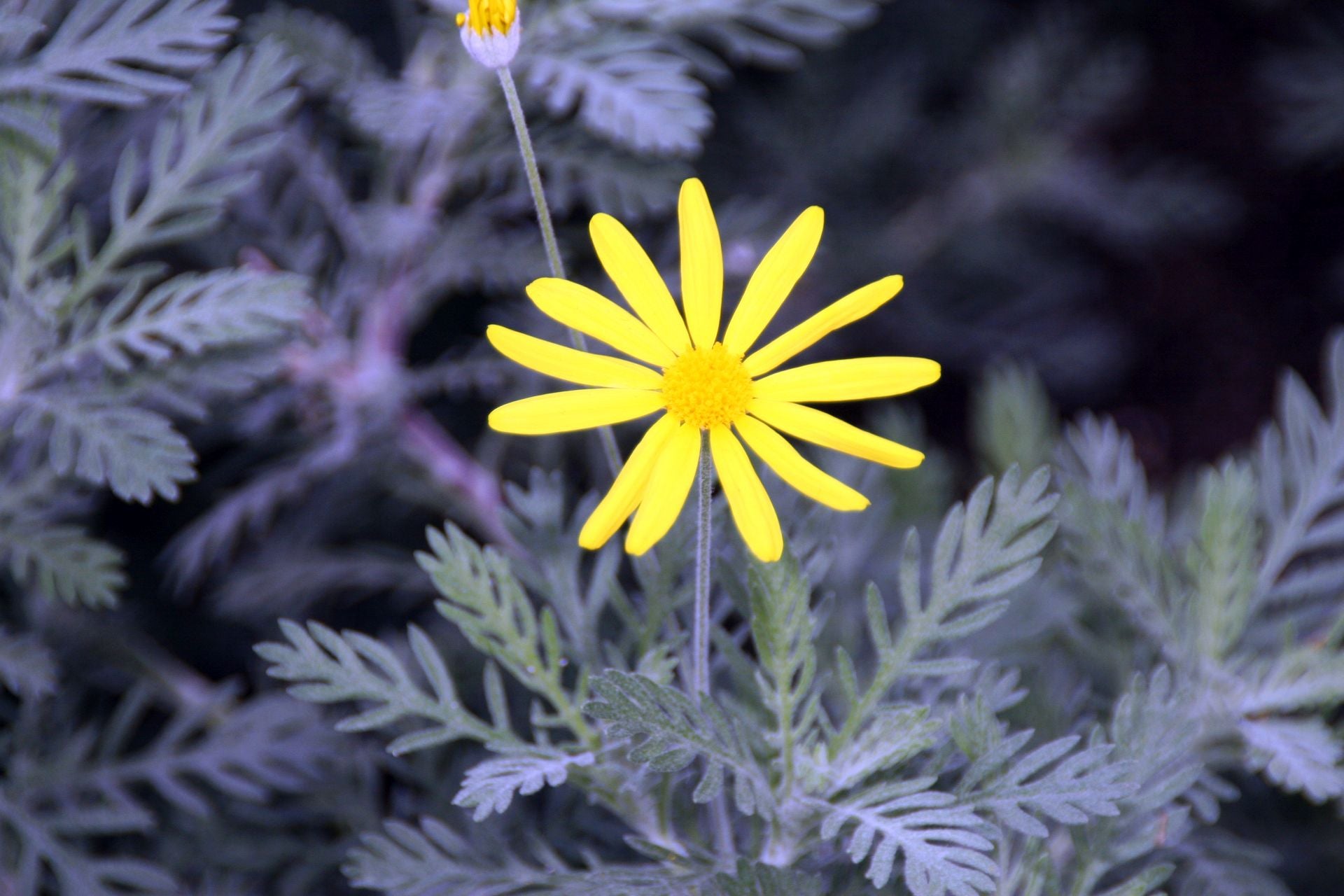
Unlike some Mediterranean-style daisies which tend to slow down during periods of extreme heat, Euryops pectinatus keeps a steady production of single, bright yellow daisy-like flower heads
Denise Bush
Native to South Africa, Euryops pectinatus, commonly called the golden daisy bush, is an evergreen perennial shrub belonging to the Asteraceae (daisy) family. Known for its dependable floral display, greyish downy foliage and rounded habit, it grows quickly to reach around one metre in height with an equal spread. Its finely divided, fern-like leaves have a slightly hairy texture that reduces transpiration, helping the plant handle coastal exposure, wind and periods of heat.
This shrub performs best when planted in full sun, requiring at least six hours of direct light daily to flower profusely. It thrives in well-drained, loamy soils ranging from slightly acidic to neutral, though it tolerates poor soils provided they are free-draining, as waterlogging quickly causes root rot.
Unlike some Mediterranean-style daisies such as Osteospermum, which tend to slow down during periods of extreme heat, Euryops pectinatus keeps a steady production of single, bright yellow daisy-like flower heads on long stems. The blooms appear from early summer through to mid-autumn, extending into winter in mild climates. The nectar-rich flowers are particularly attractive to bees, butterflies and other pollinating insects.
It's ideal for sunny, sheltered borders, low edging, coastal locations and gravel gardens. It also works well in large patio containers or trained into a formal standard. While it can withstand brief periods of light frost, it is best suited to milder regions or sheltered spots.
Once established, the golden daisy bush is drought resistant but will perform better if watered deeply during dry periods, allowing the top soil to dry out between applications and avoiding overhead watering to protect the foliage. A light feed every four to six weeks during the growing season encourages continuous flower production.
Euryops pectinatus can become straggly over time. Regular deadheading helps prolong the flowering display, while a light trim after the main flowering period has finished, will help to keep it compact.
It is relatively short-lived but is easy to propagate. Softwood cuttings taken in April, or from semi-ripe cuttings in late summer, root quickly.
Besides being used in landscaping, Euryops pectinatus is also the subject of laboratory research exploring the chemical compounds present in its extracts for potential antimicrobial and antioxidant properties.
![[]](http://static.vocstatic.com/voc26/latest/assets/images/favicon/surinenglish/apple-touch-icon-57x57.png)