
Education
Malaga organisation adapts classrooms for children with autism
Hogar Abierto is launching a project involving teachers, neurotypical students and their families to encourage inclusion
Cristina Pinto
Malaga-based organisation Hogar Abierto is spearheading an initiative to create equality in the classroom for children with Autism Spectrum Disorder (ASD).
Hogar Abierto is collaborating with 'la Caixa' foundation to develop the 'Strategies for the Inclusion and Coexistence of Minors with ASD in Vulnerable Environments: Family and School' programme.
The Malaga-based organisation fosters child protection and care through activities in order to help an increasing number in children with ASD, as programme coordinator Sofía Sánchez says.
Related story
-
José Carlos García
"We identified a clear problem: families were coming to us with a diagnosis, but they didn't want to accept it. Furthermore, teachers in classrooms that are not adapted for children with special needs lacked the tools to address it appropriately," Sánchez says.
That's why they started working on this pilot project, which aims to transform the educational environment to improve the emotional well-being of children with ASD.
The goal isn't to change the child, but rather to provide their environment with practical tools to foster their autonomy. The project began in February 2016 with the Hogar Abierto team and a professional partner who had in-depth knowledge of the subject.
"A colleague from the foundation, José María Salgado, wrote his doctoral thesis on this topic and was very familiar with the entire issue," Sofía Sánchez explaines
Hogar Abierto is working with students and teachers through five areas of focus. The organisation provides teachers with specialised guidance, observation and direct modelling to support them in resolving real-life situations, adapting the everyday environment and preventing crises.
"Many of them have congratulated us because they really needed to know how to react when a student is having a difficult situation," Sánchez says.
Hogar Abierto also works with families to reduce the burden on caregivers by providing psychological support, guidance and emotional support, building a genuine partnership of shared responsibility.
"Many parents don't want to accept their children's diagnosis, which is counterproductive because it prevents proper and timely treatment," Sofía says.
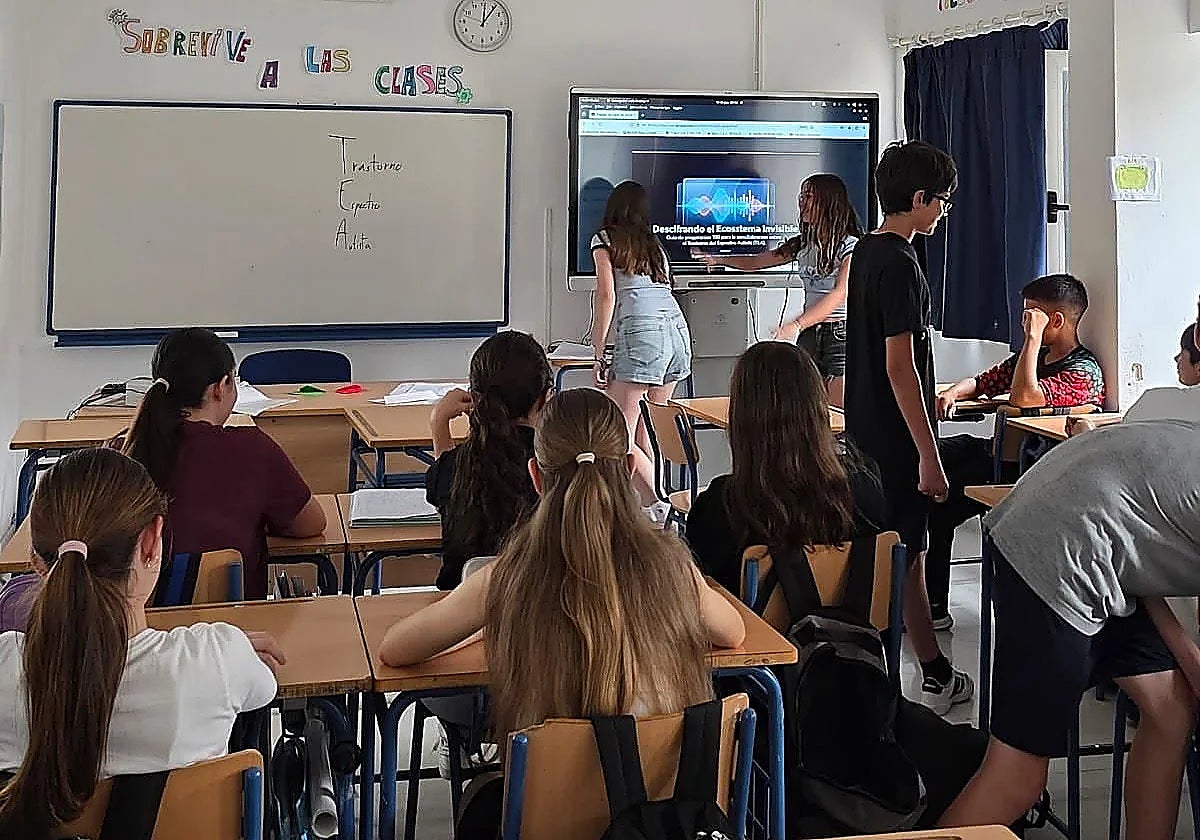
Working with students helps prevent isolation by implementing awareness sessions on neurodiversity and mentoring programmes, including peer tutoring (TEI) in secondary school, transforming classmates into active agents of inclusion. "This has surprised us because children are truly empathetic," Sánchez states.
"The school selects students without an ASD diagnosis, ideally those involved in mediation projects and with strong emotional maturity. They receive guidance on the pupils' behaviour so they can help them interact, support them in class and normalise their everyday behaviour. Schools respond very positively, as classmates come to understand the child and become key players in genuine community inclusion," the coordinator says.
This networked approach brings together professionals through regular coordination meetings between schools, public authorities and specialist services, with the aim of aligning approaches and sharing best practice that can be replicated elsewhere.
The initiative is already running in six schools. Three are primary schools: Nuestra Señora de la Luz and García Lorca in Malaga city and Benyamina school in Torremolinos. The other three are secondary schools: Santa Bárbara, Christine Picasso and Playamar.
Teachers working with pupils with ASD take part and families also receive training when they have a child with ASD or a suspected diagnosis. "The training is practical: teachers present real challenges and receive guidance," Sofía Sánchez says.
The project will continue next academic year, with sessions held every two weeks in schools, alternating between general and targeted support sessions. It is becoming a community-based response that complements public services, helping ensure that pupils with neurodiversity have a safe, supportive and genuinely inclusive school environment.
![[]](http://static.vocstatic.com/voc26/latest/assets/images/favicon/surinenglish/apple-touch-icon-57x57.png)