
History
Death of a poet: a profound and lasting impact
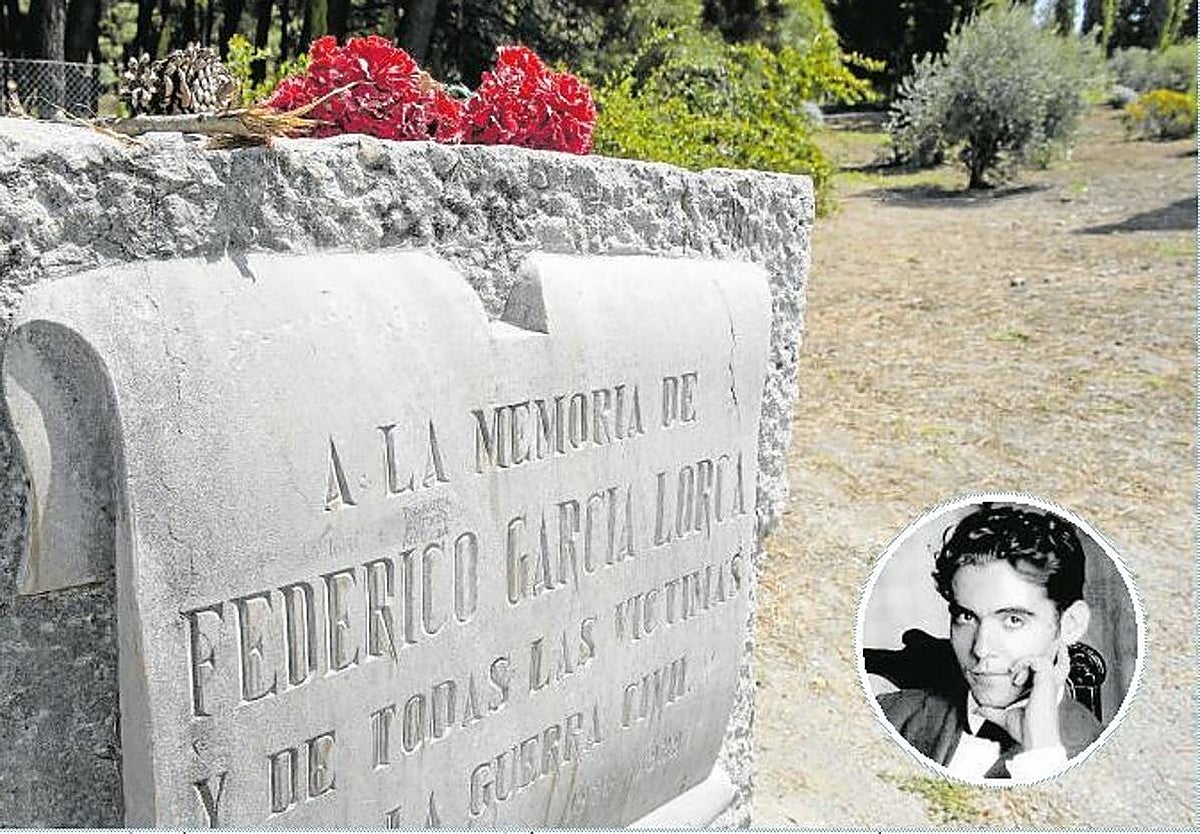
Federico García Lorca Next Wednesday marks the 90th anniversary of the execution of the Granada poet, a crime that provoked widespread outrage
Tony Bryant
In the early hours of Wednesday 19 August 1936, a military truck wound its way through the roads of the Vega de Granada towards an unknown destination, where one of one of the most notorious crimes of the Spanish Civil War was about to take place. On board was Federico García Lorca, the world-renowned Spanish poet and playwright. Alongside three other condemned men, Lorca disappeared that night and was never seen alive again. Next Wednesday marks the 90th anniversary of that fateful day, and towns and cities across Spain will commemorate the tragedy with a range of events, activities and memorials.
Lorca's death nine decades ago provoked widespread outrage, prompting Spanish literary figures and others in South America to condemn the Franco regime for its appalling destruction of human life. Several writers and intellectuals became prominent voices of protest and mourning, especially those who were part of the Generation of '27, the literary movement to which Lorca was attached.
The death of Lorca, who was considered one of the greatest names of modern European literature, became an increasing embarrassment for the regime, and they sought desperately to exonerate themselves in the eyes of world opinion. When it became clear that fault did not lie with the Republicans, Nationalist propagandists laid the blame on unspecified assassins.
Lorca's death caused the regime embarrassment and they sought desperately to exonerate themselves in the eyes of world opinion
Chain of responsibility
Lorca's execution itself was carried out by forces associated with the Nationalist side, but the precise chain of responsibility remains historically complicated; it wasn't simply a straightforward centrally ordered execution by General Franco personally. The reasons behind Lorca's arrest and subsequent execution remain unclear (as does his resting place), but it is widely believed that he was targeted because of his outspoken socialist views and his homosexuality.
Ian Gibson, the Irish-born historian and leading biographer of Lorca, has spent almost six decades investigating his murder. He believes the killing was politically motivated, while also emphasising Lorca's homosexuality. Gibson identified Ramón Ruiz Alonso as the principal figure behind Lorca's arrest. Gibson, who had actually interviewed Ruiz Alonso, described him as an extremely violent, far-right figure hostile to socialists and the left.
Lorca advocated for justice and equality for people of all races and backgrounds, gradually moving toward greater political involvement despite considering himself apolitical.
In 1933, Lorca made his opposition to fascism clear by signing a manifesto condemning the Nazi persecution of German writers. Later, he openly expressed his support for the Popular Front, a coalition formed in January 1936 by Spain's major left-wing parties.
Lorca also added his signature to several documents in connection with the imprisonment of prominent figures, the Brazilian Communist leader, Carlos Prestes, being one of them: he also joined a society called 'Friends of Latin America', an organisation dedicated to the struggle against dictatorships.
In the months leading to the Spanish Civil War, politics and the arts had become entangled, and political significance was given to the words and actions of influential writers like Lorca.
Public condemnation
Lorca's execution had a profound and lasting impact on many writers of the period. In addition to publicly condemning the atrocity, numerous writers produced poems and works that reflected on the poet's untimely death and its enduring significance.
Chilean poet Pablo Neruda believed that Lorca was the “guiding spirit of his moment in our language”. Neruda, a longtime friend of Lorca, said he “spoke with enlightenment, cracked walls with his laughter, improvised the impossible, and in his hands a prank became a work of art; I have never seen such magnetism and such constructiveness in a human being”. Talking at the time about the murder, Neruda said, “We will never be able to forget this crime, nor forgive it; we will never put it out of our minds and never will we excuse it, never”.
Neruda was exceptionally outspoken about the murder and incorporated Lorca's death into his anti-fascist writing. He later described Lorca as one of the great poets of the Spanish-speaking world.
Probably the most immediate and most vocal and historically significant response came from the Spanish literary genius, Antonio Machado, who had fled Spain to avoid the regime. His poem, written shortly after the assassination, 'El Crimen Fue en Granada' (the crime was in Granada), directly condemned Lorca's killing. The poem became the most famous direct poetic denunciation of Lorca's murder.
However, more condemnation followed, including from Raúl González Tuñón, an important figure in the Argentine left who went to Spain as a correspondent at the start of the civil war and who had briefly met Lorca and Neruda in Madrid.
Another writer deeply affected by Lorca's death was Miguel Hernández, a poet and playwright who holds a particularly significant place in twentieth-century Spanish literature and who wrote a poem that reflects the impact of Lorca's death. Hernández regarded the killing as a devastating blow to Spanish poetry.
Members of the Generation of '27 also showed their anger at the death of their friend and peer, such as Luis Cernuda, who wrote 'A Un Poeta Muerto' (F.G.L.) in 1937; and Rafael Alberti, who publicly commemorated Lorca and treated his death as a symbol of the violence of the Nationalist uprising.
Lorca was well known abroad prior to his death, particularly in Latin America and the United States. His killing by forces associated with the Nationalist side made him a symbol of the destruction of artistic and intellectual freedom. His death transformed him from a highly regarded Spanish poet and dramatist into an international cultural martyr and symbol of artistic freedom, while also helping draw worldwide attention to the brutality of the Spanish Civil War.
![[]](http://static.vocstatic.com/voc26/latest/assets/images/favicon/surinenglish/apple-touch-icon-57x57.png)