
Lifestyle
Could tech fears and tan lines signal the end of topless sunbathing?
From concerns about being filmed on someone's mobile phone to #bikinitanlines: how social media influences the decisions of female beachgoers on the Costa del Sol
Cristina Pinto
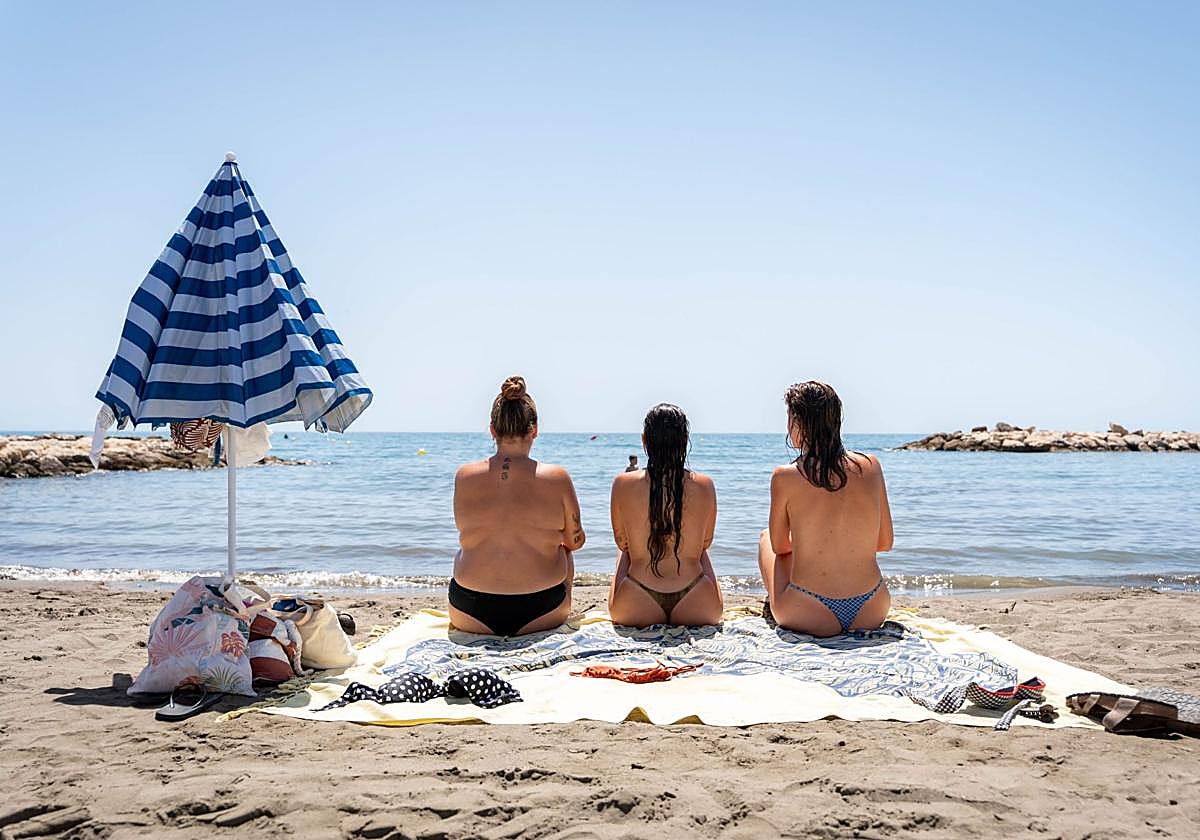
Going topless, a common practice on Spanish beaches over the last few decades, is currently on the decline among the younger generations.
This has been evident this summer along the Costa del Sol: while adult and older women continue the tradition of going topless, the majority of teenage girls and young women aged between 18 and 30 are choosing to remain covered.
The decline in this practice among the younger population is due to a combination of factors, including a fear of exposure in the digital sphere, changes in swimwear trends and the pressure of aesthetic stereotypes regarding body image.
Visiting various beaches in Malaga city, women's views on women topless sunbathing are consistent in that “there are fewer and fewer of them”.
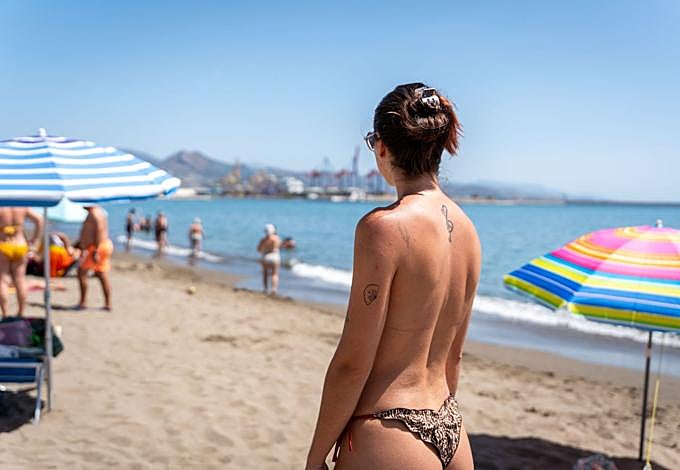
With accounts from women ranging in age from 20 to nearly 70, female beachgoers in Malaga confirm the trend in this report: “These days, there are far fewer young women going topless,” says Elena Rodríguez, 41, who has been sunbathing without her bikini top on the beach for years, although she admits that if she is with her family or a group of friends, she wears the top half of her bikini.
“Well, because people are afraid of being filmed,” replies Yolanda González de Guzmán when discussing the decline in topless sunbathing among younger people.
The widespread use of mobile phones and the emergence of new devices such as smart glasses have heightened concerns about being photographed or filmed without consent. Added to this is the development of artificial intelligence and its ability to manipulate images.
Vanesa Nadal, from Malaga, who admits to going topless regularly, explains this concern: “We're afraid that someone might impersonate us or that we might end up on social media basically naked; or even in a bikini... You can't be sure that someone might use your image to do all sorts of things.”
Recordings from smart glasses
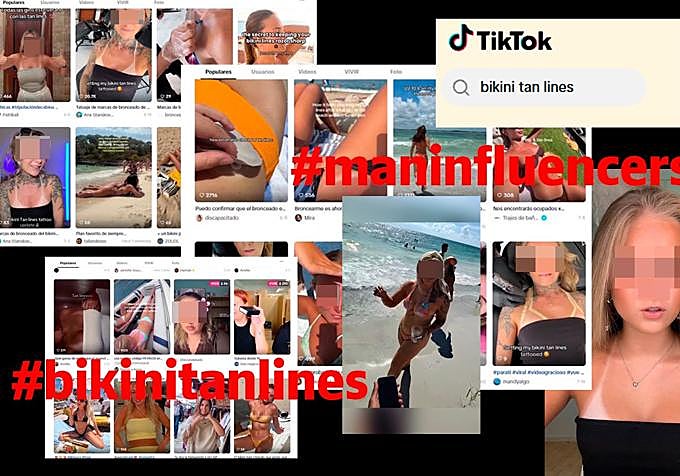
Smart glasses have forced Ray-Ban Meta to review its own software and take action after discovering that male content creators - the so-called #maninfluencers - are using them to film women on beaches and in the streets without their consent. Specific accounts have even been set up on Instagram and TikTok dedicated solely to footage captured by these glasses on various beaches around the world.
In Malaga, complaints have been made this summer about this type of video, which infringes on women's privacy: “I know of a girl from Huelin, who has filed a complaint because she was filmed while she was just relaxing on the beach...”, says Yolanda Túnez, who often goes to the beach topless, although she admits she feels “more at ease” when she does so with her partner.
‘Going topless has lost its role as a form of body activism’
To put this phenomenon into context from an academic perspective, Luis Ayuso, professor of sociology and deputy director of the centre for applied social research at the University of Malaga (UMA), first points to a strictly structural factor: an ageing population. As the professor explains, “demographic trends over recent decades mean that the proportion of young women on our beaches is significantly lower than in the past”.
Beyond the sheer numbers, Ayuso highlights a profound shift in the social significance that younger generations attach to nudity on the beaches. While in the decades following the Transition, going topless served as an explicit symbol of freedom and the assertion of rights, today the situation has changed: “Going topless has lost the role it once played as a political assertion of one’s own body and sexuality.” As this freedom has been fully established by previous generations, young women no longer feel ‘the need’ to use nudity as an act of self-affirmation or protest in public spaces.
Finally, the sociologist from the University of Malaga (UMA) emphasises the intense pressure exerted by image culture within contemporary digital society. Constant public exposure on social media platforms has raised expectations regarding women’s physical appearance, turning nudity into a potential source of scrutiny. In the words of the researcher and professor at the UMA, “the greater importance we attach to having a perfect body may be another contributing factor”, a factor that leads many young female bathers to cover themselves to protect their privacy and avoid being judged by others.
Any electronic device poses a threat to the freedom of female bathers. This is another reason highlighted by the women: “People passing on photos, spotting someone they know and taking photos of them, sharing them in groups and all that sort of thing that's been happening a lot lately...,” explains young woman Nekane Penas.
This situation contrasts with previous decades, as Elena Rodríguez points out: “You're on the beach and you're much more likely to end up on social media or in WhatsApp groups if someone decides to take a photo or video of you. That didn't happen in the past.”
Young women are aware of how quickly content spreads on social media and of the misuse of images. They use all platforms on a daily basis: “Any photo can be taken out of context or used against the person,” says Carmen López, who is in her twenties, adding that she does not go topless.
However, Cristina Casanova, 51, is also aware of the consequences: “These days, everything gets posted online; everything is seen, everything is heard...”. Her sister, Tata, also makes it clear that she is aware of this issue: “Everything is recorded, and it's normal for people to feel a bit wary.”
Protecting one's privacy from the watchful eye of social media algorithms or simply going with the flow of new trends are just some of the reasons behind this shift, but the result is undeniable: the generation gap is wider than ever.
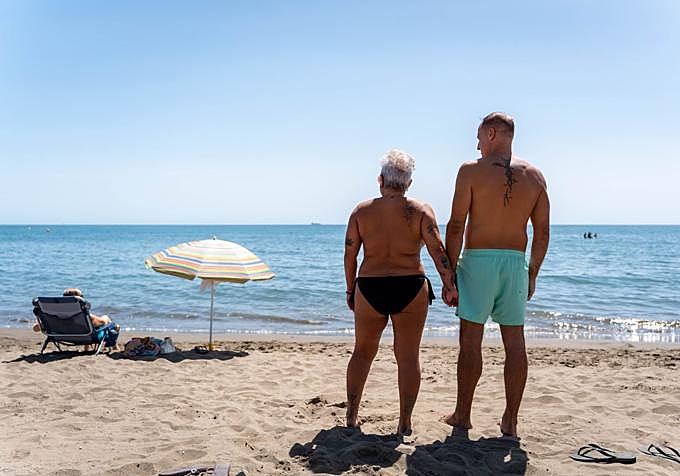
“You see more older people going topless - even older than me, and I'm approaching 50. Older women aren't so active on social media, so they don't really care because they don't know about or see everything that's on these platforms nowadays,” explains Tata Casanova. This difference is clearly illustrated in the family of Marian, 67, who gives her own example: “My daughters, who are 40 and 35, still go topless. However, my 17-year-old granddaughter doesn't.”
Fashion trend: #bikinitanlines
Alongside privacy considerations, swimwear has introduced new aesthetic trends. In contrast to the traditional aim of achieving an even, mark-free tan, current trends value the visibility of bikini lines. Elena Rodríguez, laughing, mentions this preference: “Tan lines are in fashion, according to my daughter.”
The rise of the Brazilian cut and the social media trend under the hashtag #bikinitanlines have turned sun tan lines into an aesthetic statement. Now women prefer not to lower their bikini straps or go topless; they want the white tan lines that show off their tan.
Since last year, this hashtag has featured millions of photos on social media. Young women deliberately show off the tan lines by wearing bikinis with very thin straps or 'micro-bikinis' to achieve crisp tan lines. Even international influencers have gone so far as to have this white bikini tan line tattooed onto their skin.
Miriam Labaja, who is in her thirties, discusses this trend: “Bikini tan lines have become fashionable, and I think people are making the most of that too because it looks kind of sexy.”
Carmen López, a young woman, is also aware of the trend: “If you want the tan line to show, you leave the strap on; if not, you take it off - but honestly, I don't really mind. I don't go topless because I don't like it, but everyone can do what they want with their own body.”
Or as Elena Rodríguez adds, referring to what her grandmother always used to say to her: “The viewer suffers more than the one showing. If anyone feels uncomfortable, it's not my fault; I'm going to carry on going topless without any hang-ups whatsoever.”
'Ideal' standards of beauty
The same Elena who now has no hang-ups admits that when she was younger she didn't dare go topless: “In the end, you lose a bit of your shyness as the years go by. Before, it made me feel self-conscious, but now it's just, look, this is how it is, you know? I mean, I just don't care. I feel comfortable and I've come to accept myself just as I am, but of course, a young girl, well, you know, around 18 or in her early twenties, might be a bit more self-conscious in that respect because she doesn't feel comfortable or doesn't like herself just as she is, and that has a big impact when it comes to exposing herself in this way.”
Miriam Labajo went through this for years: “I haven't always plucked up the courage; going topless is something I've done more as I've got older. I used to feel self-conscious about my small breasts. There are certain beauty stereotypes that are often hard to live up to, and if you think you have small breasts - or even too big ones - you don't dare. So there has to come a moment when something just 'clicks' in your head for you to be able to do it.”
Brazilian-cut bikinis
This pressure leads some young women to choose which parts of their bodies they prefer to show off. And this has also become yet another trend on the beaches: wearing Brazilian-style bikini bottoms
Lucía Fuentes observes this dynamic: “Not everyone has a body that is, as they say, “perfect” by society's standards. In a way, I think the stereotype of younger women is along those lines - that they really show off what they like about their bodies, and it's easier for them if they don't have large breasts, or 'pretty' ones according to the standards that have been imposed on us... So, in the end, they show off their bums more.”
“We see it all the time on the beach. Nowadays, young women show off their lower half more than their chest; they keep their chest covered by their bikini but their bum is completely exposed in Brazilian-style bottoms,” says Claudia, a regular at Pedregalejo beach.
The debate over the decline in topless sunbathing among younger women ranges from caution regarding digital overexposure, to the adoption of new aesthetic trends such as bikini tan lines, and the influence of beauty standards. While older generations continue the custom they adopted in their youth with less concern for other people's opinions, younger women choose to protect their privacy in an environment characterised by the constant presence of cameras and social media.
![[]](http://static.vocstatic.com/voc26/latest/assets/images/favicon/surinenglish/apple-touch-icon-57x57.png)