
Walking routes in Andalucía
Cañada Fuente de la Adelfa
A circular path along old cattle tracks, through pine forests and offering great panoramic views over the Costa del Sol

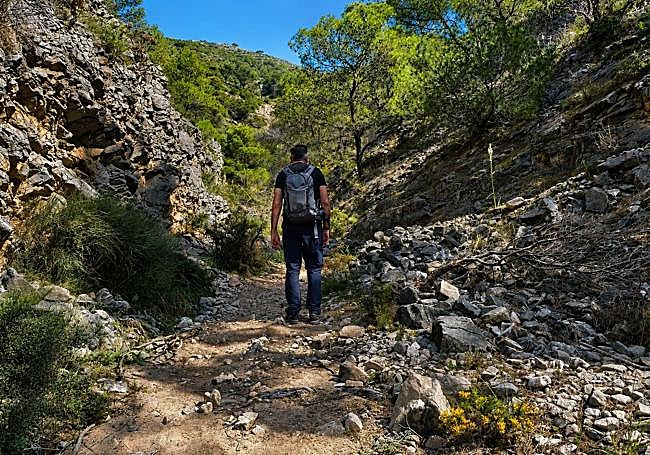
Malaga
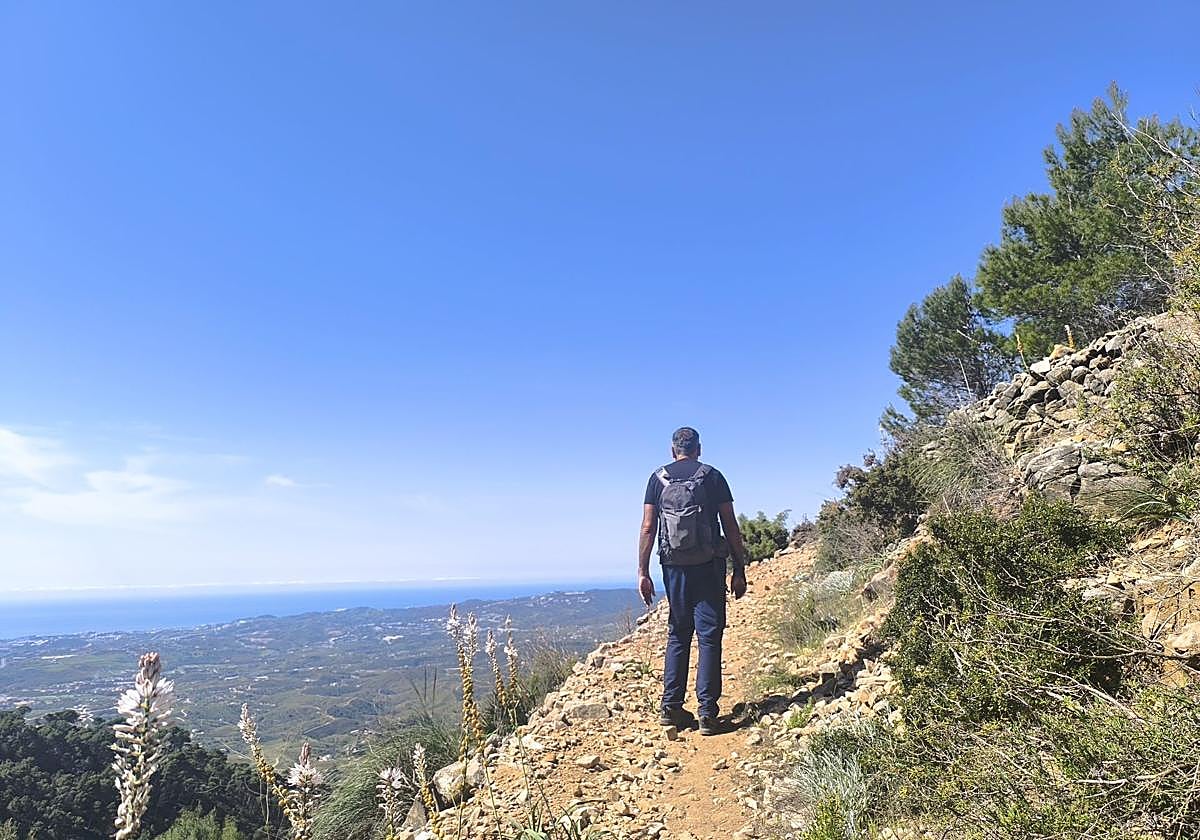
This circular hiking route in the Sierra de Mijas starting from Puerto Colorado, passes through the area of the historic Cañada Real de la Fuente ... de la Adelfa, an ancient drovers' road that crosses this section of the mountain range. The itinerary connects stretches of the green Cañadas route and the old blue route, within the municipal trail network of Mijas.
-
Route Information
Region: Western Costa del Sol
Municipality: Mijas
Difficulty level: Medium. Although the route is well signposted and does not present any orientation problems, there are several rocky sections and some zigzagging climbs that require a minimum of physical preparation and, of course, suitable footwear.
Type of route: Circular
Approximate duration: About two hours and 45 minutes
Length: 6.47 kilometres
Minimum height: 460 metres
Maximum altitude: 830 metres
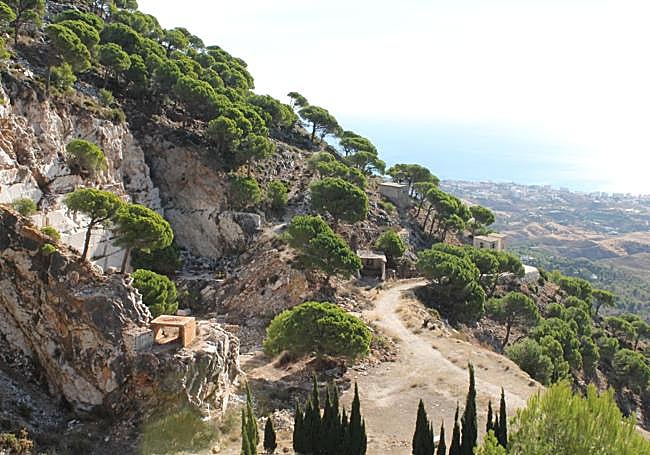
Nearby places of interest: Mirador de la Cañada Morena, Puerto Colorado, ravine of Fuente de la Adelfa, Pico Mijas, hermitage of El Calvario, viewpoints of Mijas Pueblo, Cantera del Barrio, Cruz de la Misión, Banco de la Memoria, hermitage of La Peña, church of La Inmaculada, botanical garden of La Muralla, bull ring and hermitage of La Peña, among others.
-
How to get to the starting point
The trail starts in Puerto Colorado, next to the A-387 road between Mijas Pueblo and Coín. There is a small parking area with capacity for approximately a dozen vehicles. In front of it, crossing the road, you will see the information panel of the Sierra de Mijas footpath network.
-
Route description
1. After leaving the vehicle at Puerto Colorado, cross the road and climb some stone steps with handrails that lead to the information panel on the network of trails in the Sierra de Mijas. The itinerary begins by sharing part of the route with other well-known trails in this area, such as the one that climbs up to Pico Mijas (better known as 'La Bola'), initially advancing through pine woods and open areas with good views towards the coast.
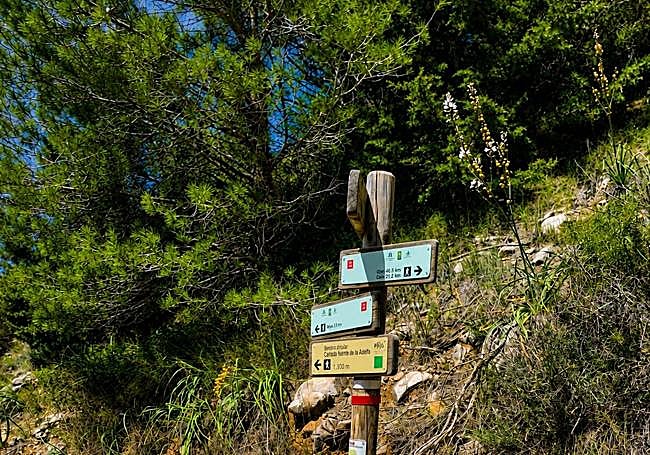
2. After just one kilometre you come to the first crossroads, which is clearly signposted. Keep to the right, as is made clear on the route's signposting. This allows you to reach the Cañada Real de la Fuente de la Adelfa, an old drovers track that gives its name to the whole route and which even preserves historical references related to old livestock watering places. From this point the circular route really begins.
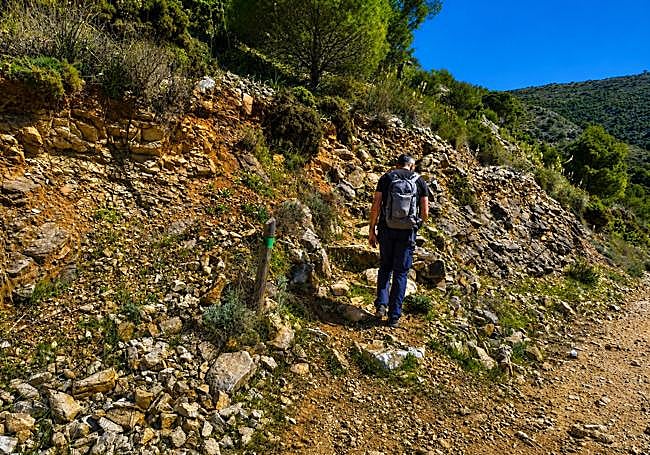
3. The trail climbs steadily along the drove road, alternating near-straight stretches with sections of continuous zigzags that allow the mountain's elevation gain to be managed. In the steeper areas, small stone steps appear along with somewhat rockier sections, where sturdy mountain footwear with good grip is essential.
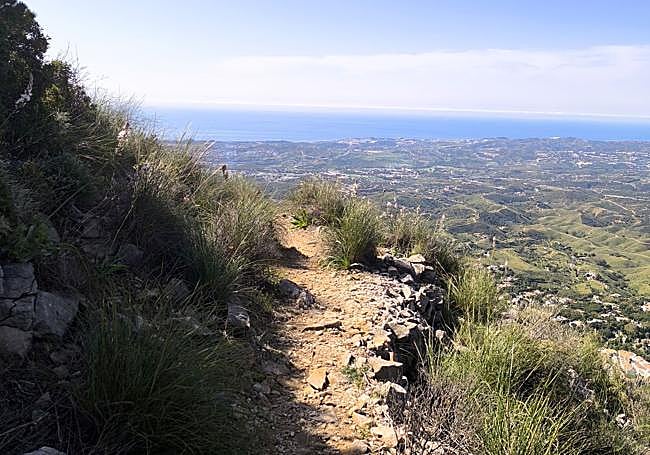
4. As you gain altitude, the landscape opens up, leaving ever wider panoramic views over the coast of Mijas and Fuengirola. Views also begin to appear towards other nearby mountain ranges such as Sierra Blanca and Sierra de las Nieves, as well as the characteristic silhouette of Pico Mijas. One of the highlights of the route is the Mirador de la Cañada Morena viewpoint, perfect for a short break to contemplate the landscape. To do this you will have to leave the official itinerary to the east for a few metres, but you will have to return after seeing this spectacular natural balcony of the sierra. Afterwards, continue zigzagging down to the forest track that runs from east to west along the southern face of the Sierra Mijeña.
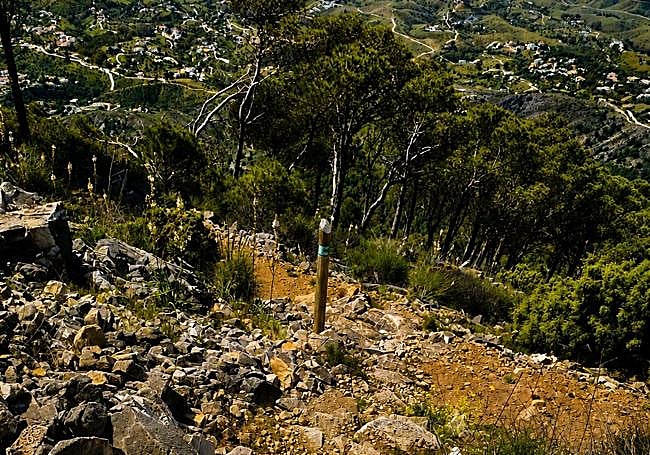
5. After reaching the forest track, the route continues in an easterly direction looking for a new stone staircase that allows us to continue linking paths of the municipal network. The itinerary ends up connecting again with the green route of Las Cañadas to return shortly after towards Puerto Colorado, completing a particularly varied route, with abundant Mediterranean vegetation, numerous changes of scenery and great views during practically the entire route.
Flora and fauna
The route crosses one of the most varied sectors of the Sierra de Mijas from the botanical point of view, alternating Mediterranean pine forests, shady ravines and slopes covered with native scrub. Along the route, different species of pine predominate, accompanied by wild olive trees, kermes oaks, junipers, gorse and aromatic plants such as rosemary, thyme and lavender, which are very common in this mountain environment. There is also the presence of the fan palm, one of the most characteristic species of the Mediterranean scrubland of Malaga.
The very environment of the Cañada Real de la Fuente de la Adelfa also favours the appearance of some specimens of special interest included in the municipal catalogue of unique trees of Mijas, a reflection of the natural wealth still preserved in this area. In the more protected and humid areas of the ravine, the vegetation gains density and variety, generating a very different landscape to that of the slopes more exposed to the sun.
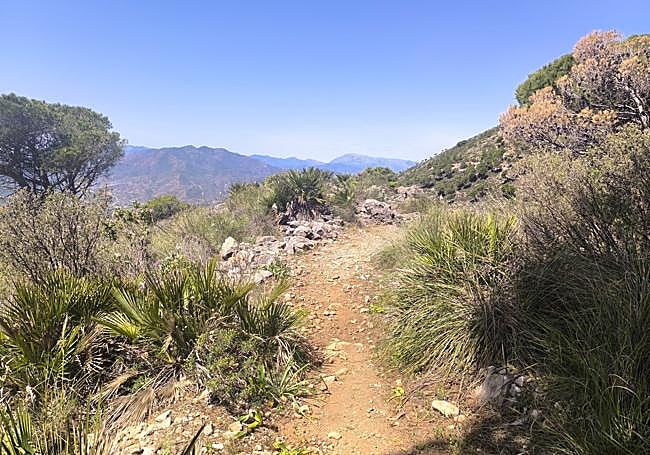
As for the fauna, it is not unusual to find signs of mammals such as mountain goats, foxes and wild boars, which are common in different parts of the mountain range. Birds of prey such as kestrels, sparrowhawks and booted eagles frequently fly over the slopes, taking advantage of the thermal currents that rise from the coast. Among the rocky and sunny areas there are also many reptiles and small forest birds typical of the Mediterranean ecosystem.
![[]](http://static.vocstatic.com/voc26/latest/assets/images/favicon/surinenglish/apple-touch-icon-57x57.png)