
People
Campo, toldo, feria... how British residents on the Costa blend Spanish into their everyday lives
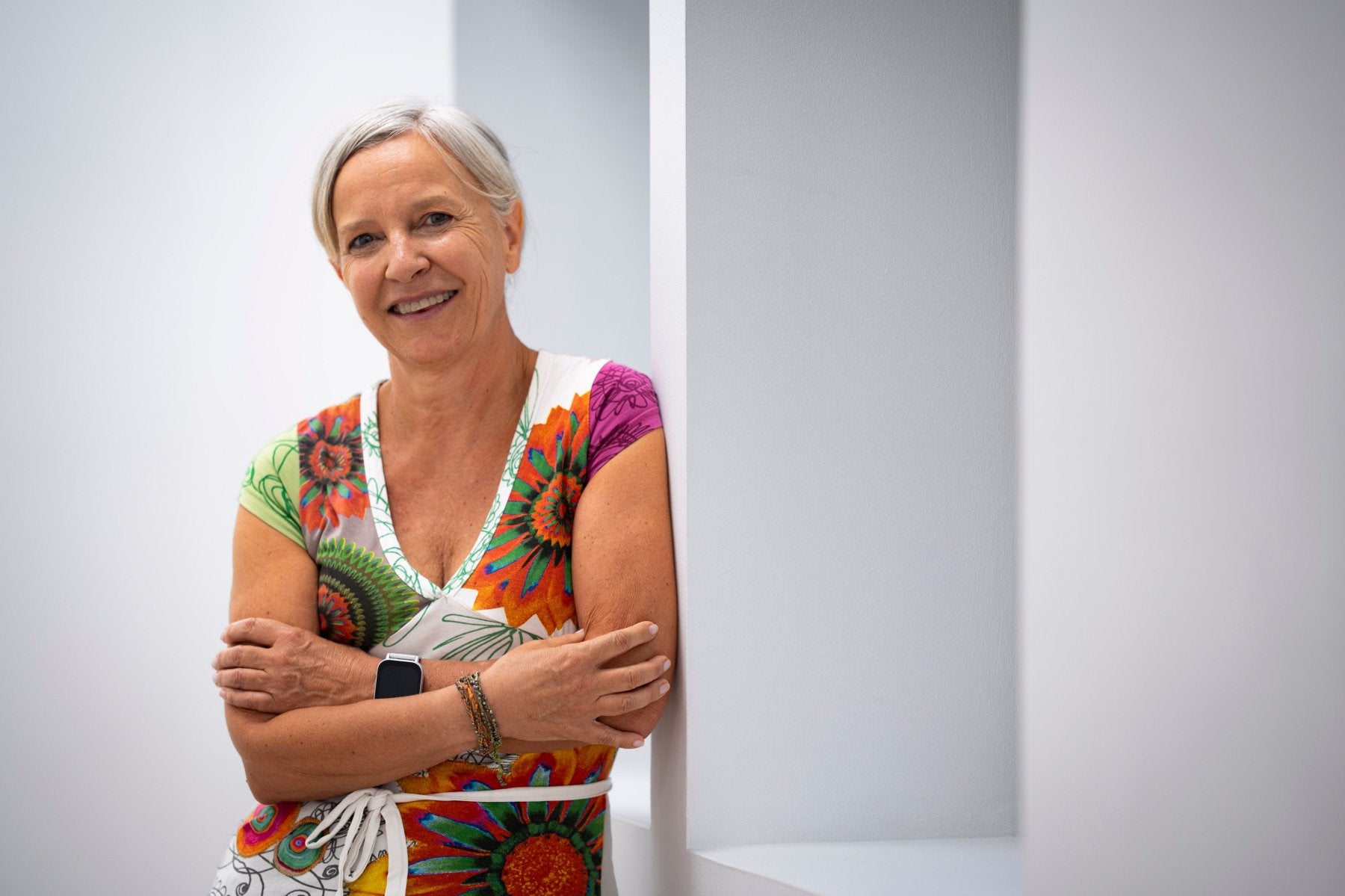
Interpreter and translator Monica de Martin Fabbro is completing a PhD on Spanish vocabulary used by expats
Daniela Craft Márquez
Ask a British expat on the Costa del Sol where they're going to walk their dog, and there's a good chance they won't say “the countryside”, they'll say “the campo”. Ask them about the roller shutters on their window and you'll likely hear “persiana”, not “blinds”. Mention the little hardware shop down the road and it is labelled “the ferretería” without a second thought.
This quiet, half-conscious blending of Spanish into everyday English is the subject of a PhD thesis by Monica de Martin Fabbro, an interpreter, translator and linguistics researcher at the University of Malaga. Over the past few years, she has been documenting exactly how (and why) British residents of the Costa del Sol mix their English with Spanish, building a detailed picture of a hybrid, local way of speaking.
A life between languages
Monica's own life is something of a case study in itself. Originally from Belluno, a small town in Italy's Dolomites, she moved to Benalmádena 28 years ago and has lived there ever since. She is 56 and lives alongside her husband Ian, a motorbike mechanic who grew up in Dorset before moving to London, and their 22-year-old son, Harley.
Today, Monica works as a professional interpreter, accompanying English speakers who don't speak Spanish to doctors' appointments, notaries, courts and other official settings. She has also taught translation and interpretation at Malaga university since 2022.
It's this dual vantage point - professional interpreter and long-term insider within the British community - that led her to the subject of her PhD. “The reason why I'm covering British people in the Costa del Sol is basically because my husband is British and my son, obviously, is a second-generation English speaker,” she explains.
In many ways, she admits, the project began close to home. “I'm basically doing a PhD of my husband and my son,” she says with a laugh, though the study quickly grew well beyond her own family.
The research itself
For the fieldwork itself, Monica interviewed 60 participants and grouped them into three different areas: British residents of working age who moved to the Costa del Sol as adults or teenagers, retirees and second-generation speakers.
“I did Brits of working age to see whether, if when people need to work, they end up speaking more Spanish and integrating more into Spanish society,” she explains. “Then the other group is retired, split between people who came here already retired and those who worked here and are now retired. And then the second generation: people who were either born here or came here before they were teenagers.”
Interview process
Each session followed a structured format, involving a sociolinguistic interview, mapping out the participant's background and their own self-assessed Spanish ability on a scale of one to five.
The second part of the interview involved a photo-based questionnaire. Participants were shown a picture and asked to describe it, or complete a sentence about it, using whatever word came to mind first, in either English or Spanish.
The images were chosen deliberately by Monica to expose gaps between the two cultures' mental images of the same concept. A photograph of an awning, for instance, consistently produced “toldo” rather than any English equivalent, with 72.41 per cent of participants saying “toldo” rather than “awning” (24.14 per cent).
A photo of roller shutters produced much the same result with “persiana”: look up “blinds” or “shutters” on Google Images, she points out, and the pictures that come back look nothing like the reality on a Spanish balcony.
The same is true of “campo”. Shown an image of a grey, dull, scrubby campo alongside a sentence about walking the dog, participants had to choose between “countryside” and “campo” and the mental image of the “English countryside” is worlds away from the campo they actually see outside their window.
What Facebook groups reveal
Beyond her formal interviews, Monica also trawled expat Facebook groups for the Costa del Sol, identifying 24 recurring Spanish terms and analysing which came up most often.
Unsurprisingly, many clustered around paperwork and bureaucracy: comisaría (police station), policía, extranjería (immigration office), gestor (administrative agent), empadronarse (to register as a resident) and padrón (the residents' register). A second cluster covered everyday local life - words like ferretería (hardware shop).
Her explanation for this pattern is simple: “When a concept does not exist in a language, the word doesn't exist in that language”. She gives the example of the traditional local ferretería: the small, independent ironmonger's shop that has all but disappeared from British high streets. The word survives here because the place itself still does - 84.48 per cent of participants said “ferretería”, compared with only 15.52 per cent who said “key cutter” or similar.
But Monica says that it often isn't a gap in vocabulary driving the switch so much as a sense of belonging. “Barrio” is one such word - participants could easily say “neighbourhood,“ but “barrio” kept coming up regardless, because it carries a sense of local identity that the English word doesn't quite capture.
The same goes for “feria”: “You can say fair, you can say festival, but it's not the same. It's not the flamenco, it's not the verdiales, it's not the Cartojal wine,” Monica says. “Feria is so intrinsic to the local way of life that people just use feria.”
Beyond bureaucracy and cultural touchstones, Monica has catalogued dozens of smaller, near-invisible substitutions that have crept into daily British-expat speech. People order a “café con leche” without thinking twice, even if their Spanish stops there. On a nice day, many will suggest a walk on the “paseo” rather than the promenade, though she says that children who attend British international schools sometimes reach instead for American English, calling it a “boardwalk.”
When they're unwell, residents head to the “ambulatorio” or “centro de salud” rather than “the health centre”. Buying plants means a trip to the “vivero” instead of “the nursery” or “garden centre”. Household rubbish goes to “the basura”, and that spare storage room off the garage becomes “the trastero” - a word for which there isn't really a tidy English equivalent at all.
When Monica asks participants directly why they reach for the Spanish word, why “campo” instead of countryside, why “trastero”, why “toldo”, the answer is almost always the same: practicality. “When I go to a shop, that's what I see, that's what I need to ask for” is the typical response. Using the English word instead would simply mean you would not be understood, “so it's just a way to make your life easier”. Tellingly, Monica notes, even native English speakers who have lived in the Costa del Sol for a long time often don't know the English word for some of these things at all.
Monica adds that the project, which is far from over, has become something much bigger than an academic exercise. “The thesis has been a labour of love for me,” she says - a fitting description for a piece of research rooted, quite literally, in her marriage, her son and nearly three decades of her life among British expats on the Costa del Sol.
![[]](http://static.vocstatic.com/voc26/latest/assets/images/favicon/surinenglish/apple-touch-icon-57x57.png)