
Gardening in southern Spain
Broken bones tree
Native to the tropical forests of the Indian subcontinent and Southeast Asia, this is a fascinating plant for the gardener who fancies trying something ‘a little different’
Denise Bush
Oroxylum indicum, commonly known as the Indian trumpet tree, midnight horror and broken bones tree, is a deciduous member of the Bignoniaceae family. Native to the tropical forests of the Indian subcontinent and Southeast Asia, it is a fascinating plant for the gardener who fancies trying something ‘a little different’.
It can be grown successfully in the microclimates of Southern Spain, particularly along the Costa Tropical and sheltered enclaves of the Costa del Sol, given specific care.
The tree is most notable for its large, bipinnate leaves, which can reach up to two metres long and over a metre wide. Despite this, the tree is quite slender, with long, erect stems and reaching heights of eight to 15 metres in ideal conditions. The common name ‘broken bones’ most likely comes from the appearance of the withered, fallen leaf stalks at the base of the trunk; these grey, woody segments bear a striking resemblance to a pile of skeletal remains.
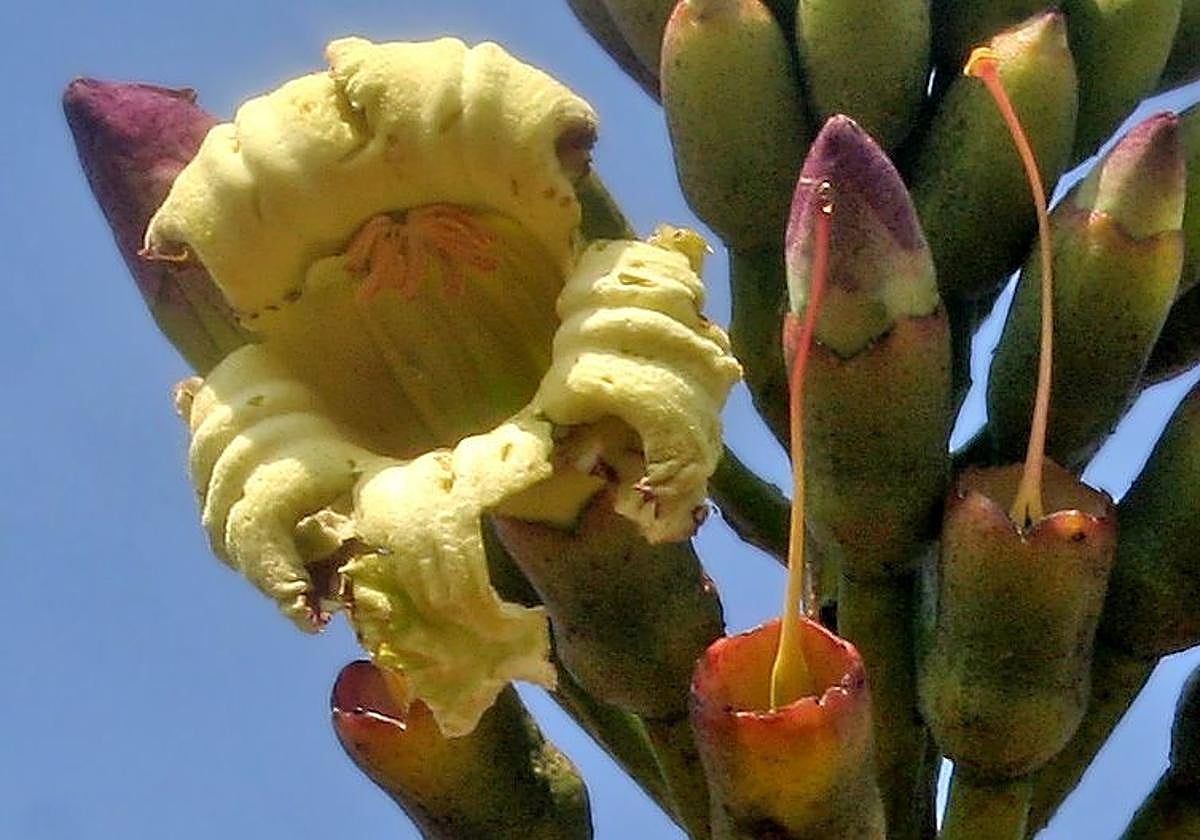
The flowering process is quite unuusual too. Large, bell-shaped flowers form on tall stalks that rise above the foliage. These blooms are a deep purple on the outside and a pale, cream-colour inside. They are nocturnal, opening in the late evening and have a strong, sulphurous scent. This odour attract bats, the tree’s primary pollinators. The flowers are capable of withstanding the weight of a bat while it feeds. Once the flowers are pollinated they develop into large, edible seed pods that can grow nearly a metre long. These pods hang down from the branches like heavy scimitars, leading to its other common name, the ‘tree of Damocles’. When the pods ripen they burst open and release hundreds of papery, winged seeds.
Oroxylum indicum requires a sheltered location. While it is well-suited to the heat, it is very sensitive to cold. On the coast, where temperatures rarely drop near freezing, the tree will thrive, but even a brief cold snap can cause significant die-back or terminal damage to younger plants.
Oroxylum indicum is not drought resistant and will need consistent irrigation and fertile, well-draining soil rich in organic matter. The size of its leaves makes it vulnerable to scorching and wind damage so it will need protection from the harsh sun and winds.
In Ayurvedic medicine, this plant is classed as one of the Ten Roots (Dashamoola). Every part of the tree, from the roots to the seeds, contains bioactive compounds which have anti-inflammatory and antioxidant properties.
Seeds can be sown in late spring or cuttings taken from semi-mature wood and a hormone rooting powder used to increase success rate.
![[]](http://static.vocstatic.com/voc26/latest/assets/images/favicon/surinenglish/apple-touch-icon-57x57.png)