
Airport chaos
UK flight chaos: Over 1,900 flights cancelled as air traffic control glitch hits hundreds of thousands
Delays and cancellations enter second day as airlines struggle to reposition aircraft and crews following Nats system failure
Ivannia Salazar-Saborío
Key takeaway
-
1,900+ flights cancelled: A major Nats air traffic control glitch on Tuesday grounded 1,762 flights and a further 153+ on Wednesday, stranding hundreds of thousands of passengers.
-
Knock-on disruption: Delays persist across major hubs like Heathrow and Gatwick while airlines struggle to reposition aircraft and crews, with some passengers stranded until the weekend.
-
Airlines demand reform: Nats ruled out a cyberattack and apologised, but carriers including Ryanair and Wizz Air have called for leadership resignations following the UK's third major ATC failure in three years.
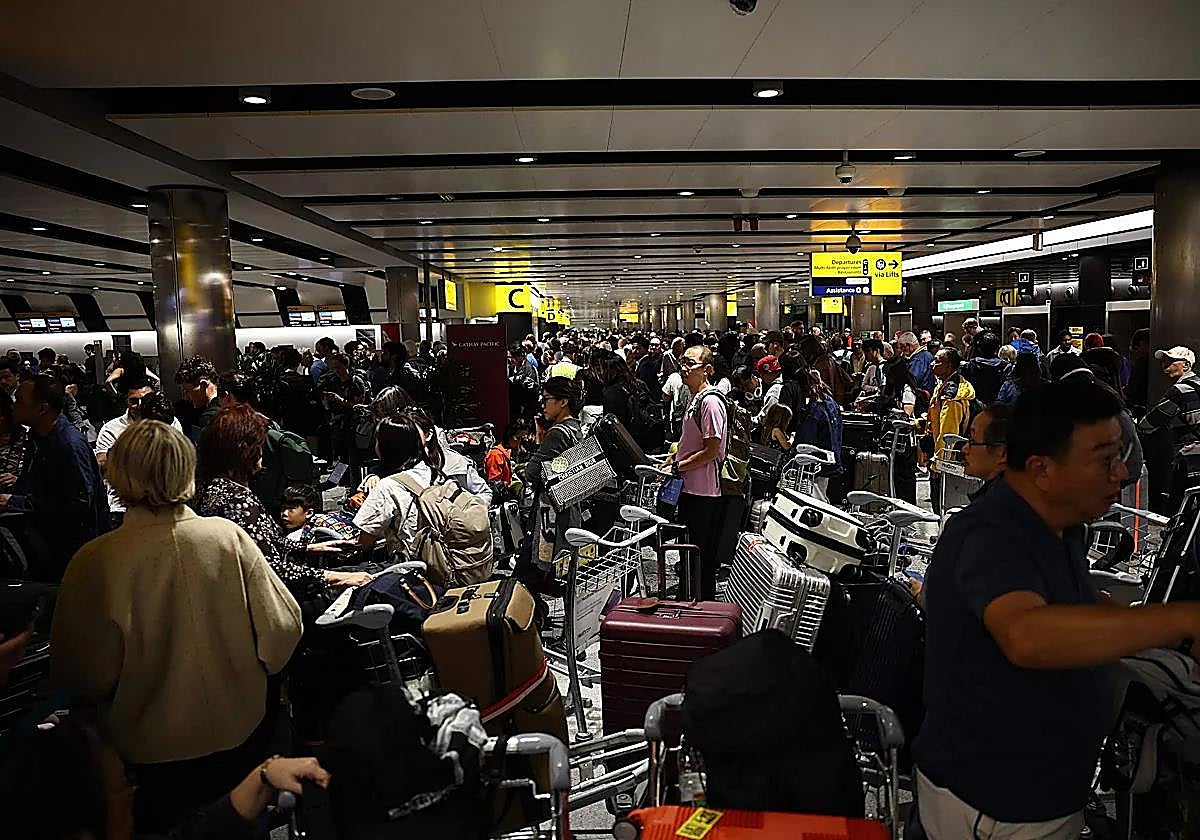
MORE than 1,900 flights have been cancelled across the UK as a second day of widespread airport disruption leaves hundreds of thousands of passengers ... stranded.
The chaos follows a major technical failure in the national air traffic control system on Tuesday, marking one of the worst aviation disruptions in recent years.
Although air traffic provider Nats resolved the technical issue on Tuesday evening, knock-on operational delays and logjams are expected to persist throughout the week.
According to aviation analytics firm Cirium, 1,762 flights - comprising 902 departures and 860 arrivals - were grounded on Tuesday out of roughly 5,800 scheduled movements. A further 153 flights were cancelled early on Wednesday, with figures expected to rise.
Ryanair reported that over 65,000 of its passengers experienced delays of up to eight hours on Tuesday, while British Airways cancelled or diverted more than 100 flights.
Major airports face ongoing disruption
Heathrow Airport - Europe’s busiest passenger hub - was severely hit, recording 362 cancellations on Tuesday according to AirNav Radar data. Ground space became severely constrained as aircraft were grounded or diverted to alternative UK and European airports.
Operational impacts vary across the country:
• Heathrow and Gatwick: Operating, but both warned that full recovery will take time as airlines reposition crews and aircraft.
• Glasgow: Facing ongoing delays and potential long-term backlog.
• Bristol: Experiencing localised delays and cancellations.
• Manchester and Stansted: Reporting normal operations.
Travel expert Simon Calder told the BBC that an estimated 250,000 people woke up on Wednesday "where they did not intend to be." Calder warned that because pilots, cabin crew, and aircraft remain out of position, some passengers may not reach their final destinations until the weekend.
Investigation launched as Nats chief apologises
Investigation launched as Nats chief apologises
The system failure occurred around 1pm on Tuesday within the Nats flight processing system, which provides critical flight-plan data to controllers managing British airspace.
Nats chief executive Martin Rolfe ruled out a cyberattack and apologised to affected travelers.
"I completely understand the frustration," Rolfe told BBC Radio 4 on Wednesday. "We take full responsibility for the incident."
Rolfe promised a "very, very thorough" investigation into the technical cause, which has not yet been disclosed. He noted that Nats has invested more than £1 billion in technology over the past 25 years, but admitted this track record "does not diminish" the severity of the failure.
Transport Secretary Heidi Alexander summoned Rolfe on Wednesday to demand explanations, stating she would seek formal assurances that system redundancies meet national standards.
Airlines demand leadership changes
The failure has reignited fierce criticism from airline executives. This week's outage marks the third major air traffic control disruption in the UK in just over three years, following a massive system collapse in August 2023 that affected 700,000 passengers, and a subsequent technical outage in July 2025.
Nats maintains that the underlying technical causes of each incident were different. However, carrier executives called for immediate reform.
Wizz Air stated that "a critical national infrastructure provider should not repeatedly immobilise the aviation system," adding that Nats "is simply not fit for purpose in its current form."
Ryanair reiterated its calls for Rolfe’s resignation and demanded structural management changes across UK air traffic control operations.
![[]](http://static.vocstatic.com/voc26/latest/assets/images/favicon/surinenglish/apple-touch-icon-57x57.png)