
Feature
The Gibraltar border treaty, much more than an agreement: 'It is a permanent uncertainty'
While the Spanish government boasts of historic progress, the Junta de Andalucía local politicians and workers from the Campo de Gibraltar criticise the lack of participation in the negotiations and the doubts about fiscal control, investment and labour rights
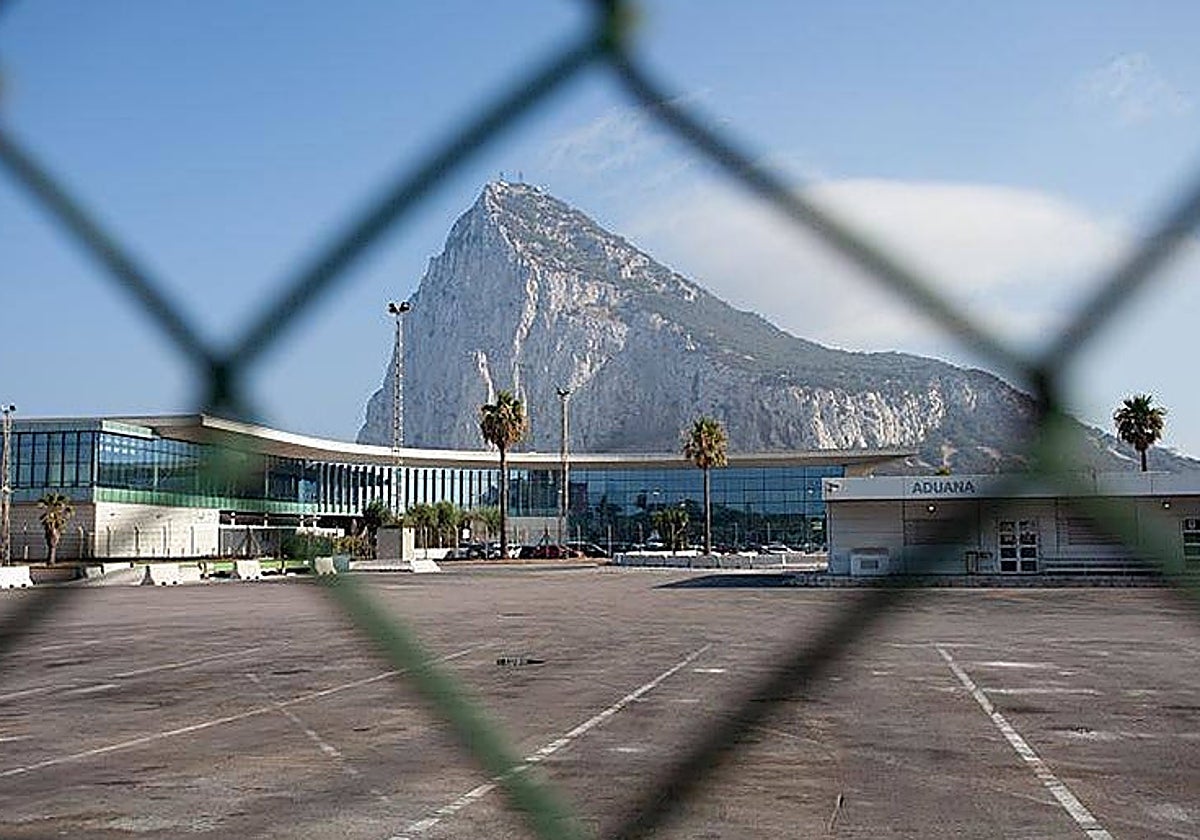
LUIS MIGUEL MORALES
LA LÍNEA
Every morning, before dawn breaks in the Campo de Gibraltar, thousands of people repeat the same route. They leave their homes in La Línea de la Concepción, Algeciras, San Roque or Los Barrios and head towards the border separating Spain from the Rock. Some go by car, others on foot or by motorbike. They all share the same destination: their jobs in Gibraltar.
For these employees, the working day starts long before they clock in. The time they actually start work often reflects the time wasted at the border crossing. A journey of just one kilometre can take half an hour, an hour or even more on busy days.
This everyday scene could change profoundly if the agreement negotiated between the United Kingdom, the European Union and Spain after Brexit is successful. On the table is a measure that has been generating debate for years: the possible disappearance of the Gibraltar frontier fence and the elimination of routine checks at the land border. For thousands of workers, the change would be much more than an administrative adjustment; it would be a direct transformation in their daily lives.
Employment for thousands of people
The economic relationship between Gibraltar and its Spanish surroundings is not recent. For decades, the Rock has established itself as one of the main sources of employment for the Campo de Gibraltar. Every day, more than 15,500 workers cross the border to carry out their professional activity, according to data from La Línea de la Concepción town hall.
This constant movement has become one of the pillars of employment in the region. For many municipalities, working in Gibraltar represents an essential source of income that supports, directly or indirectly, thousands of families. The sectors in which this workforce is concentrated reflect Gibraltar's economic structure: hospitality, retail, construction, financial services and the online gaming industry. Many of these jobs are skilled and offer higher wages than those found in the region, which for years has reinforced Campo de Gibraltar's dependence on the Rock for work.
Despite the geographical proximity, crossing to Gibraltar is not always easy. Queues and checkpoints are part of the daily routine. Under normal conditions, the journey between La Línea and Gibraltar can be completed in minutes, but at peak times it takes double or triple the time. On busy days, the wait can exceed two hours. For those who cross five days a week, this time becomes part of the working day.
Antonio, a resident of La Línea, has been working in Gibraltar for decades. His routine starts long before his working hours. "Normally the problem is when I leave. We all leave at the same time and there are long queues," he explains. Even so, he is cautious about the possible change. The disappearance of the frontier has been announced on several occasions in recent years, which fuels scepticism among those who depend on the border on a daily basis.
A document that fuels doubts
Brexit opened a period of uncertainty over Gibraltar and its relationship with Spain. Among the proposals of the agreement is the elimination of routine controls, which would allow a more streamlined transit and reduce the queues suffered by thousands of workers. The government, through foreign minister José Manuel Albares, presents the agreement as a historic step forward in protecting labour rights.
However, the published documentation has fuelled doubts. The final text, initially released only in English and less than 50 days before its provisional application, is more than a thousand pages long and technically complex. For many locals, the promised clarity contrasts with the real difficulty of knowing the precise scope of the agreement.
If there is one thing the Campo de Gibraltar has engraved in its heart, it is promises, bombastic headlines and agreements which, over time, end up being watered down. This is why mistrust weighs more than hope in a region used to being trapped between political interests that are decided far from the citizens and workers.
The Junta de Andalucía and various representatives of the Campo de Gibraltar have criticised the lack of local involvement in a negotiation that directly affects the territory. They also warn that eliminating the border fence without clear guarantees on pensions, contributions, fiscal control or legal security could generate more problems than solutions. Historically, the border has conditioned the economic and social life of the region, so any structural change should be accompanied by certainties and not by new promises.
"At home and at work we are expectant"
In the same vein, Esther insists that it is the citizens - and especially the workers - who suffer the consequences of contradictory political decisions. "We are the ones who suffer and live in permanent uncertainty," she laments. "At home and at work, we are waiting to see what will happen," she adds, tired of unkept promises.
The announcement of the agreement has opened a political and social debate with important labour implications in the Campo de Gibraltar. The lack of participation of regional authorities and local representatives in a negotiation that directly affects the territory has been questioned from various quarters, especially in the face of a decision of such a historic nature as the one that could result from the treaty.
The pact was seen by many as an opportunity to reach a more ambitious agreement to balance the region's economic relationship with Gibraltar.
In this context, the mayor of La Línea de la Concepción, Juan Franco, warned that the more than 600 pages of the document do not specify key issues related to the area's historical problems. Among them, the economic funds foreseen, the investment promised or the practical application of the concept of "shared prosperity".
The perception conveyed by some local officials is that of a partially missed opportunity for a territory marked by high unemployment rates and an unequal economic relationship with the Rock.
Historically, the relationship between the Campo de Gibraltar and Gibraltar has been conditioned by the weight of cross-border employment and economic dependence on the British enclave, a situation which, according to various institutional and social representatives, requires specific measures to guarantee legal certainty and stability for workers.
Doubts on control and taxation
Criticism also points to the practical aspects of the agreement. The disappearance of routine controls raises questions about taxation and the monitoring of trade or financial flows. Gibraltar maintains its own tax regime, with a lower tax burden than Spain, and the removal of controls without clear oversight mechanisms could complicate economic management.
These doubts were initially compounded by the lack of an official translation of the treaty into Spanish, which made it difficult for workers, trade unions and companies to analyse it.
And so, while the political debate continues, cross-border workers watch the situation with expectation and caution. Fewer queues and faster commuting would be a clear improvement in their daily routine. However, doubts about pensions and labour rights persist.
Some workers who have paid contributions for decades in Gibraltar receive pensions of barely more than 600 euros per month, a situation that trade unions and associations have been denouncing for some time.
On the other hand, the trade unions are following the process closely. Comisiones Obreras in the Campo de Gibraltar supports the agreement in general terms, but demands clear explanations about its content and consequences.
Manuel Triano, regional secretary of the union, stresses the need for a process of "institutional pedagogy" that clearly explains the implications for workers, companies and administrations and guarantees equal rights.
Beyond the economic implications, the fence has a strong historical significance. Its closure in 1969 separated families and left thousands of workers unemployed; its reopening allowed some mobility to be restored, although controls and queues still mark the daily routine.
A change that can redefine the county
The disappearance of the border would be more than an administrative reform. For thousands of workers it would mean faster journeys and less time wasted in controls. Barely a kilometre separates La Línea from the Rock, a stretch that for decades has defined one of Europe's most unique borders.
If the agreement materialises, crossing could become a simple daily commute. But the debate it opens up goes far beyond border traffic. Between workers' hopes, trade union warnings and institutional criticism, the treaty continues to raise questions in a region where the border has conditioned the lives of generations.
![[]](http://static.vocstatic.com/voc26/latest/assets/images/favicon/surinenglish/apple-touch-icon-57x57.png)