
Politics
The fall of the fence opens a new chapter in the Campo de Gibraltar
The symbolic signing of the agreement between the EU and the UK allows the free movement of people and goods from Wednesday
Antonio M. Romero
The Treaty of Utrecht of 1713 ceded sovereignty over Gibraltar to the British Crown. Since then, relations between the colony and Spain have been fraught with political and diplomatic tensions, including incidents such as the closure of the border between 1969 and 1982.
The UK's departure from the EU as a consequence of Brexit further exacerbated tensions and required a way to integrate the Campo de Gibraltar into its relations with the EU.
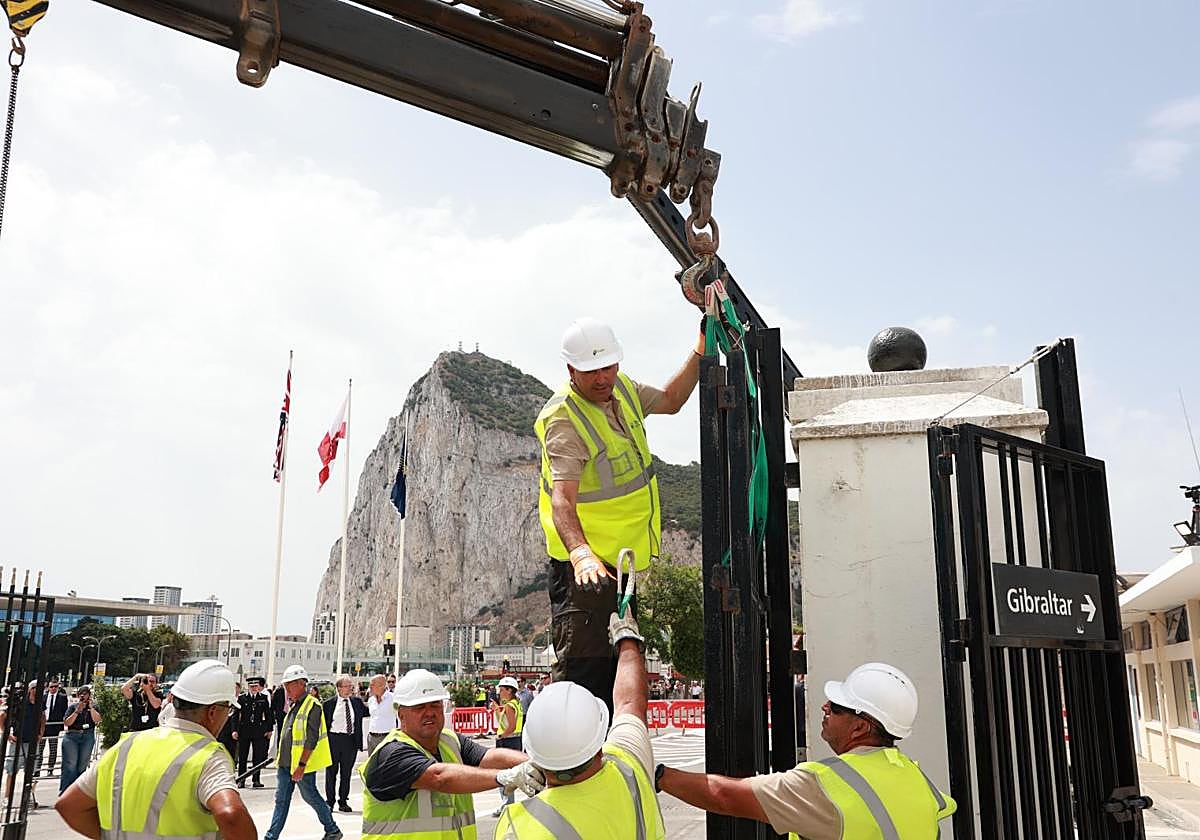
The arduous negotiations of recent years have culminated in an agreement symbolised by the fall of the border fence at midnight on Wednesday, 15 July.
Related story
-
Sergio García
The agreement that brings relations out of legal limbo was signed on Tuesday in Brussels in a solemn ceremony by the European Commissioner and negotiator for relations with the UK, Maros Sefcovic, and the British Secretary of State for Europe, Stephen Doughty, in the presence of Spanish Foreign Minister José Manuel Albares and Chief Minister of Gibraltar Fabian Picardo.
"We are moving forward afer three centuries marked by mistrust and confrontation. We have demonstrated that Spain's foreign policy addresses the concrete interests of the population," Albares said.
He will accompany PM Pedro Sánchez in La Línea de la Concepción (Cadiz) on Wednesday, during the symbolic demolition of the border fence.
The historic agreement between the EU and the UK on 11 June paved the way for its signing on 14 July. It entails the elimination of physical barriers between Gibraltar and the rest of mainland Spain with the disappearance of border control, so that people and vehicles will be able to move freely between Gibraltar and La Línea de la Concepción.
The removal of the last wall in continental Europe will generally benefit the 300,000 Andalusians in the Campo de Gibraltar area, the approximately 40,000 Gibraltarian residents and 15,000 cross-border workers.
The agreement stipulates that there will be no passport controls between the two territories. Spain will assume Schengen controls at the airport and port of Gibraltar and Spanish authorities will have the final say on residence permits.
Regarding the free movement of goods, the agreement regulates their transit through a system of harmonised controls where Spain will carry out customs controls on goods entering Gibraltar.
In tax matters, Gibraltar will apply an indirect tax equivalent to IVA, starting at 15 per cent from the entry into force of the treaty and completing convergence within three years.
There will be specific rules for tobacco in accordance with European regulations to "avoid economic distortions and strengthen fairness".
The agreement also establishes the creation of a financial mechanism for job training and other social measures to compensate for income inequalities, along with the strengthening of coordination in social security matters and protection measures for workers.
According to the documentation from the Ministry of Foreign Affairs, Spain fully maintains its position on sovereignty, "as the agreement expressly states".
Read the latest Gibraltar news and border updates
![[]](http://static.vocstatic.com/voc26/latest/assets/images/favicon/surinenglish/apple-touch-icon-57x57.png)