
Gibraltar
'A three-century-old wound has been healed' - Spanish PM as Gibraltar fence comes down
Pedro Sánchez presides over the symbolic ceremony marking the historic opening of the border, which heralds a “new era of shared prosperity” in the region

La Línea de la Concepción (Cádiz)
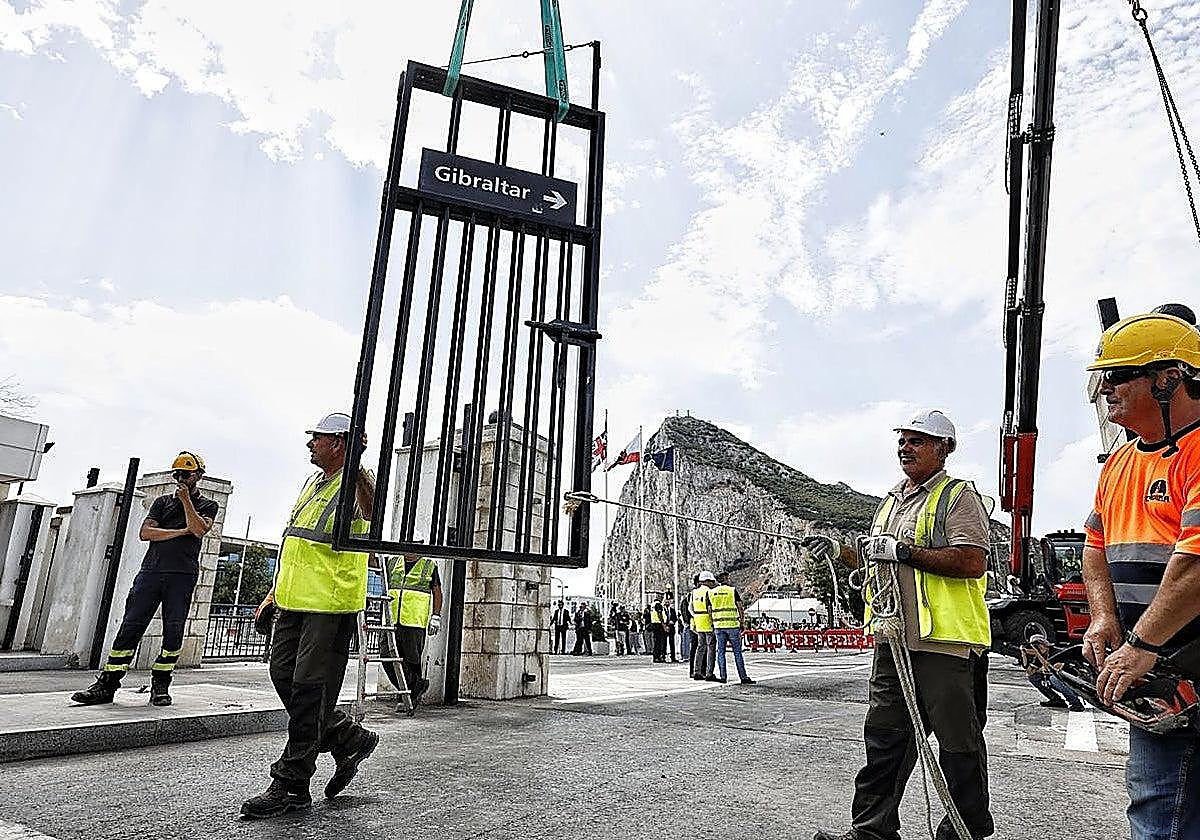
The Gibraltar fence is now nothing but a memory. At midnight on Wednesday 15 July, the last wall on the European mainland came down.
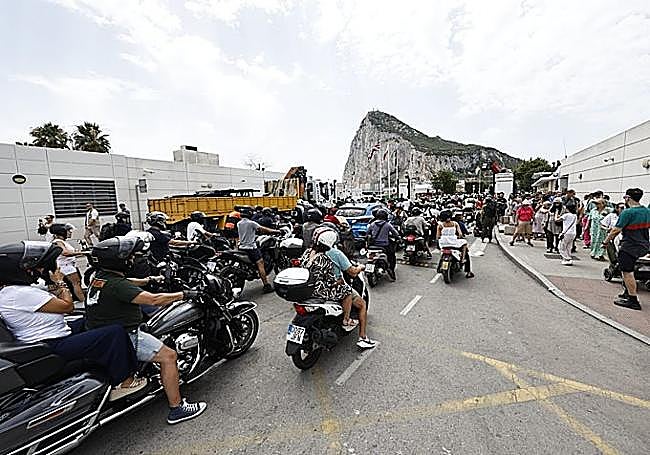
This ... historic event was celebrated on both sides of what had until now been the border: on the Gibraltar side, with a small official ceremony, and on the Spanish side, with thousands of people moving freely towards the British side, through the areas where the checkpoints had previously stood to control access, combining their joy at the fall of the fence with Spain’s progress to the World Cup final.
Twelve hours after those emotional moments for the people of La Línea and ‘llanitos’, the official Spanish ceremony to demolish the fence took place, attended by Pedro Sánchez.
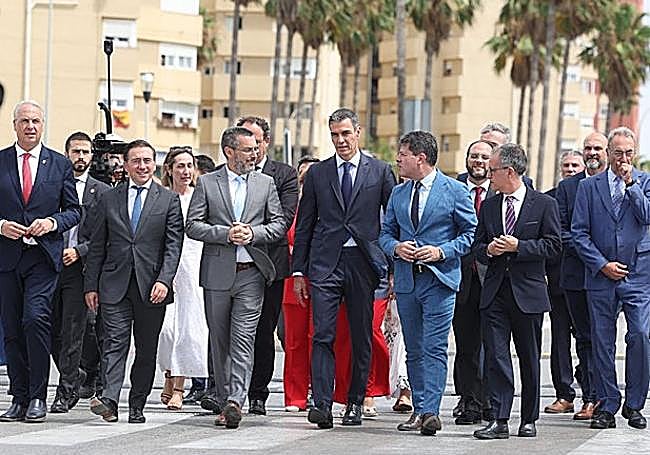
A quarter of an hour past midday, the Prime Minister, accompanied by the Minister for Foreign Affairs, José Miguel Albares, arrived in La Línea de la Concepción, where, after greeting the mayors of the Campo de Gibraltar region, the Chief Minister of Gibraltar, Fabian Picardo, and the UK Ambassador to Spain, Alex Ellis, he watched as two cranes and workers from the state-owned company Tragsa lifted the iron fences that had until then marked the border between the two territories.
The moment was met with applause from the authorities present.
“We are making history for the better,” said Sánchez in an official statement delivered next to the now-derelict customs house, in which he emphasised that the fall of the “last wall of continental Europe” heals “a three-century-old wound” —ever since the Treaty of Utrecht was signed in 1713, under which Spain ceded the Rock to the British—and a “new era of shared prosperity” is beginning both for Gibraltar (home to some 40,000 people) and the 300,000 inhabitants of the region.
“We’re making history for the better,” said the Prime Minister, who believes the agreement will bring “mutual” benefits
For the Prime Minister, the agreement signed between the European Union and the United Kingdom will bring ‘mutual’ benefits, as exemplified by the more than 15,000 workers who cross over to the Gibraltar side every day and who make up half of Gibraltar’s workforce.
Pedro Sánchez described the new era that is dawning as a time of ‘coexistence’ between peoples who ‘never turned their backs on one another’ and who will now look ahead and move forward ‘hand in hand’ in the Campo de Gibraltar, which aspires to be a “gateway where seas, cultures and continents meet”.
“For decades, the fence was an open wound for the thousands of workers who crossed it every day without knowing how long it would take them to reach their workplace, and also for the families separated by a few metres of metal, and for generations upon generations who grew up believing that there was no possible solution,” he said.
Faced with this situation, Sánchez argued that there was a solution which, in his view, lay in moving beyond that way of understanding politics which “confuses prudence with inertia, which looks to the future whilst always gazing at the past, and which believes that entrenched conflicts are destined to remain unresolved”.
"We have never believed that; we believe that politics achieves its greatest dignity when it stops merely managing inherited problems and finds the courage to resolve them. That is what we have done: governed with determination, persistently insisted that negotiations – however difficult – move forward until an agreement is reached, and demanded dialogue without, of course, compromising the principles that each party legitimately holds,” he added.
The Prime Minister emphasised that Spain would under no circumstances relinquish its claims regarding the British 'colony' and stressed that the agreement which has led to the removal of the fence (and the consequent removal of passport controls) protects Spanish interests and ‘more than meets’ the objectives set by Spain.
Terms of the agreement
Spain will exercise Schengen powers at Gibraltar’s port and airport, ‘ensuring the security of the European external border and full control over visas’, whilst, as regards the movement of goods, a customs union is established between the EU and Gibraltar and fiscal convergence is achieved, which “will put an end to historical imbalances”.
In the transport sector, Gibraltar Airport is opening to civilian traffic under a shared management model, which will provide new opportunities for citizens, tourism, investment and the development of the entire Gibraltar region.
As for workers, the agreement ‘safeguards’ the rights of cross-border workers who used to commute to Gibraltar on a daily basis, as their unemployment benefits are ‘guaranteed’, their pensions will be ‘protected and may be topped up to the Spanish minimum levels, and consequently there will no longer be any delays in benefit payments due to a lack of administrative coordination’,
Furthermore, any EU citizen legally resident in Spain will be able to work as an employee in Gibraltar without discrimination and on an equal footing, and a social fund is being set up to promote cohesion and solidarity - co-funded by the EU and the United Kingdom - between Gibraltar and the Campo de Gibraltar, which will help to “tackle inequalities on both sides” through specific measures in training and employment, to provide opportunities for young people in the region, as highlighted by the Prime Minister.
“Today, the Campo de Gibraltar is embracing its true destiny,” added Pedro Sánchez, before congratulating Spain on reaching the World Cup final and expressing his confidence that they would win their second star.
![[]](http://static.vocstatic.com/voc26/latest/assets/images/favicon/surinenglish/apple-touch-icon-57x57.png)